


News & Events
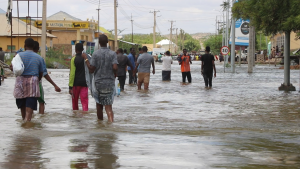
The Food and Agriculture Organization of the United Nations (FAO) is calling for enhanced early warning and anticipatory action in Somalia ahead of an expected El Niño and positive Indian Ocean Dipole (IOD) event and the start of the upcoming Deyr rainy season in October 2023 that could affect up to 1.2 million people Somalia. The country’s riverine communities are particularly at risk of flooding.
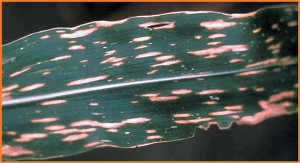
Southern leaf blight caused by fungal pathogen Cochliobolus heterostrophus is a destructive disease on maize throughout the world. Argonaute (AGO) proteins, key regulators in small RNA pathway, play important roles in plant defense. But whether they have function in maize resistance against C. heterostrophus is unknown. Association analysis between the nucleic variation of 18 ZmAGO loci with disease phenotype against C. heterostrophus was performed,

After re-electing QU Dongyu of China for a second term as Director-General of the Food and Agriculture Organization of the United Nations (FAO), the 43rd Session of the FAO Conference ended successfully on Friday with decisions to increase the regular budget of the Organization for the next biennium (2024-25) and to strengthen FAO actions and initiatives in integrated water resources management.

An area famous for using hand nets to fish for marsh clams in the Seomjingang River Estuary of the Republic of Korea is the latest site to be formally recognized as a GIAHS. The Sonteul (hand net) Fishery System for Marsh Clam in Seomjingang River Estuary was designated during a meeting of the GIAHS Scientific Advisory Group taking place in Valencia, Spain from 4 to 7 July.
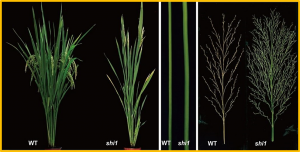
Plants experience a changing environment throughout their growth, which requires dynamic adjustments of plant architecture in response to these environmental cues. Our previous study demonstrated that Tiller Angle Control 1 (TAC1) modulates dynamic changes in plant architecture in rice; however, the underlying regulatory mechanisms remain largely unknown. In this study, we show that TAC1 regulates plant architecture in an expression dose-dependent manner,

Researchers from Duke Health found an enhanced approach to CRISPR that expands its functionality. The finding may lead to safer and more effective techniques for utilizing CRISPR technology as therapy. “CRISPR is great, but there are a lot of places within the human genome that can't be edited well,” said senior author Bruce Sullenger, Ph.D. CRISPR depends on the guide RNA to direct it to the right position on DNA and enable the repair or deletion in that location.
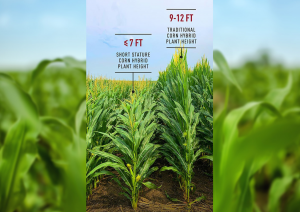
Bayer's genetically engineered shorter-stature corn known as Smart Corn System has received safety approval from the United States Department of Agriculture (USDA) Animal and Plant Health Inspection Service (APHIS). The shorter corn plants are modified to be 30% smaller with the same yields as other corn plants. Bayer CropScience modified the corn plant to reduce the plant growth hormone gibberellic acid, to produce shorter plants and reduce the likelihood of lodging or stem buckling.
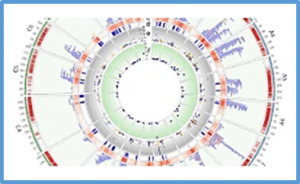
Seed weight (SW) is a direct determinant of seed yield in Brassica napus and is controlled by many loci. To unravel the main genomic regions associated with this complex trait, we used 13 available genetic maps to construct a consensus and highly dense map, comprising 40,401 polymorphic markers and 9191 genetic bins, harboring a cumulative length of 3047.8 cM.
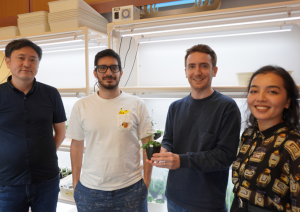
The research team from OIST led by (from left to right): Professor Hidetoshi Saze, Dr. Leonardo Furci, Dr. Jeremy Berthelier, and Munissa Sadykova. Photo Source: Okinawa Institute of Science and Technology. Researchers from the Okinawa Institute of Science and Technology (OIST) and the Center for Sustainable Resource Science, RIKEN found that the model plant Arabidopsis thaliana expresses thousands of transcripts between regular genes and jumping genes
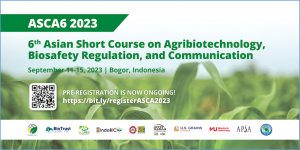
The course is a capacity building initiative of ISAAA Inc. and the Malaysian Biotechnology Information Centre (MABIC). It was first organized in 2018 as a platform for Asian scientists and regulators to be more competent in the regulations and policies related to biotechnology. Since then, the short course has been offered to promote strong collaboration among key biotechnology stakeholders for science and regulation to co-evolve and bring the benefits of modern biotechnology to society, while reducing its potential risks.
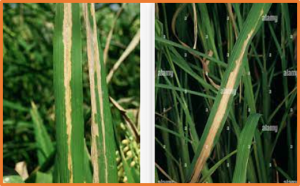
Rice bacterial leaf blight (BLB) is the most destructive bacterial diseases caused by Xanthomonas oryzae pv. oryzae (Xoo). Phages have been proposed as a green and efficient strategy to kill bacterial pathogens in crops, however, the mechanism of action of phages in the control of phyllosphere bacterial diseases remain unclear. Here, the glasshouse pot experiment results showed that phage combination could reduce the disease index by up to 64.3%.

A team of experts led by Feng Zhang at the Massachusetts Institute of Technology (MIT) reported the first programmable RNA-guided system in eukaryotic organisms, including plants, animals, and fungi. Their findings are published in Nature. The system's main component is a protein called Fanzor, which uses RNA as a guide to target DNA accurately. Fanzors can also be reprogrammed to edit the genome of human cells.