


News & Events
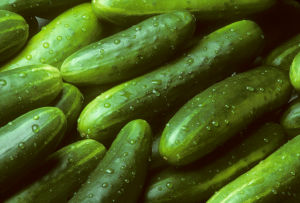
A study published in Transgenic Research reported that a gene called CsUBL5 could be used to enhance cucumbers' resilience to climate change. CsUBL5 is a promoter gene; thus it controls the expression of other genes. In this study, researchers found that the CsUBL5 promoter could be used to drive the expression of genes that make cucumbers more resistant to pests, diseases, and drought.
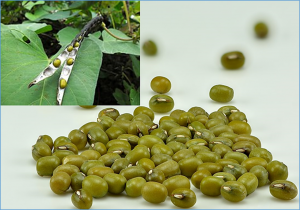
YUCCA, belonging to the class B flavin-dependent monooxygenases, catalyzes the rate-limiting step for endogenous auxin synthesis and is implicated in plant-growth regulation and stress response. Systematic analysis of the YUCCA gene family and its stress response benefits the dissection of regulation mechanisms and breeding applications. In this study, 12 YUCCA genes were identified from the mungbean (Vigna radiata L.) genome and were named based on their similarity to AtYUCCAs. Phylogenetic analysis revealed that the 12 VrYUCCAs could be divided into 4 subfamilies.

ISAAA Inc., in partnership with the Philippine Agriculture and Fisheries Biotechnology Program of the Department of Agriculture (DA Biotech Program), released the Biotechnology in the Philippines Resource. It serves as a repository of materials that highlight biotechnology applications, regulations, and communication efforts in the Philippines. The Biotechnology in the Philippines Resource includes Biotech Updates articles, blogs, journals, publications, videos, and webinars about the latest developments in Philippine biotechnology, as well as biotech products in the pipeline.
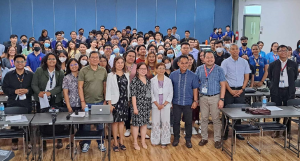
ISAAA Inc. continues to aid in informing the Filipino public about the drafted Joint Department Circular (JDC) on the Rules and Regulations for the Research and Development, Handling and Use, Transboundary Movement, Release into the Environment, and Management of Genetically Modified Animal and Animal Products Derived from the Use of Modern Biotechnology in the Philippines through the recently concluded animal biotechnology symposium and stakeholder consultation held in the Philippine Carabao Center (PCC), Science City of Muñoz, Philippines on July 4, 2023.
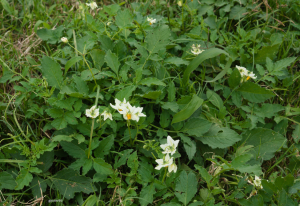
Wild potatoes are a valuable source of agronomic traits. However, substantial reproductive barriers limit gene flow into cultivated species. 2n gametes are instrumental in preventing endosperm abortion caused by genetic imbalances in the endosperm. However, little is known about the molecular mechanisms underlying the formation of 2n gametes. Here, the wild species Solanum malmeanum Bitter (2x, 1EBN, endosperm balance number) was used in inter- and intrapoloid crosses with other Solanum species
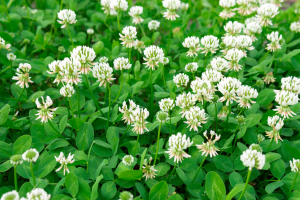
AgResearch, a scientific research center in New Zealand, is expanding research and development initiatives on genetically modified and gene-edited grasses. The center has included clover and endophytes to its research efforts, which initially focused on High Metabolizable Energy (HME) ryegrass. HME ryegrass has completed field trials in the US, but was temporarily withdrawn in Australia because of the complex requirements of the regulators.
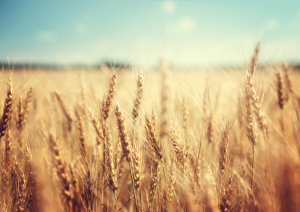
HB4® wheat has received approval in Paraguay, according to the Instituto de Biotecnologia Agricola (INBIO). This approval allows the introduction of the HB4® event to wheat improvement programs so that in four to five years, wheat varieties will be ready to be produced and commercialized for their seeds.
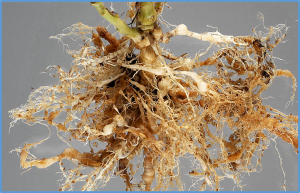
Five species of root-knot nematodes (RKN), Meloidogyne spp. (M. haplanaria, M. incognita, M. floridensis, M. javanica, and M. arenaria) were detected in 67% of vegetable-growing regions in Georgia, United States (Marquez et al. 2021a, b; Marquez and Hajihassani 2022a, b). In October 2021, two sweet potato (Ipomoea batatas) samples (FF1 and FF2) collected at harvest from a field located in Tattnall County, Reidsville, GA were received for assessment. Symptoms of RKN damage on storage roots included a veiny appearance, surface cracking, and bumpy yellow to brown colored specks (Fig. 1). The population density of RKN second-stage juveniles (J2) was 148 and 180 J2/100 cm3 of soil for FF1 and FF2 samples, respectively.
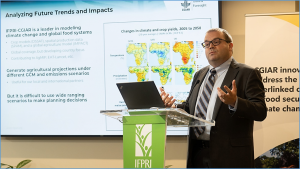
Climate change poses significant challenges for global economic development and food systems, particularly for impoverished nations and vulnerable populations. Policymakers are facing a daunting task of designing effective policies to address climate risks and making long-term investment decisions under growing uncertainty. Ideally, governments would have access to advance information about likely/estimated unfolding climate change patterns specific to their regions and the potential implications for their economies and communities
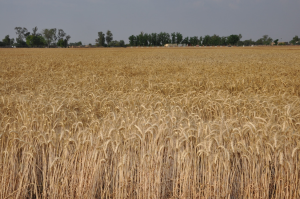
Wheat is critical to millions of households in Pakistan as it serves a dual role as a foundational part of nutritional security and as an important part of the country’s economy. Pakistan’s goal to achieve self-sufficiency in wheat production is more attainable with the release of 31 wheat varieties since 2021. These new seeds will help the country’s 9 million hectares of cultivated wheat fields become more productive, climate resilient, and disease resistant—a welcome development in a region where climate change scenarios threaten sustained wheat production.
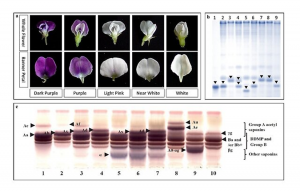
Shade tolerance is a key for optimal cultivation of soybean inter/relay-cropped with corn. To explore the shade tolerance gene–allele system in the southern China soybean germplasm, we proposed using gene–allele sequence markers (GASMs) in a restricted two-stage multi-locus model genome-wide association study (GASM-RTM-GWAS). A representative sample with 394 accessions was tested for their shade tolerance index (STI), in Nanning, China.
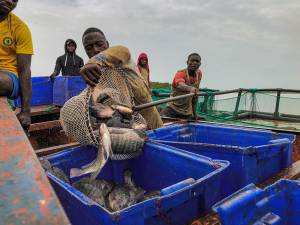
Nigeria’s Federal Ministry of Agriculture and Rural Development (FMARD) recently released a policy brief titled “Transformation and Future of Aquatic Food Systems in Nigeria” highlighting the untapped potential of aquatic foods in addressing malnutrition and creating jobs in Nigeria. The brief, developed by FMARD in collaboration with the Global Panel on Agriculture and Food Systems for Nutrition