


News & Events
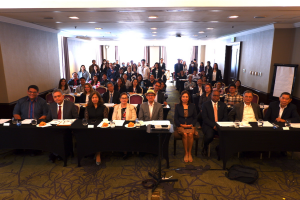
The key role of judges and lawyers in examining how the country's legal framework can extend the level of support to the development of biotechnology was highlighted during the second leg of the 2023 Biotech Outreach Program in the Philippines. Increasing the Philippine judiciary's awareness and knowledge of biotechnology can aid in boosting the country's agricultural productivity, increase food security, promote agricultural entrepreneurship, and uplift the lives of Filipinos.
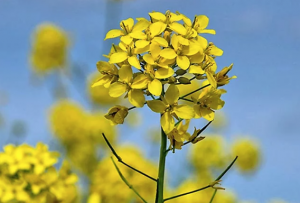
Rapeseed (Brassica napus L.) is an essential oil crop that accounts for a considerable share of global vegetable oil production. Nonetheless, studies on functional genes of B. napus are lagging behind due to the complicated genome and long growth cycle, this is largely due to the limited availability of gene analysis and modern genome editing-based molecular breeding. In this study, we demonstrated a short-cycle semi-winter-type Brassica napus ‘Sef1’ with very early-flowering and dwarf phenotype, which has great potential in large-scale indoor planting.
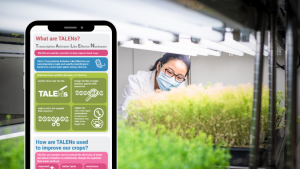
The International Service for the Acquisition of Agri-biotech Applications (ISAAA) has launched a new resource page on transcription activator-like effector nucleases (TALENs), a powerful gene editing tool. TALENs are highly accurate and can target any DNA sequence. They can also be used to modify DNA within organelles, such as mitochondria.

Scientists from the University of Leipzig and the University of Vilnius created a new method that can track the gene scissors of CRISPR-Cas with the finest resolution in real time. This technique can also be utilized in various CRISPR-Cas complexes or biomolecules. During gene recognition, the DNA of the target sequence is unwound to allow base pairing with the RNA
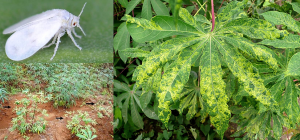
Cassava mosaic disease is caused by a complex of whitefly-transmitted begomoviruses, which often occur in co-infections. These viruses have bipartite genomes consisting of DNA-A and DNA-B that are encapsidated into separate virions. Individual viruses exist in plants and whitefly vectors as populations comprising both genome segments, which can occur at different frequencies. Both segments are required for infection, and must be transmitted for virus spread to occur.

Development of our exciting, ground-breaking plant and microbial science and innovation hub can go ahead with confirmation of funding announced today. The transformational investment will fund new cutting-edge, world-class facilities for the John Innes Centre (JIC) and The Sainsbury Laboratory (TSL) at the heart of the Norwich Research Park. This will deliver a step change in our capability to translate scientific knowledge into bio-based solutions in response to some of society’s most pressing challenges.
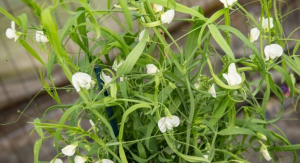
Using a newly available genome sequence of grass pea (Lathyrus sativus L.) a research collaboration led by the John Innes Centre has identified key biochemical steps that lead to the production of the neurotoxin β-L-ODAP (ODAP). Dr Anne Edwards of the John Innes Centre, one of the authors of the research, comments: “The genomic sequence for grass pea and the biochemical insights that occur as a result provide a breakthrough in our understanding. It offers an opportunity to develop varieties with less ODAP that are adapted to local conditions.”
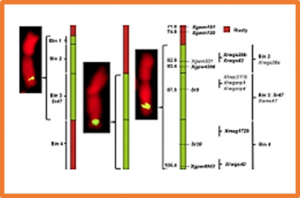
Three durum wheat (Triticum turgidum L. subsp. durum) lines, RWG35, RWG36, and RWG37 carrying slightly different Aegilops speltoides introgressions, but each carrying the Sr47 stem rust resistance gene, were backcrossed to three durum and three hard red spring (HRS) wheat (Triticum aestivum L.) cultivars to produce 18 backcross populations. Each population was backcrossed to the recurrent parent six times and prepared for yield trials to test for linkage drag.
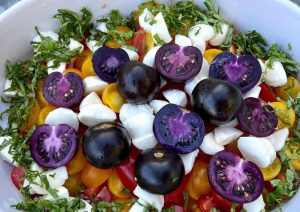
The FDA review states, "We have no further questions concerning human food derived from Del/Ros1-N tomato at this time." This decision from the FDA aligns with the United States Department of Agriculture's favorable decision in September 2022, marking a significant milestone for Norfolk. The FDA meticulously reviewed the purple tomato's composition, safety, and other relevant parameters. Purple tomatoes have a similar nutrient composition as their conventional counterparts, except for their intended higher levels of anthocyanins.

Around 735 million people are struggling with hunger, according to the latest report on the State of Food Security and Nutrition in the World (SOFI) released by five agencies of the United Nations. Compared with the 2019 data, the count has increased by over 122 million, which is attributed to the COVID-19 pandemic, as well as repeated weather shocks and conflicts.
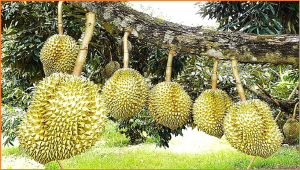
Durian (Durio zibethinus), which yields the fruit known as the "King of Fruits," is an important economic crop in Southeast Asia. Several durian cultivars have been developed in this region. In this study, we resequenced the genomes of three popular durian cultivars in Thailand, including Kradumthong (KD), Monthong (MT), and Puangmanee (PM) to investigate genetic diversities of cultivated durians. KD, MT, and PM genome assemblies were 832.7, 762.6, and 821.6 Mb, and their annotations covered 95.7, 92.4, and 92.7% of the embryophyta core proteins, respectively.

Addressing a high-level United Nations Townhall Meeting held in New York during the High Level Political Forum (HLPF) 2023 on Sustainable Development, under the theme "Overcoming the crises, driving transformation for the SDGs, and leaving no one behind,” FAO Director-General QU Dongyu today outlined six actions he said were needed to transform agrifood systems to make them more efficient, more inclusive, more resilient and more sustainable.