


News & Events

In a new ISAAA publication titled Points to Ponder on Gene Editing: Can We Edit the Future of Food?, a group of experts from around the world discuss the potential impacts of gene editing in the context of food security. The publication begins by outlining the challenges that the global food system faces. The world's population is expected to reach 9.7 billion by 2050, and demand for food is expected to increase by 50%
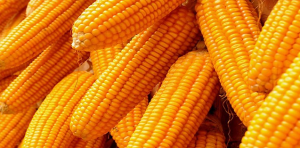
Highly heterozygous F1-hybrids outperform their parental inbred lines, a phenomenon known as heterosis. Utilization of heterosis is of paramount agricultural importance and has been widely applied to increase yield in many crop cultivars. Plant roots display heterosis for many traits and are an important target for further crop improvement. To explain the molecular basis of heterosis, several genetic hypotheses have been proposed.

The 2023 UN Food Systems Stocktaking Moment will build on the momentum of the 2021 UN Food Systems Summit (UNFSS). At this meeting, countries will convene to review the commitments to action that were made at the 2021 UNFSS and to share lessons learned and best practices in food systems transformation. The meeting is also intended to support the country-led momentum for food systems transformation.
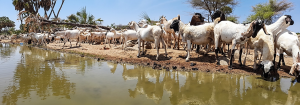
Water plays a crucial role as a key connector between the three components of One Health. What happens to water upstream affects humans and animals downstream. The concept of One Health recognizes the interconnectedness of human, animal and environment health and emphasizes the importance of addressing health challenges through a holistic approach that integrates multiple disciplines and sectors. Globally, the health of water is affected by various water users and pollution sources including cities, towns, crops, livestock and industries.
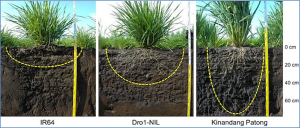
Rice is the second most produced crop worldwide, but is highly susceptible to drought. Micro-organisms can potentially alleviate the effects of drought. The aim of the present study was to unravel the genetic factors involved in the rice-microbe interaction, and whether genetics play a role in rice drought tolerance. For this purpose, the composition of the root mycobiota was characterized in 296 rice accessions (Oryza sativa L. subsp. indica) under control and drought conditions.
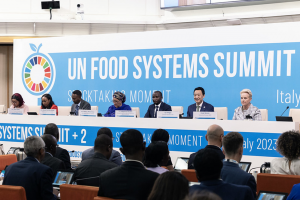
A full-scale Africa-led agrifood systems transformation will not be possible without game changing solutions, greater investments in smallholder farmers and local organisations, structural transformation, innovations, and partnerships at all levels. This was a key takeaway from a high-level special event held on the sidelines of the United Nations Food Systems Summit +2 Stocktaking Moment (UNFSS2+) entitled “Building Africa's food sovereignty and resilience through sustainable investments,” which was organized by the Interdepartmental Task Force on African Affairs (IDTFAA).
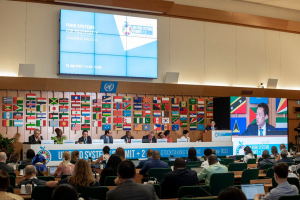
Agrifood systems hold the key to sustainable and inclusive economic prosperity, and harnessing science and technology is the most impactful way to unlock their potential, QU Dongyu, Director-General of the Food and Agriculture Organization of the United Nations (FAO) said today. Qu emphasized his messages at two afternoon events on the second day of the UN Food Systems Summit +2 Stocktaking Moment, which has drawn more than 20 heads of State and Government and hundreds of delegations from around the world to FAO’s headquarters.
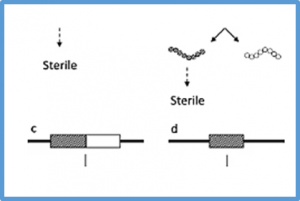
Cytoplasmic male sterility (CMS) is an increasingly important issue within the context of hybrid seed production. Its genetic framework is simple: S-cytoplasm for male sterility induction and dominant allele of the restorer-of-fertility gene (Rf) for suppression of S. However, breeders sometimes encounter a phenotype of CMS plants too complex to be explained via this simple model. The molecular basis of CMS provides clue to the mechanisms that underlie the expression of CMS.

Climate Action took center stage during the first day of the UN Food Systems Summit+2 Stocktaking Moment (UNFSS+2) during an Italy-led high-level event dedicated to exploring solutions to build climate-resilient agrifood systems and reduce their carbon footprint to meet the growing global demand for food, while protecting the environment. The session held at the headquarters of the Food and Agriculture Organization of the United Nations (FAO), was opened by Antonio Tajani,
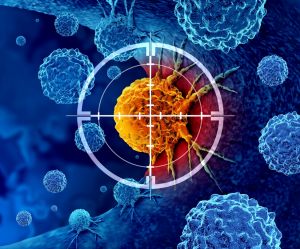
Researchers from various universities in Iraq analyzed the different benefits and challenges of using CRISPR-Cas to target miRNA in Cancer. They also offered advanced strategies that can be used to overcome potential issues. CRISPR-Cas can be used to insert permanent mutations in the genome that can be transferred to the next generation of cells.
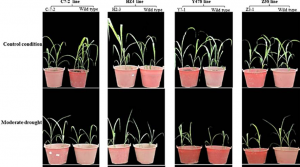
The genes enconding proteins containing plasma membrane proteolipid 3 (PMP3) domain are responsive to abiotic stresses, but their functions in maize drought tolerance remain largely unknown. In this study, the transgenic maize lines overexpressing maize ZmPMP3g gene were featured by enhanced drought tolerance; increases in total root length, activities of superoxide dismutase and catalase, and leaf water content; and decreases in leaf water potential, levels of O2-·and H2O2, and malondialdehyde content under drought.

Researchers at North Carolina State University led by NC State CRISPR pioneer Rodolphe Barrangou and tree geneticist Jack Wang have developed poplar trees with reduced levels of lignin using a CRISPR gene editing system. The research team used predictive modeling to lower lignin levels, increase the carbohydrate to lignin (C/L) ratio, and increase the ratio of two important lignin building blocks – syringyl to guaiacyl (S/G) – in poplar trees.