


News & Events
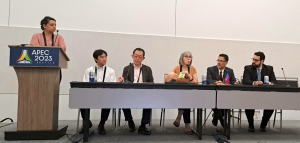
Over 120 representatives of Asia-Pacific Economic Cooperation (APEC) member economies convened at Seattle Convention Center to identify regulatory and policy solutions for science-based and risk-appropriate oversight of agricultural biotechnologies. The event titled Workshop on Reducing Redundancies and Facilitating Efficiencies was organized by the US Department of Agriculture (USDA) and Agriculture Food Systems Institute (AFSI). The workshop is part of the APEC 2023 High Level Policy Dialogue on Agricultural Biotechnology (HLPDAB) activities.
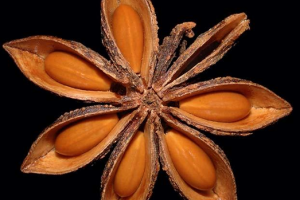
Star anise (Illicium verum) is an important economic and medical plant widely cultivated in Guangxi province, China. Its fruit can be used as spice and medicine (Wang et al. 2011). In recent years, anthracnose led to a serious decline in the production of star anise in Guangxi. In 2021, a survey conducted in CenwangLaoshan Reserve of Guangxi (24°21'N; 106°27'E) showed that the 2500 ha planting area had disease incidence greater than 80%.

A report published by Allied Market Research shows that the GMO Testing Market may reach $6.2 billion by 2031, with a 4.8% compound annual growth rate (CAGR) from 2022 to 2031. The report pointed out that North America was the highest contributor to revenue. The GMO testing market was analyzed based on different factors, such as region, technology, crop type, and traits. The region was categorized into Europe, North America, Asia-Pacific, and LAMEA.

Researchers will develop in vivo therapies for sickle cell disease and other genomic diseases. The project team will use Scribe Therapeutics' CRISPR XE technologies and Sanofi's non-viral delivery technologies. In vivo genome editing involves directly modifying genes inside the body, and it provides numerous advantages compared to existing treatment methods and late-stage investigational therapies. One of the benefits of the in vivo approach is that it may be used to streamline sickle cell disease's treatment process.
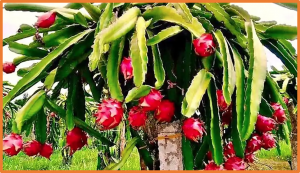
Pitahaya (Hylocereus spp.), also called dragon fruit, is a cultivated cactus that is native to Mexico as well as Central and South America. In October 2021, anthracnose symptoms were observed on fruit of pitahaya (Hylocereus costaricensis) in a commercial orchard located in Culiacán, Sinaloa, Mexico. Lesions on fruit were circular, sunken, dark brown and with halo. To fungal isolation, small pieces from adjacent tissue to lesions of symptomatic fruits were surface disinfested by immersion in a 2% sodium hypochlorite solution for 2 min

In a new ISAAA publication titled Points to Ponder on Gene Editing: Can We Edit the Future of Food?, a group of experts from around the world discuss the potential impacts of gene editing in the context of food security. The publication begins by outlining the challenges that the global food system faces. The world's population is expected to reach 9.7 billion by 2050, and demand for food is expected to increase by 50%. At the same time, climate change is making it more difficult to produce food in many parts of the world.
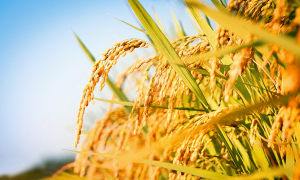
A review article in the journal Foods highlights the potential of genetically engineered rice to improve nutrition and reduce malnutrition. The article discusses how genetic engineering can be used to increase the nutritional value of rice, improve grain size and yield, and generate bioactive components with potential health benefits. One of the promising areas of research is the identification of quantitative trait loci (QTLs) involved in grain weight and nutritional quality.
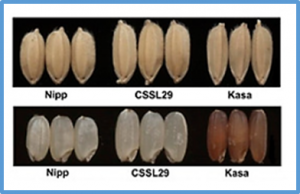
While nearly one in nine people in the world deals with hunger, one in eight has obesity, and all face the threat of climate change. The production of rice, an important cereal crop and staple food for most of the world’s population, faces challenges due to climate change, the increasing global population, and the simultaneous prevalence of hunger and obesity worldwide. These issues could be addressed at least in part by genetically modified rice. Genetic engineering has greatly developed over the century.

A two-day training workshop attended by 30 students from seven organizations of five state universities was conducted by ISAAA Inc. in partnership with the Department of Agriculture-Philippine Agriculture and Fisheries Biotechnology Program to encourage members of the youth to engage in biotech discourses and potentially become social media influencers.

The Netherlands Commission on Genetic Modification (COGEM) released the advice for the renewal of the authorization for the import and processing of genetically modified (GM) maize MON89034 x 1507 x NK603 which was previously authorized in 2013 and valid for a period of 10 years. The authorization holders filed an application for renewal and submitted monitoring reports, updated bioinformatic analyses, and a systematic literature search. The COGEM advice has the following findings on the stacked herbicide tolerant and insect resistant GM maize:
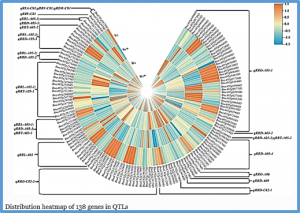
Aluminum (Al) toxicity has become one of the important abiotic stress factors in areas with acid soil, which hinders the absorption of water and nutrients by roots, and consequently retards the growth of crops. A deeper understanding of the stress-response mechanism of Brassica napus may allow us to identify the tolerance gene(s) and use this information in breeding-resistant crop varieties. In this study, a population of 138 recombinant inbred lines (RILs) was subjected to aluminum stress,
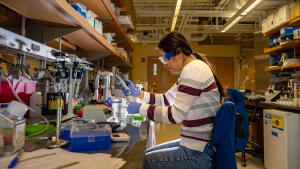
University of Chicago scientists led by chemist Weixin Tang have created new CRISPR systems that are smaller and can easily slip into cells yet retain their potency. Tang's team hopes that these systems could someday pave the way toward improved therapies for diseases such as sickle cell disease, Huntington's disease, cystic fibrosis, and muscular dystrophy, among many others.