


News & Events
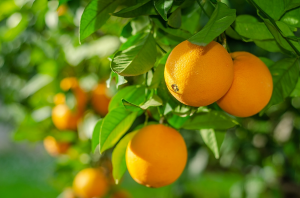
A group of scientists from the University of Florida and Integrated DNA Technologies, Inc. were able to generate transgene-free canker-resistant citrus lines using CRISPR-Cas12a/crRNA ribonucleoprotein technology. The study is expected to have significant beneficial impact on the improvement of elite citrus cultivars. The scientists conducted transformation of embryogenic protoplasts with Cas12a/crRNA ribonucleoprotein to edit canker
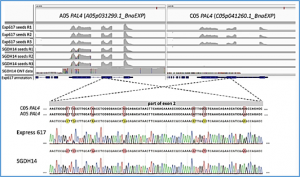
Oilseed rape is a major oil crop and a valuable protein source for animal and human nutrition. Lignin is a non-digestible, major component of the seed coat with negative effect on sensory quality, bioavailability and usage of oilseed rape’s protein. Hence, seed lignin reduction is of economic and nutritional importance. In this study, the major QTL for reduced lignin content found on chromosome C05 in the DH population SGDH14 x Express 617 was further examined.
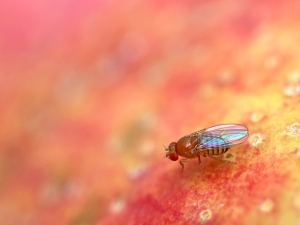
University of Cambridge researchers were able to identify the genes responsible for parthenogenesis, or “virgin birth.” They were able to confirm the genes' function and, for the first time, engineered virgin birth to happen in an animal that is known to sexually reproduce. Initially, the researchers sequenced two strains of Drosophila mercatorum. One of the strains needed males to reproduce, while the other was known to undergo parthenogenesis.

Researchers from the University of Pennsylvania and Children's Hospital of Philadelphia (CHOP) have developed an in vivo gene editing model that can be used to treat blood disorders. This method may expand access and decrease the cost of gene therapies. During in vivo gene editing, the gene editing tools are delivered directly to the patient's body, which allows the Hematopoietic stem cells (HSCs) to be edited and corrected easily without using conditioning regimens.
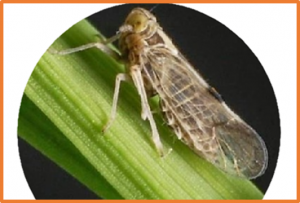
The brown planthopper (BPH) is the most serious pest causing yield losses in rice. MicroRNAs (miRNAs) are emerging as key modulators of plant-pest interactions. In the study, we found that osa-miR162a is induced in response to BPH attack in the seedling stage and tunes rice resistance to the BPH via the α-linolenic acid metabolism pathway as indicated by gas chromatography/liquid chromatography-mass spectrometry analysis. Overexpression of osa-miR162a inhibited the development and growth of the BPH and simultaneously reduced the release of 3-hexenal and 3-hexen-1-ol to block host recognition in the BPH.

A group of scientists from different institutions has discovered a protein's step-by-step activation process. The results of this study can be used for future therapeutic purposes. Researchers from Ohio State University, California Institute of Technology, and Case Western Reserve University studied the protein SPARTA, which is a short prokaryotic Argonaute (also known as Ago).

Juice is the world's third-largest drink, but it lacks low-sugar alternatives. That's why researchers from IncreBio decided to produce a Near Zero Sugar Juice that has a sugar content that is lower than those found in plain milk. To achieve this, the company developed and used a proprietary fermentation platform that managed the path of sugar-reducing microbes within a bioreactor to reduce the natural sugar in the juice.
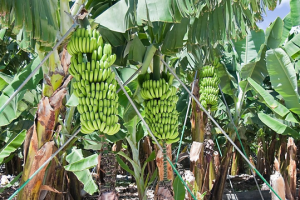
The cultivation of bananas and plantains (Musa spp.) holds significant global economic importance, but faces numerous challenges, which may include diverse abiotic and biotic factors such as drought and various diseases caused by fungi, viruses, and bacteria. The genetic and asexual nature of cultivated banana cultivars makes them unattractive for improvement via traditional breeding. To overcome these constraints, modern biotechnological approaches like genetic modification and genome editing have become essential for banana improvement.
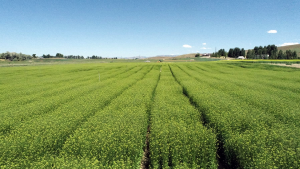
Yield10 Bioscience, Inc. has announced that they have filed a request for a Regulatory Status Review (RSR) with the U.S. Department of Agriculture Animal and Plant Health Inspection Service (USDA-APHIS) Biotechnology Regulatory Services (BRS) under the SECURE Rule for proprietary elite Camelina varieties containing genes that allow the plant to produce the eicosapentaenoic acid (EPA) component of omega-3 oil.
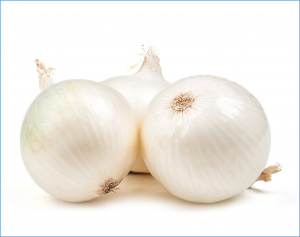
Scientists from the Directorate of Onion and Garlic Research in India and Iowa State University are reporting for the first time about the successful application of CRISPR-Cas9 to alter an onion trait. Their work provides supporting evidence for further basic and applied molecular and breeding research work on onions. Two exons of gene coding were targeted for Phytoene desaturase (AcPDS) in onion. Constructs carrying sgRNA were developed using 2-month old embryogenic calli and Agrobacterium-mediated transformation.
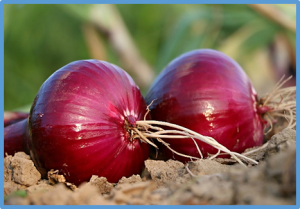
Clustered regularly interspaced short palindromic repeats (CRISPR)/Cas9 is a precise genome-editing tool used to introduce genetic modifications in a wide range of crop species. Thus far, there is no report of CRISPR/Cas9mediated genome editing in onion (Allium cepa L.). In the present study, we targeted two exons of the gene coding for Phytoene desaturase (AcPDS) in onion cv. Bhima Super.

Andi M. Saleh, Coordinator of the Assessment and Variety Dissemination Subgroup of the Seed Directorate of the Directorate General of Food Crops of the Ministry of Agriculture said that the government encourages the development of new varieties both through hybrid technology and biotechnology. "Seeds are the main component that significantly contributes dominantly to increasing plant production and productivity," said Saleh.