


News & Events
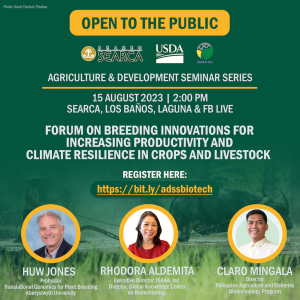
The hybrid event is the fourth and last part of the 2023 Biotech Outreach Program, a series of knowledge-sharing and learning activities packages that focuses on different timely and relevant topics on biotech innovations. The series serves as a platform to discuss the latest updates, emerging issues, and concerns for an improved understanding and acceptance of biotechnology in the country.
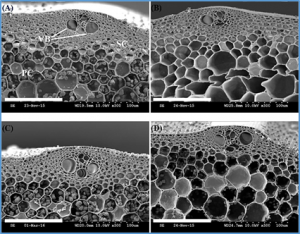
Cell wall is essential for plant upright growth, biomass saccharification, and stress resistance. Although cell wall modification is suggested as an effective means to increase biomass saccharification, it is a challenge to maintain normal plant growth with improved mechanical strength and stress resistance. Here, we reported two independent fragile culm mutants, fc19–1 and fc19–2, resulting from novel mutations of OsIRX10, produced by the CRISPR/Cas9 system
International institutions need to take a more integrated approach to solving the world’s problems – and need more funding – write Claudia Sadoff, executive managing director of CGIAR, and Lindiwe Majele Sibanda, chair of the group’s System Board. French President Emmanuel Macron’s recent Summit for a New Global Financing Pact delivered a clear message: international institutions, from finance to research, are in urgent need of reform if they are to be fit-for-purpose in addressing the challenges the world faces today.

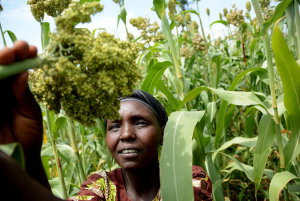
In the heartland of Basona Werana District in Ethiopia, a remarkable agricultural transformation is taking place, thanks to a groundbreaking collaboration between the International Crops Research Institute for the Semi-Arid Tropics (ICRISAT) and the Ministry of Agriculture (MoA) of Ethiopia through the support of the Excellence in Agronomy (EIA) Initiative.
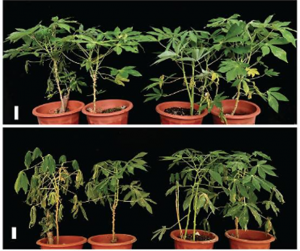
The reactive oxygen species (ROS) signal regulates stress-induced leaf abscission in cassava. The relationship between the function of the cassava transcription factor bHLH gene and low temperature-induced leaf abscission is still unclear. Here, we report that MebHLH18, a transcription factor, involved in regulating low temperature-induced leaf abscission in cassava. The expression of the MebHLH18 gene was significantly related to low temperature-induced leaf abscission and POD level.
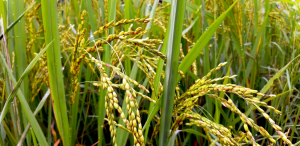
A study published in the Journal of Hazardous Materials reported that CRISPR-Cas9 gene editing can be used to improve rice lodging resistance. The study, conducted by researchers at Shenyang Agricultural University in China, found that two independent mutants of rice, fc19-1 and fc19-2, exhibited increased lodging resistance after being edited with CRISPR-Cas9.

Gene editing is a powerful tool that allows scientists to change the DNA of living organisms. This can be used to create organisms with new or improved traits, or to fix genetic defects. Researchers from Russia, South Africa, and China released a review on the advantages of CRISPR-Cas9 in comparison to other gene editing tools, such as zinc finger proteins (ZNF) and transcription activator-like effector nucleases (TALENs)

Chitin soil amendment is known to improve soil quality, plant growth and stress resilience, but the underlying mechanisms are not well understood. In this study, we monitored chitin's effect on lettuce physiology every two weeks through an eight-week growth period, analyzed the early transcriptional reprogramming and related metabolomic changes of lettuce, in response to crab chitin treatment in peat-based potting soil. In commercial growth conditions
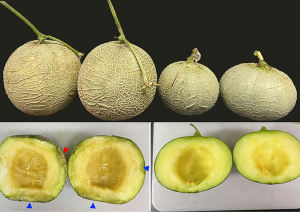
Researchers from the University of Tsukuba in Japan used CRISPR-Cas9 to modify the ethylene synthesis pathway in Japanese luxury melon (Cucumis melo var. reticulatus "Harukei-3") to increase its shelf life. The gaseous plant hormone ethylene has been long known to promote fruit ripening and play a certain role in the shelf-life of fruits. Extending the shelf-life of fruits decreases food loss and waste and contributes to global food security.

Agriculture Ministers from the European Union (EU) have met to discuss for the first time the European Commission's (EC) recent proposal on new genomic techniques (NGTs). The discussion saw many EU agriculture ministers welcome the Commission's proposed loosening of gene editing rules as a building block for sustainable farming, while others voiced concerns over potential risks.

The chrysanthemum can be consumed in various forms, representing the "integration of medicine and food". Quantitative analysis of multi-pesticide residues in chrysanthemum matrices is therefore crucial for both product-safety assurance and consumer-risk evaluation. In the present study, a simple and effective method was developed for simultaneously detecting 15 pesticides frequently used in chrysanthemum cultivation in three matrices, including fresh flowers, dry chrysanthemum tea, and infusions
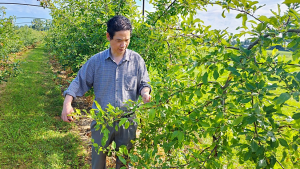
Cornell University scientists identified a rare gene in apples that can improve orchard fruit production. Combined with gene editing tools, the MdLAYZY1A gene can potentially increase yield and reduce labor costs for apple growers. MdLAYZY1A gene largely controls the “weeping” growth in apples, which means that the branches grow downwards.