


News & Events
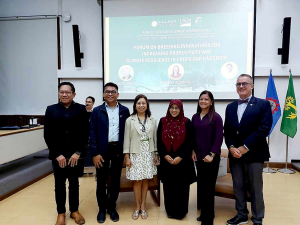
ISAAA Inc. the Southeast Asian Regional Center for Graduate Study and Research in Agriculture (SEARCA), and the United States Department of Agriculture (USDA) concluded the 2023 Biotech Outreach Program in the Philippines on August 15, 2023 at Los Baños, Laguna. More than 230 onsite and online participants joined the event, mostly students and young scientists of the academic community around the Philippines.
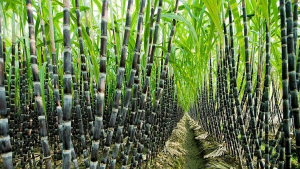
Sugarcane is an important sugar and bioenergy source and a significant component of the economy in various countries in arid and semiarid. It requires more synthetic fertilizers and fungicides during growth and development. However, the excess use of synthetic fertilizers and fungicides causes environmental pollution and affects cane quality and productivity. Plant growth-promoting bacteria (PGPB) indirectly or directly promote plant growth in various ways. In this study, 22 PGPB strains were isolated from the roots of the sugarcane variety GT42.
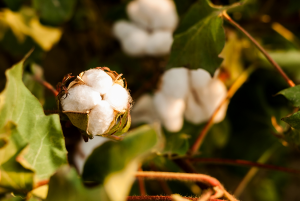
Researchers from the International Rice Research Institute and Oklahoma State University reported a gene (B5) that could provide cotton plants with broad-spectrum resistance to bacterial blight. Their findings are published in Phytopathology. Bacterial blight is a destructive disease that impacts cotton plants. A few effective ways to combat bacterial blight has been available, and most farmers rely on pesticides. This led the farmers to put a spotlight on B5 gene, which was first identified in the 1950s but since then received little attention.
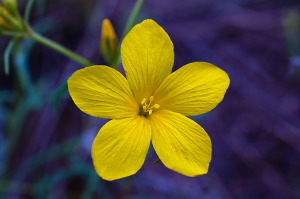
The first field trial test of stacked herbicide tolerant (HT) Camelina revealed favorable findings, according to agricultural bioscience company Yield10 Bioscience, Inc. Yield10's proprietary stacked HT Camelina varieties showed tolerance to an over-the-top herbicide for weed control and to Group 2 herbicide soil residues, a key advancement for the biofuel feedstock market. Yield10 is executing a program to develop and commercialize spring and winter stacked HT Camelina varieties to achieve large acreage adoption of the crop in North America.
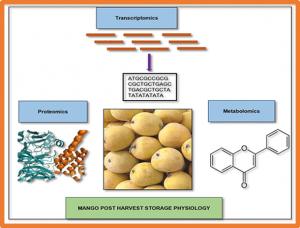
Mango (Mangifera indica L.) is a nutritionally important fruit of high nutritive value, delicious in taste with an attractive aroma. Due to their antioxidant and therapeutic potential, mango fruits are receiving special attention in biochemical and pharmacognosy-based studies. Fruit quality determines consumer's acceptance, and hence, understanding the physiological, biochemical, and molecular basis of fruit development, maturity, ripening, and storage is essential.
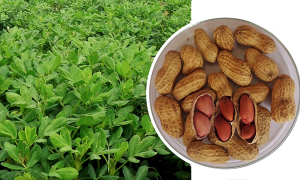
A superior groundnut variety, developed by the International Crops Research Institute for the Semi-Arid Tropics (ICRISAT) and the Bangladesh Agricultural Research Institute (BARI), is now available in the country for cultivation for the upcoming post-rainy season, bolstering economic opportunities for farmers. This improved variety is more resistant to diseases and has been designed to meet the needs of food processing industries.
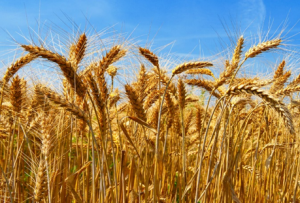
In the heartland of Basona Werana District in Ethiopia, a remarkable agricultural transformation is taking place, thanks to a groundbreaking collaboration between the International Crops Research Institute for the Semi-Arid Tropics (ICRISAT) and the Ministry of Agriculture (MoA) of Ethiopia through the support of the Excellence in Agronomy (EIA) Initiative.
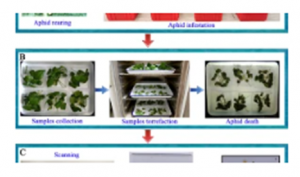
Aphis gossypii is an economically important sap-feeding pest and is widely distributed in the world’s cotton-producing regions. Identification of cotton genotypes and developing cultivars with improved A. gossypii resistance (AGR) is essential and desirable for sustainable agriculture. In the present study, A. gossypii was offered no choice but to propagate on 200 Gossypium hirsutum accessions.
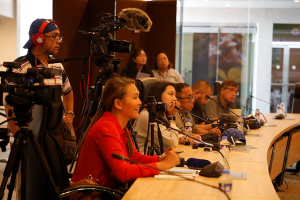
An assembly of cross-continental experts in rice science and technology is set to lead the programs and discussions in the upcoming International Rice Congress 2023 (IRC 2023). These resource persons representing the academia, private companies, and research institutions in countries across Asia, Africa, as well as the United States are setting the tone at this year’s IRC to be held at the Philippine International Convention Center (PICC) in Manila, Philippines on 16-19 October.

"As Interim Director General, Dr. Kohli's primary focus will be ensuring stability and continuity in IRRI's mission,” said Cao Duc Phat, Chair of the IRRI Board of Trustees. ”Dr. Kohli will collaborate with the Board of Trustees Leadership Transition Committee, the Executive Team, The Research Leadership Team, IRRI staff, CGIAR, and our global partners to uphold the Institute's commitment to excellence in rice systems research for development and impact.”
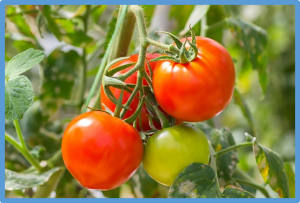
WD40 proteins are a superfamily of regulatory proteins widely found in eukaryotes that play an important role in regulating plant growth and development. However, the systematic identification and characterization of WD40 proteins in tomato (Solanum lycopersicum L.) have not been reported. In the present study, we identified 207 WD40 genes in the tomatoes genome and analyzed their chromosomal location, gene structure and evolutionary relationships.
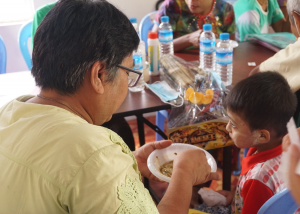
Low- and middle-income countries, such as Myanmar and Zambia, face a double burden of malnutrition, with their populations suffering from both undernutrition and overnutrition, resulting in health and developmental issues. To help alleviate malnutrition, WorldFish initiated the use of dried fish powder to enhance the nutrient composition of local food products consumed by young children and women of reproductive age through the Fish for Livelihoods Activity, funded by the United States Agency for International Development (USAID).