


News & Events
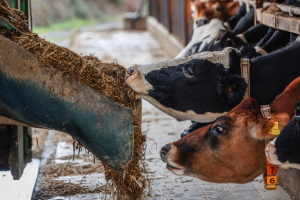
International food commodity prices declined in August, led by staples other than rice and sugar, the Food and Agriculture Organization of the United Nations (FAO) reported today. The FAO Food Price Index, which tracks monthly changes in the international prices of globally-traded food commodities, averaged 121.4 points in August, down 2.1 percent from July and as much as 24 percent below its March 2022 peak.

The revisions stated that the USDA Animal and Plant Health Inspection Service's (APHIS) Strategic Plan for 2023-2027 indicated that “one of its objectives is to ensure the safe development of agricultural biotechnology products using a science-based regulatory framework, including efficient permit review for genetically engineered (GE) organisms, clear communication of regulations to stakeholders, coordination with other agencies, and harmonization of regulatory oversight for biotechnology products.”
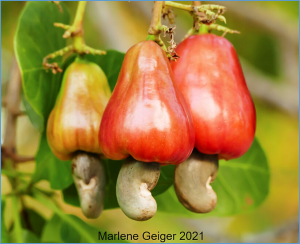
The cashew is an edible tree nut crop having a wide range of food and industrial applications. Despite great economic importance, the genome-wide characterization of microsatellites [simple sequence repeats (SSRs)] in cashew is lacking. In this study, we carried out the first comprehensive genome-wide microsatellites/SSRs characterization in cashew and developed polymorphic markers and a web-based microsatellite database.

As concerns for climate change and the rising global population increase, providing European consumers with safe, affordable, and high-quality food has become crucial. According to Czech Agriculture Minister Marek Výborný, the answer to these challenges might come from advanced scientific techniques such as gene editing.
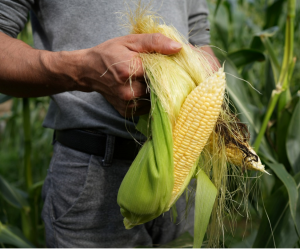
Researchers gene-edited a gibberellin (GA) biosynthesis enzyme to boost plant height and drought resistance in maize. This serves as a novel technique for drought resistance and plant architecture improvement in maize. Drought stress can severely suppress crop yield performance. However, the exchange of yield performance and drought tolerance is extremely difficult in crop breeding. Some phytohormones such as GA have a specific role in plant drought response, as well as plant growth and development.
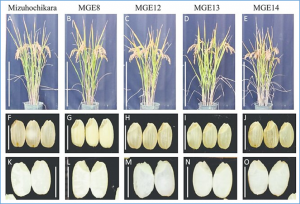
An in vitro Ca2+/CaM assay showed that the C-terminal region of putative GAD4 has the ability to bind to Ca2+/CaM. CRISPR/Cas9-mediated genome editing was performed to trim the coding region of CaMBD from the OsGAD4 gene. Rice calli infected with Agrobacterium carrying an all-in-one vector harboring guide RNAs and CRISPR/Cas9 was used to regenerate rice plants. We produced 27 independent transgenic lines (T0) through genome editing.
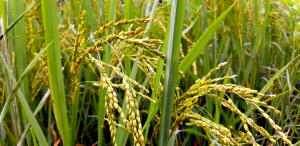
Researchers from Shimane University in Japan developed GABA-fortified rice plants by editing the OsGAD4 gene. The findings are indicated in the preprint published in Research Square. GABA, or gamma-aminobutyric acid, is a non-protein amino acid important for many biological processes, including regulating plant stress responses. GAD enzymes are responsible for producing GABA from glutamate

Researchers led by Dr. Wang Guodong from the Institute of Genetics and Developmental Biology (IGDB) of the Chinese Academy of Sciences (CAS) have discovered the functions of type-A soyasaponin acetylation in soybean seed germination. Soyasaponins, oleanane-type triterpenoid saponins, are abundant in soybean seeds.
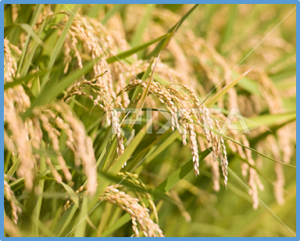
High salinity is a major stress factor affecting the quality and productivity of rice (Oryza sativa L.). Although numerous salt tolerance-related genes have been identified in rice, their molecular mechanisms remain unknown. Here, we report that OsJRL40, a jacalin-related lectin gene, confers remarkable salt tolerance in rice. The loss of function of OsJRL40 increased sensitivity to salt stress in rice, whereas its overexpression enhanced salt tolerance at the seedling stage and during reproductive growth.
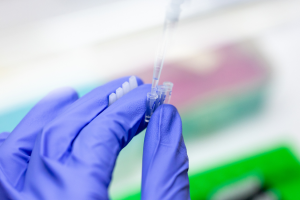
Researchers from the Duke University Medical Center developed a blood-based diagnostic test to assist early detection of Parkinson's Disease. The researchers utilized the polymerase chain reaction (PCR) technology in detecting levels of DNA damage in mitochondria. Parkinson's Disease is a neurodegenerative disorder that affects millions of people worldwide, causing slow movements, tremors, and balance problems.

A new study led by molecular biologist Steven Van Doren, a scientist at the University of Missouri College of Agriculture, Food and Natural Resources, has uncovered the unexpected actions of a key player in how the SARS-CoV-2 coronavirus infects humans—a discovery that could guide further vaccine development. Van Doren and his team studied the fusion peptide, an important feature of the coronavirus spike protein that serves to bind the virus with the human cell, an essential step in the course of infection.
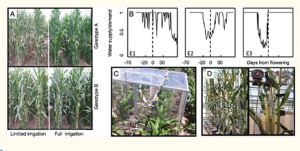
We review approaches to maize breeding for improved drought tolerance during flowering and grain filling in the central and western US corn belt and place our findings in the context of results from public breeding. Here we show that after two decades of dedicated breeding efforts, the rate of crop improvement under drought increased from 6.2 g m-2 year-1 to 7.5 g m-2 year-1, closing the genetic gain gap with respect to the 8.6 g m-2 year-1 observed under water-sufficient conditions.