


News & Events

Biotech Company Pureture launched a plant-based casein that can be used for cheeses and other dairy products. This development will help reshape the alternative dairy industry.Casein is a crucial part of animal-based dairy products. This protein produces a stable emulsion to prevent the separation of water and fat, which provides milk with a smooth texture. Due to the lack of casein, the majority of vegan cheeses lack certain aspects, such as stretchiness and meltability.

The commercial cultivation of Ghana's first locally developed genetically modified (GM) cowpea, Bt Songotra, is supported by nearly 50 scientists and regulators from different institutions during the workshop organized by the Open Forum on Agricultural Biotechnology (OFAB) in Accra, Ghana. Bt Songotra cowpea is part of the ongoing efforts to develop the second generation of pod borer resistance (PBR) cowpeas which aims to have a positive impact on food security and livelihood of small-scale farmers in Sub-Saharan Africa.
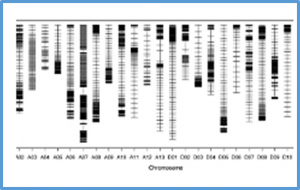
The breeding and use of short-season cotton have significant values in addressing the question of occupying farmlands with either cotton or cereals. However, the fiber yields of short-season cotton varieties are significantly lower than those of middle- and late-maturing varieties. How to effectively improve the fiber yield of short-season cotton has become a focus of cotton research.
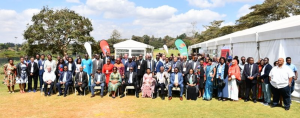
The fight against misinformation on agricultural bio-innovations in Africa has received a major boost following the launch of the Africa Science Dialogue hub, an inclusive and interactive platform that will serve as a one-stop source of verifiable and credible information about trends in advanced innovations on agriculture, health, and the environment. The launch formed one of the key outcomes from the 5th edition of the Africa Biennial Biosciences Communication (ABBC) symposium held in Nairobi, Kenya, August 22-24, 2023

The Netherlands Commission on Genetic Modification (COGEM) released the evaluation of the stacked genetically modified (GM) cotton T304-40 x GHB119 x COT102 for food and feed use, as submitted by Bayer CropScience. COGEM has previously advised positively on the import and processing of all three GM parental lines of this stacked GM event, as well as on the import and processing of several stacked events of parental lines under assessment, including T304-40 x GHB119.

Male sterility enables reduced cost and high seed purity during hybrid seed production. However, progress toward its commercial application has been slow in tomato due to the disadvantages of most natural male-sterile mutants. Here, we developed a practical method for efficient tomato hybrid seed production using a male-sterile system with visible marker, which was rapidly generated by CRISPR/Cas9-mediated gene editing

The Philippine Bureau of Plant Industry issued a Biosafety Permit for the Commercial Propagation of Bt cotton (GFM cry1A) developed by the Philippine Fiber Industry Development Authority (PhilFIDA). The permit was granted to PhilFIDA after completion of the biosafety evaluation and the requirements for commercial propagation based on the DOST-DA-DENR-DOH-DILG Joint Department Circular (JDC) No. 1, Series of 2021. BPI issued the permit on August 24, 2023, and announced the approval on their website.

In the absence of genetically engineered crops, the world would have needed 3.4 percent more cropland to achieve the global agricultural output in 2019. This finding is according to study published in the American Economic Review: Insights. Experts from the University of Copenhagen conducted a study to estimate the impact of genetically engineered crops on yields per country, harvested area, and trade.
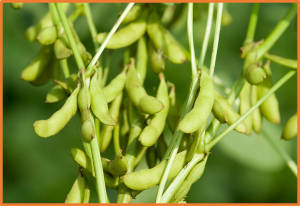
Biotic stress is a critical factor limiting soybean growth and development. Soybean responses to biotic stresses such as insects, nematodes, fungal, bacterial, and viral pathogens are governed by complex regulatory and defense mechanisms. Next-generation sequencing has availed research techniques and strategies in genomics and post-genomics.

Scientists from Hiroshima University presented an updated overview of TALEN construction systems as part of the Methods in Molecular Biology book series. TALENs, short for transcription activator-like effector nucleases, are a type of gene editing tool that can be used to make precise changes to DNA. They are made up of two parts: a DNA-binding domain and a nuclease domain.

Researchers from Kyoto University used gene editing to restore dystrophin protein function in stem cells that originated from Duchenne muscular dystrophy (DMD) patients. This study is a promising approach for the treatment of DMD and other genetic disorders that need extensive deletions.Duchenne muscular dystrophy (DMD) is a muscle degeneration disorder that is caused by mutations that affect the dystrophin gene.
Transcription activator-like effector (TALE) nuclease (TALEN) is the second-generation genome editing tool consisting of TALE protein containing customizable DNA-binding repeats and nuclease domain of FokI enzyme. Each DNA-binding repeat recognizes one base of double-strand DNA, and functional TALEN can be created by a simple modular assembly of these repeats. To easily and efficiently assemble the highly repetitive DNA-binding repeat arrays