


News & Events
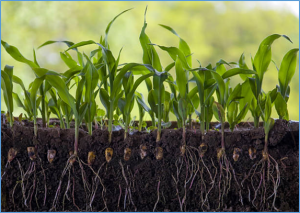
In a significant development for the nation's agricultural and food security sector, President of Pakistan Dr. Arif Alvi has appointed Dr. Kauser Abdulla Malik as the Federal Minister of National Food Security and Research in the Caretaker Cabinet. Honorable President Dr. Alvi made the appointment on the advice of the caretaker prime minister under Article 224 (1a) of the Constitution.
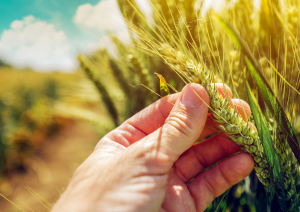
Starch found in wheat, maize, rice, and potatoes is important to the human diet and a key ingredient in many industrial applications from brewing and baking to the production of paper, glue, textiles, and construction materials. New research conducted at the John Innes Centre describes how starch granules form in the seeds of Triticeae crops, unlocking the potential benefits for numerous industries and for human health.
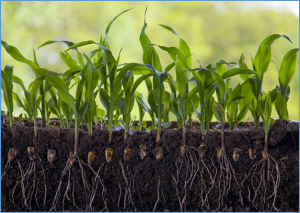
Root system architecture (RSA) is a crucial determinant of water and nutrient uptake efficiency in crops. However, the maize genetic architecture of RSA is still poorly understood due to the challenges in quantifying root traits and the lack of dense molecular markers. Here, an association mapping panel including 356 inbred lines were crossed with a common tester, Zheng58, and the test crosses were phenotyped for 12 RSA traits in three locations. We observed a 1.3 ~ sixfold phenotypic variation for measured RSA in the association panel. The association panel consisted of four subpopulations, non-stiff stalk (NSS) lines, stiff stalk (SS), tropical/subtropical (TST), and mixed.
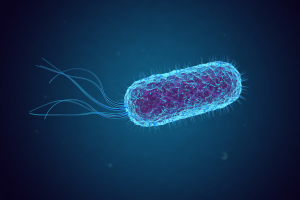
Researchers from École Polytechnique Fédérale de Lausanne (EPFL) in Switzerland successfully engineered Escherichia coli (E. coli) bacteria to generate electricity from wastewater through extracellular electron transfer (EET). In this process, the bioengineered bacteria produces electricity by metabolizing a variety of organic substrates. E. coli is a type of bacteria that is commonly found in the intestines of humans and animals.
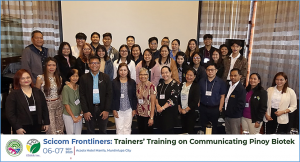
Scicom Frontliners: Trainers' Training on Communicating Pinoy Biotek is a training held from September 6-7, 2023, at Acacia Hotel Manila that aims to train researchers to popularize scientific information to make it accessible to non-technical audiences. Equipping researchers to train others to be better scientist communicators is expected to speed up the transmission of information on biotechnology to the public. The training serves as an initial step towards building a community of practice, composed of biotech experts with excellent communication skills.
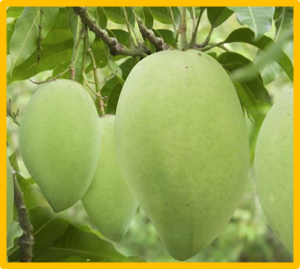
The 'king of fruits' mango (Mangifera indica) is widely cultivated in tropical areas and has been threatened by frequent extreme cold weather. Cyclic nucleotide-gated ion channel (CNGC) genes have an important function in the calcium-mediated development and cold response of plants. However, few CNGC-related studies are reported in mango, regardless of the mango cold stress response. In this study, we identified 43 CNGC genes in mango showing tissue-specific expression patterns.
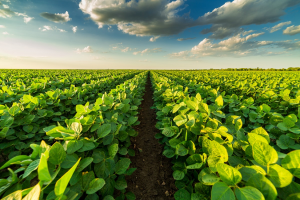
A new study led by Benjamin Z. Houlton, the Ronald P. Lynch Dean of the College of Agriculture and Life Sciences at Cornell University, and Maya Almaraz, associate research scholar at Princeton University shows that state-of-the-art agricultural technology and management can not only reduce greenhouse gas emissions but eliminate it altogether by producing net negative emissions, reducing more greenhouse gas than food systems add.

Aside from the FAQs, the publication also works as an activity booklet targeting high school learners and professionals with non-biotech backgrounds. It aims to spur interest in gene editing and foster entertainment-education among key stakeholders of the technology. The fun activities include a guessing game, word editing, baking banana bread out of gene-edited bananas, spot the difference, and more!
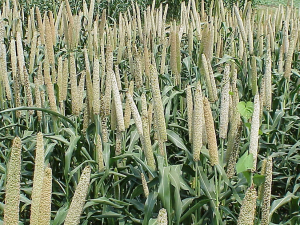
The cultivation of pearl millet in India is experiencing important transformations. Here, we propose a new characterization of the pearl millet production environment using the latest available district level data (1998–2017), principal component analysis, and large-scale crop model simulations. Pearl millet cultivation environment can be divided in up to five environments (TPEs). The eastern part of the country (Rajasthan, Haryana, Uttar Pradesh) emerges as the only region where pearl millet cultivation has grown (+0.4 Kha/year)
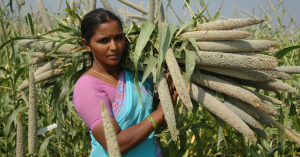
A new study by the International Crops Research Institute for the Semi-Arid Tropics (ICRISAT) and the Indian Council of Agricultural Research - All India Coordinated Research Project on Pearl Millet (ICAR-AICRP) suggests a re-evaluation of how and where pearl millet is grown in India due to changing climate conditions. Pearl millet, an essential cornerstone of India's food security, finds itself at a critical juncture.
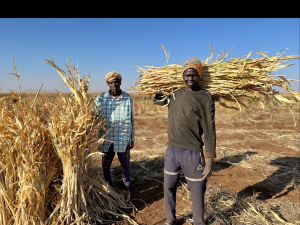
The Food and Agriculture Organization of the United Nations (FAO) has launched an Emergency Livelihood Response Plan to address growing food insecurity in Sudan, providing communities with emergency seeds and livestock treatment kits, as well as veterinary and fisheries support and equipment. The Plan builds on FAO’s work to address extreme vulnerabilities triggered by the ongoing conflict on small-scale farming, herding and fishing communities.
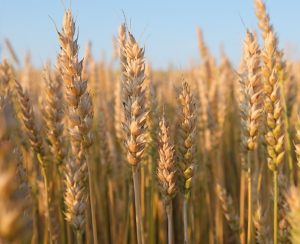
Common bunt in wheat has witnessed a renaissance with the rise of organic agriculture that began in the 1980s. The abandonment of systemic fungicides in organic farming, together with a lack of resistant cultivars, has led to wide-spread problems due to common bunt infections. Knowledge about genetic sources for resistance is still scarce and only few of the known bunt resistance factors are currently used in breeding.