


News & Events

Researchers from North Carolina State University produced normally-grown tobacco plants that do not have pollen and seeds. Their findings may be used for further research in other types of plants. Plants that are unable to produce pollen have a trait called cytoplasmic male sterility (CMS). This trait may be due to aberrations within the mitochondrial genome. The NC State researchers and their colleagues from Precision BioSciences and Elo Life Systems used a unique strategy to test if the tobacco plant could generate the CMS trait.

Tropic and Corteva Agriscience will harness the power of Tropic's proprietary Gene Editing induced Gene Silencing (GEiGS®) technology to develop non-transgenic disease resistance traits in corn and soybeans. The GEiGS® technology uses established genome editing tools such as CRISPR or TALEN to make precise and specific changes to only a few nucleotides within non-coding genes of a host organism.

Although pulses are nutritious foods containing high amounts of protein, fiber and phytochemicals, their consumption and use in the food industry have been limited due to the formation of unappealing flavors/aromas described as beany, green, and grassy. Lipoxygenase (LOX) enzymes are prevalent among pulse seeds, and their activity can lead to the formation of specific volatile organic compounds (VOCs) from certain polyunsaturated fatty acids (PUFAs).
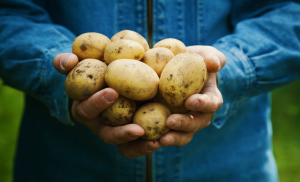
Researchers from RIKEN Center for Sustainable Resource Science and partners used a gene editing tool and Agrobacterium to improve potatoes free from foreign genes. The results of their study is published in Plant Biotechnology. Gene editing is a popular method for improving crops, but it can be challenging to use in crops that are propagated vegetatively. One of the ways to still use gene editing is through a transient expression system in Agrobacterium
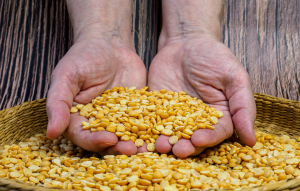
Canadian researchers successfully engineered yellow peas to improve the aroma and fatty acid components through CRISPR-Cas9 mediated editing of the pea PsLOX2 gene. According to the researchers, this is the first study to successfully generate mutant pea lines through the use of CRISPR-Cas9 to improve the flavor traits of yellow peas.
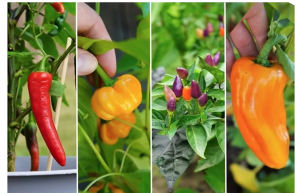
To maximise the benefit of genebank resources, accurate and complete taxonomic assignments are imperative. The rise of genebank genomics allows genetic methods to be used to ensure this, but these need to be largely automated since the number of samples dealt with is too great for efficient manual recategorisation, however no clearly optimal method has yet arisen. A recent landmark genebank genomic study sequenced over 10,000 genebank accessions of peppers (Capsicum spp.),

Training and opportunities to conduct public engagement are vital to encourage more biomedical researchers to participate in science communication. This is according to the study conducted by researchers from Oxford University Clinical Research Unit (OUCRU) in Vietnam, Nepal, and Indonesia. A total of 70 researchers from OUCRU were given an online survey with both open-ended and close-ended questions to gather and analyze their perceptions of public engagement.

Researchers from Rice University and Baylor College of Medicine produced a split gene editing tool that stays inactive when disassembled but activates when the binding molecule is added. This tool has better precision and is easier to control compared to the intact version. Single base-pair mutations or point mutations can cause thousands of diseases in humans.

The plant-specific RWP-RK transcription factor family plays a central role in the regulation of nitrogen response and gametophyte development. However, little information is available regarding the evolutionary relationships and characteristics of the RWP-RK family genes in cassava, an important tropical crop. Herein, 13 RWP-RK proteins identified in cassava were unevenly distributed across 9 of the 18 chromosomes (Chr), and these proteins were divided into two clusters based on their phylogenetic distance

Officials of China's Ministry of Agriculture and Rural Affairs reported an abundant harvest from the multi-locational field trials of genetically engineered maize and soybean conducted in the country. This news was delivered to the public through a press conference. The officials said that the harvest reached 5.6 to 11.6 percent more than the conventional counterparts. They attributed the high yields to the strong tolerance to herbicides and resistance to crop pests such as the fall armyworm.
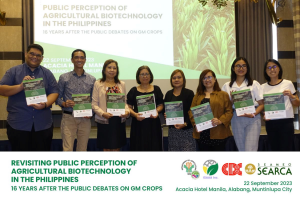
ISAAA Inc. organized the launch of the study titled Public Perception of Agricultural Biotechnology in the Philippines: 16 years after public debates on GM crops in a hybrid event at Acacia Hotel Manila, Alabang, Muntinlupa City on September 22, 2023. This research was conducted in partnership with the Philippine Agriculture and Fisheries Biotechnology Program of the Department of Agriculture (DA Biotech Program),
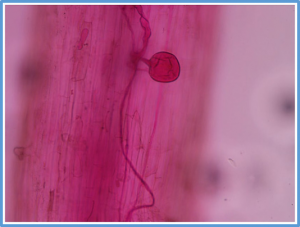
Soybean is an S-loving crop, and continuous cropping might cause soil sulfur shortage. The primary objectives of this study are to determine whether Funneliformis mosseae (F. mosseae) can enhance the content of available S in S-deficient soil and thereby improve the sulfur utilization rate in soybean. The experiment used Heinong 48 (HN48), a soybean variety with a vast planting area in Heilongjiang Province, and F. mosseae was inoculated in the soil of soybean that had been continuously cropped for 0 and 3 years.