


News & Events

The Australian Office of the Gene Technology Regulator (OGTR) invites comments from the public to assess an application from Queensland University of Technology (QUT) for the commercial cultivation of genetically modified (GM) banana plants modified for resistance to the fungal disease Fusarium wilt tropical race 4 (TR4), also known as Panama disease.
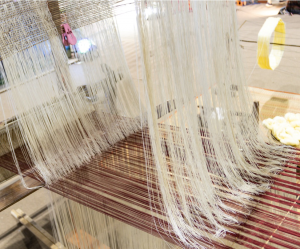
Researchers from China used CRISPR technology on silkworms to produce tough and strong spider silk. The resulting fiber is considered better compared to other commercial synthetic fibers. Commercial synthetic fibers usually have a trade-off between toughness and strength so researchers must create materials that can combine strength with fiber toughness. As a solution to this problem, researchers from Southwest University in Chongqing and Donghua University in Shanghai used CRISPR on silkworms in order for them to spin spider silk.

Inheritance of the presence/absence of seeds in Annona squamosa is mediated by a single fully recessive gene and is caused by a deletion of the INNER NO OUTER (INO) locus. For some fruits, seedless varieties are desirable for consumption and processing. In the sugar apple tree (Annona squamosa L.), the seedless trait in the Thai seedless (Ts) and Brazilian seedless (Bs) accessions was associated with defective ovules and an apparent deletion of the INNER NO OUTER (INO) ovule development gene locus.

Ukraine's Parliament, the Verkhovna Rada, adopted in general the Draft Law No. 5839 "On State Regulation of Genetic Engineering Activities and State Control over the Circulation of Genetically Modified Organisms and Genetically Modified Products to Ensure Food Security." The law will allow Ukrainian legislation to be in line with the European Union's (EU) GMO legislation, as the document is based on the 8 major acts of the EU law on GMOs

Researchers and engineers from an Idaho-based startup biotech company, Light Bio, successfully engineered petunia, a common ornamental plant, to give a bright green color during nighttime. Light Bio plans to start shipping the glow-in-the-dark genetically modified plants in 2024 after receiving permission from the U.S. Department of Agriculture earlier this month.

Soybean Cyst Nematode (SCN), Heterodera glycines Ichinohe, is the most important pathogen of soybean in the Mid-Atlantic region. In recent decades, a decline in the effectiveness of genetic resistance has been observed and additional management approaches are needed. Seed treatments are of rising interest, but no local data on product response exists for the region. In 2020-2021, two experiments were conducted to observe the effects of chemical and biological seed treatment options

The World Food Prize Foundation has announced the selection of Dr. Swati Nayak as the 2023 Recipient of the Norman E. Borlaug Award for Field Research and Application, Endowed by The Rockefeller Foundation. Nayak is recognized for her innovative approach to engaging farmers in demand-driven rice seed systems, from testing and deployment to access and adoption of climate-resilient and nutritious rice varieties.

Researchers from the Biotechnology Research Institute in the Chinese Academy of Agricultural Sciences have successfully developed a new bio-breeding resource for glyphosate-resistant (GR) maize by introducing the microbial genes GAT and GR79-EPSPS. Herbicide tolerant crops, including glyphosate tolerant crops, offer an innovative solution that can help farmers in weed control management. Million hectares of farmlands are affected by weed infestation yearly all over the world. If left untreated, weed infestation can result in a significant decrease in crop production and yield.
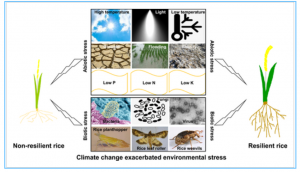
A key to achieve the goals put forward in the UN's 2030 Agenda for Sustainable Development, it will need transformative change to our agrifood systems. We must mount to the global challenge to achieve food security in a sustainable manner in the context of climate change, population growth, urbanization, and depletion of natural resources. Rice is one of the major staple cereal crops that has contributed, is contributing, and will still contribute to the global food security.
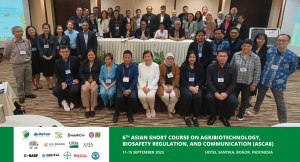
ISAAA Inc. and partner organizations have successfully conducted the 6th Asian Short Course on Agribiotechnology, Biosafety Regulation, and Communication (ASCA6) at Hotel Santika, Bogor, Indonesia on September 11-15, 2023. ASCA is a capacity-building initiative by ISAAA Inc. and the Malaysian Biotechnology Information Centre (MABIC) that was started in 2018 to create a platform for Asian scientists and regulators to be competent in the regulations and policies related to agricultural biotechnology (agbiotech).

The Kenyan media has been hailed as a key driver of science and innovations and an enabler of agricultural transformations in the country. Speaking during a media awards gala held in Nairobi on September 15, 2023, science and agricultural stakeholders heaped praises on the media for promoting public understanding and acceptance of agricultural biotechnology. The gala was organized by the Kenya Chapter of the Open Forum on Agricultural Biotechnology in Africa (OFAB) to celebrate exemplary science journalism and recognize excellence in reporting agri-biotechnology.
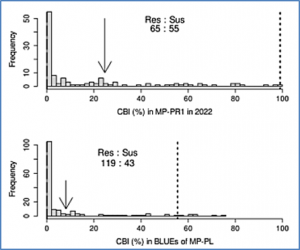
Common bunt in wheat has witnessed a renaissance with the rise of organic agriculture that began in the 1980s. The abandonment of systemic fungicides in organic farming, together with a lack of resistant cultivars, has led to wide-spread problems due to common bunt infections. Knowledge about genetic sources for resistance is still scarce and only few of the known bunt resistance factors are currently used in breeding.