


News & Events

It doesn’t matter where you live. There is no escaping rising food prices. Assuming you can still find physical ones instead of QR code versions, restaurant menus have telltale stickers with handwritten higher numbers. Supermarket shelves are filling up with packaged food that may appear to be roughly the same price, but with less content, a sneaky practice called shrinkflation.

The CGIAR Initiative on Diversification in East and Southern Africa, also known as Ukama Ustawi is thrilled to announce the launch of the Ukama Ustawi Scaling Fund – an event to which members of the press are invited to attend in person and/or virtually on 25 October 2023 from 12:00 to 13:00 (UTC+3) at the ILRI Campus in Nairobi, Kenya. The Scaling Fund, coordinated by the International Livestock Research Institute (ILRI), focuses on supporting innovation scaling to transform agrifood systems in East and Southern Africa (ESA).
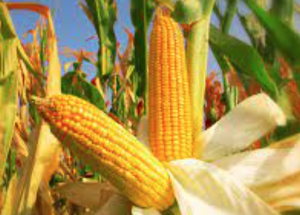
Maize genetic diversity is structured into genetic groups selected and improved relative to each other. This process increases group complementarity and differentiation over time and ensures that the hybrids produced from inter-group crosses exhibit high performances and heterosis. To identify loci involved in hybrid performance and heterotic group complementarity, we introduced an original association study model that disentangles allelic effects from the heterotic group origin of the alleles and compared it with a conventional additive/dominance model.
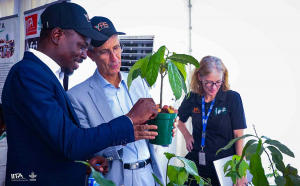
Organized by the International Institute of Tropical Agriculture (IITA), the CGIAR country convener in Nigeria, in its station in the capital city of Nigeria, the event brought together diverse partners working towards scaling innovations for sustainable food systems. The event aimed at creating an avenue for key actors in the food systems sphere to explore areas of alignment and collaboration, and providing an opportunity to showcase and celebrate the contributions of rural women and youth in ensuring the sustainability of food systems.
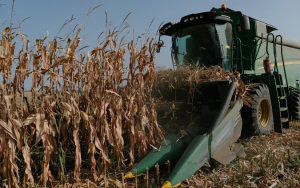
The underlying reason why the war in Ukraine has had such a significant impact on global food security is because the world is precariously dependent on only a handful of staple food crops. Just six crops – rice, wheat, maize (or corn), potato, soybeans, and sugarcane – account for more than 75 per cent of total plant-derived energy intake globally. So, there is no wonder that the conflict between major exporters of wheat and maize has contributed to rising levels of food insecurity
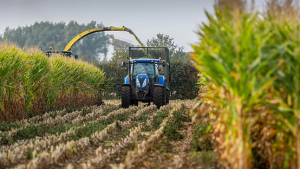
Maize (Zea mays L.) benefits from heterosis in-yield formation and photosynthetic efficiency through optimizing canopy structure and improving leaf photosynthesis. However, the role of canopy structure and photosynthetic capacity in determining heterosis in biomass production and radiation use efficiency has not been separately clarified. We developed a quantitative framework based on a phytomer-based three-dimensional canopy photosynthesis model
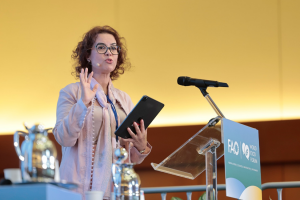
The second edition of the Science and Innovation Forum, a key constituent of the annual flagship World Food Forum, closed here on Friday after three days of discussions and proposals on how technology can help agrifood systems deal with the climate crisis. The forum, which was held in hybrid form at the headquarters of the Food and Agriculture Organization of the United Nations (FAO), attracted hundreds of stakeholders from across the globe.
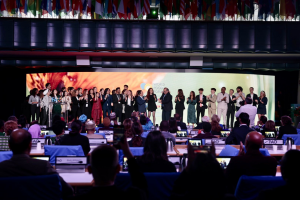
The third annual World Food Forum flagship event hosted by the Food and Agriculture Organization of the United Nations (FAO), has drawn to a successful close, with attendees from across the world celebrating a week of intense discussions, innovative solutions, investments, and commitments. The event, which brought together over 5,000 in-person participants, along with more than 20,000 online viewers, marked a significant step toward transforming global agrifood systems. The discussions focused on the theme “Agrifood systems transformation accelerates climate action”.
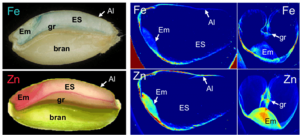
Micronutrient malnutrition is one of the most common public health problems in the world. Biofortification, the most attractive and sustainable solution to surmount malnutrition requires the development of micronutrient enriched new crop cultivars. In this study, two recombinant inbred line (RIL) populations, ZM175/XY60 and ZM175/LX987, were used to identify QTL for grain zinc concentration (GZnC), grain iron concentration (GFeC) and thousand grain weight (TGW)

To bolster a full-spectrum response to the global need to achieve sustainable agrifood systems, the heads of two United Nations agencies announced a new initiative called Atoms4Food to offer Member countries assistance in strategic planning, increasing food production and food safety. Atoms4Food was unveiled on Wednesday at a special event on “Innovation Breakthroughs” held during World Food Forum 2023, hosted by the Food and Agriculture Organization (FAO).
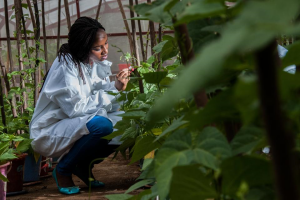
Breeding better beans for AFRICA: When PABRA researchers first met in 1996, they decided to focus on beans because it is a food security crop. But also, because it has enormous potential to add value. Through conventional breeding, iron-enriched beans can beat malnutrition; high-yielding varieties can help farmers boost their yields and profits. From rural mountain hillsides to bustling urban markets, beans are grown, traded and eaten as a staple food crop across Africa. They are a primary source of protein for almost half a billion people daily
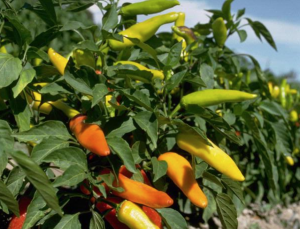
To maximise the benefit of genebank resources, accurate and complete taxonomic assignments are imperative. The rise of genebank genomics allows genetic methods to be used to ensure this, but these need to be largely automated since the number of samples dealt with is too great for efficient manual recategorisation, however no clearly optimal method has yet arisen. A recent landmark genebank genomic study sequenced over 10,000 genebank accessions of peppers (Capsicum spp.)