


News & Events

The potential uses and impacts of gene drive technologies have garnered increasing interest at the international and national levels across the world. As part of the effort to contribute to an informed debate around gene drive technologies, the Outreach Network for Gene Drive Research and the ISAAA are organizing a new Gene Drive Webinar Series. The first webinar titled Genetic Tools For Conservation and Health: What's The Role of Gene Drives?
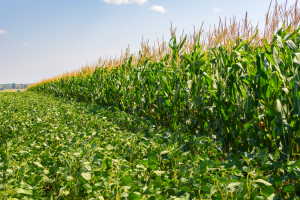
According to the Ministry of Agriculture in China, the country approved 37 genetically modified (GM) corn seeds and 14 GM soybean seed varieties on October 17. China is the top importer of corn and soybeans all over the world. This is a milestone that is significant for the promotion of food security and self-sufficiency in the country. The pilot program for commercial planting of GM corn and soybean crops started in 2021, and the trial was expanded to 20 counties in five provinces in China.
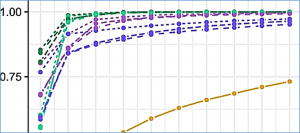
Estimating the breeding value of individuals using genome-wide marker data (genomic prediction) is currently one of the most important drivers of breeding progress in major crops. Recently, phenomic technologies, including remote sensing and aerial hyperspectral imaging of plant canopies, have made it feasible to predict the breeding value of individuals in the absence of genetic marker data.

Scientists from the International Rice Research Institute (IRRI) have identified the genes responsible for low and ultra-low glycemic index (GI) in rice. This discovery will allow the conversion of popular rice varieties into low and ultra-low GI for refined white rice, through conventional breeding methods, keeping high-quality grain without compromising yield.
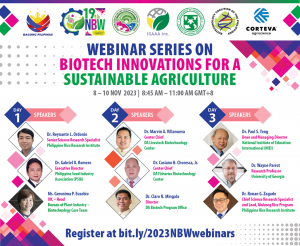
ISAAA Inc., in partnership with the Department of Agriculture Biotechnology Program Office (DA-BPO), Biotechnology Coalition of the Philippines, Inc. (BCP), Bureau of Animal Industry, and Corteva Agriscience, will hold a webinar series on Biotech Innovations for A Sustainable Agriculture from November 8 to 10, 2023, at 8:45 AM (GMT+8). The registration is now open to all interested participants.
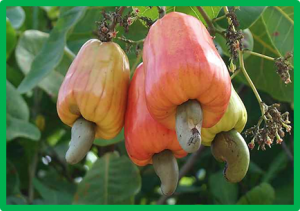
The cashew is an edible tree nut crop having a wide range of food and industrial applications. Despite great economic importance, the genome-wide characterization of microsatellites [simple sequence repeats (SSRs)] in cashew is lacking. In this study, we carried out the first comprehensive genome-wide microsatellites/SSRs characterization in cashew and developed polymorphic markers and a web-based microsatellite database. A total of 54526 SSRs were discovered in the cashew genome, with a mean frequency of 153 SSRs/Mb.
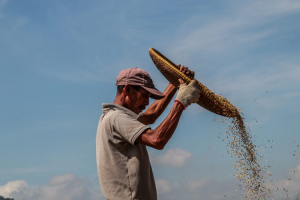
A recent Twitter conversation between the UN’s David Beasley and Tesla’s Elon Musk has shown that hunger is deceptively complex. There is a crucial difference between acute hunger, caused by shocks like war or natural disasters, and chronic hunger, which occurs when agricultural production (and distribution) fails to keep pace with threats such as soil degradation, erratic rainfall, or heatwaves, or when poverty renders food unaffordable.

Collaboration between the International Crops Research Institute for the Semi-Arid Tropics (ICRISAT) and Corteva Agriscience has yielded three 'platinum-standard' genome sequences* for pearl millet varieties, providing valuable insights into the crop’s genetic composition. This milestone study, published in the prestigious Nature’s Communications Biology, paves the way for the development of more climate-resilient and nutritionally enhanced crops.
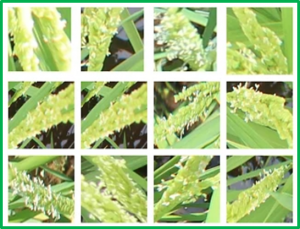
Heading date is a key agronomic trait in rice (Oryza sativa L.) that determines yield and adaptability to different latitudes. Heading date 1 (Hd1), Grain number, plant height, and heading date 7 (Ghd7), Days to heading on chromosome 8 (DTH8), and PSEUDO-RESPONSE REGULATOR 37 (PRR37) are core rice genes controlling photoperiod sensitivity, and these genes have many haplotypes in rice cultivars. However, the effects of different haplotypes at these genes on yield-related traits in diverse rice materials remain poorly characterized.

In the heart of Taita-Taveta County, Kenya, an innovative combination of superior seeds and comprehensive training is yielding bumper crops. The Accelerating Impacts of CGIAR Climate Research for Africa (AICCRA) project, supported by the International Crops Research Institute for the Semi-Arid Tropics (ICRISAT), has registered significant positive impacts. Farmers are reporting better harvests than traditional farming methods, which are often adversely affected by unpredictable rainfall.
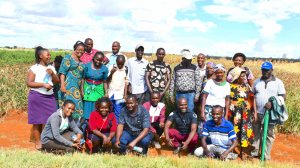
International Crops Research Institute for the Semi-Arid Tropics (ICRISAT) celebration of World Food Day in Kenya, with a focus on promoting millet, highlights the organization's commitment to sustainable food systems and food security in dryland regions. The event showcased the importance of millet and other drought-tolerant crops, as well as their role in adapting to climate change and encouraging agribusiness. The participation of young farmers and women in this initiative is a positive step towards empowering the next generation and diversifying food production.
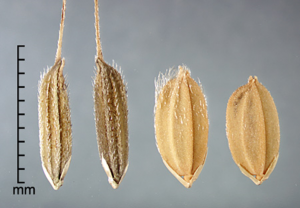
Kernel size and plant architecture are critical agronomic traits that are key targets for improving crop yield. From the single-segment substitution lines of Oryza rufipogon Griff. in the indica cultivar Huajingxian74 (HJX74) background, we identified a novel quantitative trait locus (QTL), named qGLF5, which improves kernel shape, plant architecture, and yield per plant in rice. Compared with the control HJX74, the plant height, panicles per plant, panicle length, primary branches per panicle