


News & Events

A team of researchers has developed a software tool called DANGER (Deleterious and ANticipatable Guides Evaluated by RNA-sequencing) analysis. The tool provides a way to establish a safer genome editing design for all organisms with a transcriptome, including crops. The DANGER analysis overcomes the challenges in using other genome editing tools, such as CRISPR, and allows researchers to perform safer on- and off-target assessments without a reference genome. It has potential applications in medicine, agriculture, and biological research.

Researchers reviewed the usage of CRISPR to build crop resistance against parasitic plants. They also offered insights for future research that will help boost agricultural productivity. Parasitic plants cause substantial crop losses and endanger food security in the world. One way to address this problem is to use CRISPR technology to develop crop resistance. However, this field is previously unexplored.
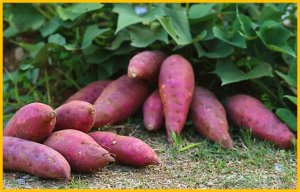
Quantitative real-time PCR (qRT-PCR) in sweet potatoes requires accurate data normalization; however, there are insufficient studies on appropriate reference genes for gene expression analysis. We examined variations in the expression of eight candidate reference genes in the leaf and root tissues of sweet potatoes (eight nonvirus-infected or eight virus-infected samples).
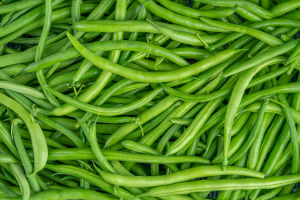
A study from Frontiers in Plant Science shows that the hairy root transformation system allowed a rapid evaluation of multiple single guide RNA (sgRNA) and promoters in common beans (Phaseolus Vulgaris L.). Results also indicate that the Lindel repair model is deemed the most effective tool for predicting sgRNA efficiency and the type of induced mutation in most hairy roots in common beans.

Scientists at Cold Spring Harbor Laboratory (CSHL) worked together to explore just how predictable plant breeding actually is with natural and CRISPR mutations. To do so, they turned back the evolutionary clock. CSHL Professor & HHMI Investigator Zachary Lippman and Associate Professor David McCandlish wondered if different natural and engineered mutations could have similar effects on tomato size depending on the presence of two other gene mutations
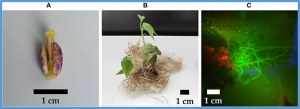
The stable transformation of common bean is a challenging and time-consuming process. Although CRISPR/Cas9 has revolutionized gene editing with its high efficiency and specificity, the performance of the system can be affected by multiple factors, such as sgRNA specificity and effectiveness, and the choice of promoter used to drive Cas9 expression.

Researchers from Spain developed artificial proteins that can degrade and reduce nanoplastics and PET microplastics down to their essential components for easier recycling and breaking down. This will help reduce plastic pollution in the environment. About 400 million plastic tons are manufactured worldwide, increasing by 4% annually. PET (polyethylene terephthalate) is one of the most used chemicals in packaging and beverage bottles. PET can wear down into microplastics, which exacerbates environmental problems.

Researchers from various institutions developed REVeRT, which is a novel approach to transporting large genes. This method demonstrates great potential for therapeutic applications. Adeno-associated viral (AAV) vectors are commonly used in gene editing and therapy to transport genetic material. However, AAVs cannot transport large genes because they have limited DNA uptake capacity. To address this issue, the research team developed REVeRT, which is a dual AAV vector technology that is based on reconstitution via mRNA trans-splicing.
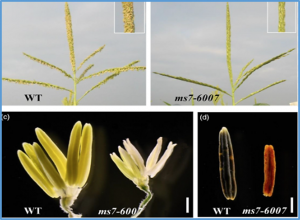
The lack of strong restorer gene of maize CMS-C greatly limits its application in hybrid seed production. Therefore, the cloning of maize CMS-C novel strong restorer genes is necessary. In this study, a strong restorer line ZH91 for maize CMS-C was found, and the novel restorer gene named Rf12 in ZH91 had been mapped in a 146 kb physical interval on maize chromosome 2

Yuanpei University of Medical Technology researchers in Taiwan developed transgenic orchids (Phalaenopsis) to improve their photosynthetic efficiency and carbohydrate accumulation. The results are published in Transgenic Research. Phalaenopsis orchids use crassulacean acid metabolism (CAM) for carbon dioxide assimilation. Compared to other models, CAM plants exhibit better water-use efficiency but slower photosynthetic efficiency.

The researchers subjected the rice seeds to heavy ion irradiation and later screened for resistance to glufosinate. Two individual rice plants, glr1 and glr2, showed resistance. The glr1 mutant showed significant resistance to glufosinate. Through map-based cloning and functional analysis, the researchers revealed that the GLR1 gene encodes ARF18, which belongs to the ARF family of auxin response factors.

Crassulacean acid metabolism (CAM) is one of three major models of carbon dioxide assimilation pathway with better water-use efficiency and slower photosynthetic efficiency in photosynthesis. Previous studies indicated that the gene of sweet pepper plant ferredoxin-like protein (PFLP) shows high homology to the ferredoxin-1(Fd-1) family that belongs to photosynthetic type Fd and involves in photosystem I.