


News & Events
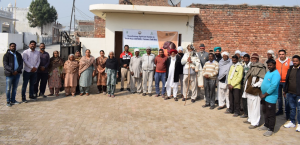
The CGIAR–TAFSSA (Transforming Agrifood Systems in South Asia) initiative is transforming agriculture in the region. TAFSSA is leading a coordinated effort that brings together various stakeholders, with a focus on equitable access to healthy diets, farmer livelihood improvement, and environmental conservation. This blog highlights TAFSSA’s recent Farmer Field Day in Karnal District, Haryana, India, in February 2023.
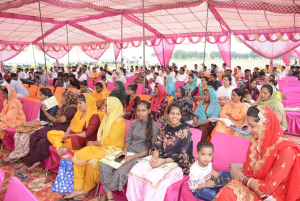
Agriculture – always the backbone of the Indian economy – is constantly changing to meet the changing demands of a growing population and a changing global landscape. A transformative event took place on September 24, 2023, in the heart of Haryana, India. In collaboration with its esteemed partners, the CGIAR initiative Transforming Agrifood Systems in South Asia (TAFSSA) organized the Haryana State Maize Day in the village of Nadana. This event brought together key agricultural industry players to discuss the potential of maize to transform agriculture.
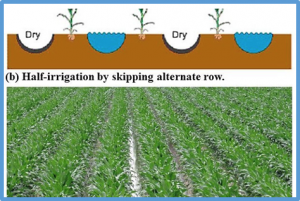
Concerns regarding high maize yield losses due to increasing occurrences of drought events are growing, and breeders are still looking for molecular markers for drought tolerance. However, the genetic determinism of traits in response to drought is highly complex and identification of causal regions is a tremendous task. Here, we exploit the phenotypic data obtained from four trials carried out on a phenotyping platform
For most of human history, people around the world lived in small communities. However, over the past few centuries – and particularly in recent decades – there has been a mass migration of populations from rural to urban areas. In fact, in 2007, the number of people in urban areas around the globe overtook the number in rural settings. While the world’s changing climate is taking a toll on basic city services, infrastructure, livelihoods and health, cities are also a large contributor to climate change.
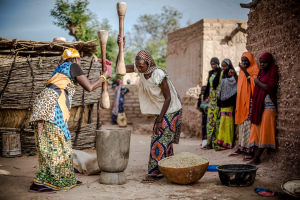
Governments from two critical regions, Central America’s Dry Corridor and Africa’s Sahel, presented dozens of projects aimed at boosting agricultural production and food security in a sustainable and profitable way at the Hand-in-Hand Investment Forum 2023. Participating governments met with traditional donors, multilateral development banks and representatives of the private sector and foundations at the national government-led event, organized by the Food and Agriculture Organization of the United Nations ( FAO) and held during the World Food Forum (17-20 October)
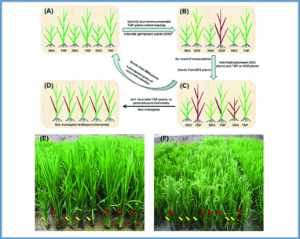
The additive genetic variance VA inherent to a breeding population is a major determinant of short- and long-term genetic gain. When estimated from experimental data, it is not only the additive variances at individual loci (QTL) but also covariances between QTL pairs that contribute to estimates of VA . Thus, estimates of VA depend on the genetic structure of the data source and vary between population samples.
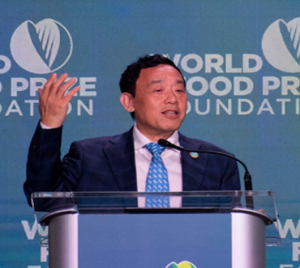
“Harnessing change is a call to move from action to evolution, and youth have a paramount role as the most important agents of change,” QU Dongyu, Director-General of the Food and Agriculture Organization of the United Nations (FAO), said Tuesday in his address at the Borlaug International Dialogue of the World Food Prize 2023 opening ceremony in Iowa.

The Food and Agriculture Organization of the United Nations (FAO) has welcomed the renewal of its accreditation by the Green Climate Fund (GCF), a decision announced this Wednesday during the 37th meeting of the GCF Board. The reaccreditation reaffirms FAO's unwavering dedication to advancing climate action through agrifood system transformations and supporting countries in addressing the challenges posed by climate change.
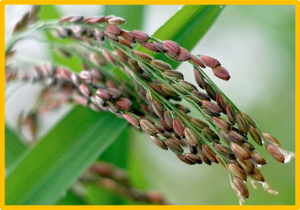
This brief article highlights the key findings of the study conducted by Sha et al. (Nature, doi:10.1038/s41586-023-06205-2, 2023), focusing on the cloning of the RBL1 gene from rice, which is associated with lesion mimic mutant (LMM) traits. The RBL1 gene encodes a cytidine diphosphate diacylglycerol (CDP-DAG) synthase and plays a crucial role in regulating cell death and immunity by controlling phosphatidylinositol biosynthesis. The rbl1 mutant shows autoimmunity with multi-pathogen resistance but with severe yield penalty. Using genome editing techniques,
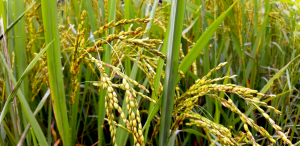
CRISPR-Cas9 is a gene editing tool that has revolutionized the field of plant biology. However, it has some limitations, such as the requirement for a specific PAM sequence and the potential for off-target editing. A new tool called CRISPR-Cas12i3 has the potential to overcome some of these limitations because of its broader PAM sequence range and a lower frequency of off-target editing compared to CRISPR-Cas9.
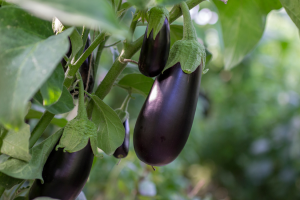
One of the challenges of using CRISPR-Cas9 in plants is designing single guide RNAs (sgRNAs) that can accurately target the desired gene. Many different sgRNA design tools are available, but many are based on guidelines designed for animals. Researchers from the University of the Philippines Los Baños investigated the in vitro and in vivo activity of four different sgRNAs targeted for several eggplant polyphenol oxidase gene family members.
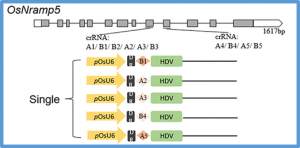
The CRISPR/Cas type V-I is a family of programmable nuclease systems that prefers a T-rich protospacer adjacent motif (PAM) and is guided by a short crRNA. In this study, the genome-editing application of Cas12i3, a type V-I family endonuclease, was characterized in rice. We developed a CRIPSR/Cas12i3-based Multiplex direct repeats (DR)-spacer Array Genome Editing (iMAGE) system that was efficient in editing various genes in rice. Interestingly, iMAGE produced chromosomal structural variations with a higher frequency than CRISPR/Cas9.