


News & Events
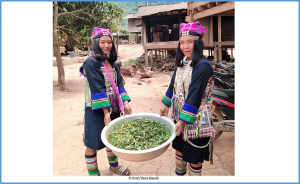
Dietary diversity is a big problem in some northern parts of the Lao People’s Democratic Republic. Many rural families regularly consume as few as four of the ten major food groups, with rice often forming much of the meal. Despite eating local, leafy vegetables themselves, mothers rarely feed these to their young children, leading to high levels of stunting as well as micronutrient deficiencies.
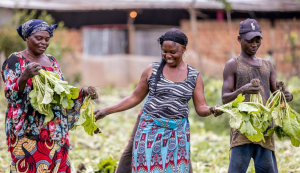
With 24 countries, the West and Central Africa (WCA) region is as intricate as it is vast. Its population has quadrupled in the last 50 years, with agriculture providing income for up to 80 per cent of people in some countries. IFAD has been working in WCA for almost four decades, navigating a patchwork of cultures, languages and lifestyles, so rural communities can lift themselves out of poverty and thrive.
Phytophthora root rot caused by the oomycete Phytophthora capsici is the most devastating disease in pepper production worldwide, and current management strategies have not been effective in preventing this disease. Therefore, the use of resistant varieties was regarded as an important part of disease management of P. capsici. However, our knowledge of the molecular mechanisms underlying the defense response of pepper roots to P. capsici infection is limited.
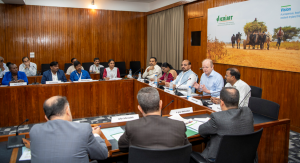
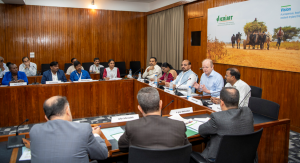
Scientists from Iran, Kenya, and India recently benefited from a 21-day "International Training Course on Conservation Agriculture for Sustainable Intensification of Drylands" organized by the International Crops Research Institute for the Semi-Arid Tropics (ICRISAT) in collaboration with the Food and Agriculture Organization of the United Nations (FAO). The course, which was held at the ICRISAT Headquarters in India, trained ten delegates in modern tools and techniques implemented in conservation agriculture to promote sustainable, resilient, and profitable dryland farming.

Opinion Piece by ICRISAT's Dr Shalander Kumar, Deputy Research Program Director, Enabling Systems Transformation; Dr Abhishek Das, Scientist; and Dr ML Jat, Research Program Director, Resilient Farm and Food Systems. Originally published in Ideas For India. Following a proposal by India, the year 2023 has been declared by the United Nations as the International Year of Millets. Present global agri-food systems face multiple challenges, including not just hunger but the triple burden of malnutrition.
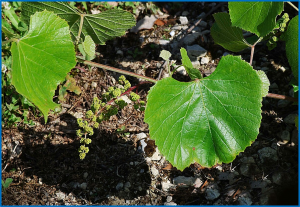
In woody perennial plants, quantitative genetics and association studies remain scarce for root-related traits, due to the time required to obtain mature plants and the complexity of phenotyping. In grapevine, a grafted cultivated plant, most of the rootstocks used are hybrids between American Vitis species (V. rupestris, V. riparia, and V. berlandieri). In this study, we used a wild population of an American Vitis species (V. berlandieri)

NEXUS Gains is pleased to announce the launch of the “Global WEF Nexus Community”. This new Community of Practice (CoP) aims to be:
- - A place for conversations, questions, and support
- - A place to share and access resources, such as papers and reports
- - A place to exchange ideas and points of view
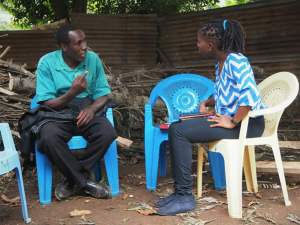
Agricultural researchers are increasingly developing digital solutions to transform the livelihoods of farmers in low- to middle-income countries. However, it has proven challenging to develop tools that achieve impact at scale. Human-centered design has arisen as a solution that is increasingly required for international applied research, including in CGIAR. To support uptake, the Initiatives on Digital Innovation and Excellence in Agronomy have launched the User Research Toolkit.
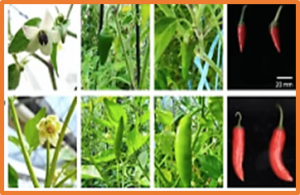
Segmental introgression lines (SILs) and advanced backcross lines (ABs) can accelerate genetics and genomics research and breeding in crop plants. This study presents the development of a complete collection of SILs and ABs in pepper using Capsicum annuum cv. ‘CM334’ as the recipient parent and Capsicum baccatum ‘PBC81’, which displays various agronomically important traits including powdery mildew and anthracnose resistance, as donor parent
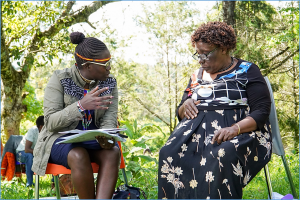
For generations, Indigenous Peoples (CEMIRIDE, 2010) have been custodians of the natural environment. Yet, these same custodians are the ones who often disproportionately suffer the impacts of climate change. This is why it is imperative that building resilience to climate change must ensure that indigenous peoples’ voices are not just heard but also represented at climate change negotiations.
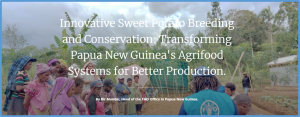
In Papua New Guinea's highlands, sweet potato is more than a staple food, it's a lifeline for thousands of smallholder farmers. Known locally as 'kaukau,' this tuber has been a cornerstone of sustenance and income. However, the challenges of climate change, pests, and diseases have put this vital crop at risk. In response to this challenge, colleagues in my office, at the Food and Agriculture Organization (FAO) of the United Nations in Papua New Guinea, have stepped in, embodying the ethos of 'Better Production' through innovative sweet potato breeding and conservation.
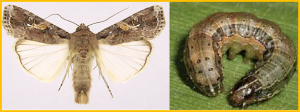
Transgenic crops producing insecticidal proteins from Bacillus thuringiensis (Bt) have revolutionized control of some major pests. However, more than 25 cases of field-evolved practical resistance have reduced the efficacy of transgenic crops producing crystalline (Cry) Bt proteins, spurring adoption of alternatives including crops producing the Bt vegetative insecticidal protein Vip3Aa.