


News & Events

Researchers from the Perelman School of Medicine explored CRISPR gene editing techniques that can be used for potential treatments of Phenylketonuria (PKU). The two methods may be used for further research in the field of medical applications. Phenylketonuria is a newborn genetic disease that causes the phenylalanine (Phe) amino acid to accumulate in the bloodstream.
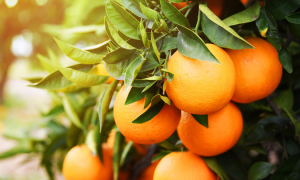
A study published in Frontiers in Plant Science shows a rapid, simple, and highly efficient hairy root transformation system induced by Agrobacterium rhizogenes for functional analysis of citrus genes. This technology is highly beneficial for plant gene research and molecular improvement breeding. Agrobacterium tumefaciens-mediated genetic transformation technology is commonly used in plant gene function research.
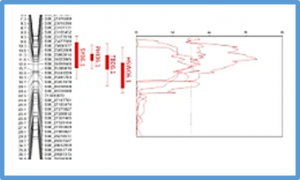
Drought is a major production constraint of common bean (Phaseolus vulgaris L.) worldwide. The objective of this study was to identify the Quantitative Trait Loci (QTL) for drought tolerance in an Andean population of Recombinant Inbred Lines (RILs). A total of 155 F5:7 RILs derived from a cross between Kijivu (drought tolerant) and Bukoba (drought susceptible) were evaluated for drought tolerance in field and pot experiments.

The Ghanaian deposit comes from the Plant Genetic Resources Research Institute of the Council for Scientific and Industrial Research (CSIR-PGRRI). It includes key crops for the country's food security, health, and culinary culture, including maize, rice, eggplant, and cowpea varieties. This is an important step towards ensuring the long-term protection of the country's major food crops.

The event is part of a series of seminars that aims to increase awareness and appreciation of Pinoy biotechnologies and products by the general public, especially in the Philippines. It will also provide science-based information to target stakeholders to boost adoption and funding support of the Pinoy-developed biotechnologies that can contribute to the improvement of the country's fisheries sector.
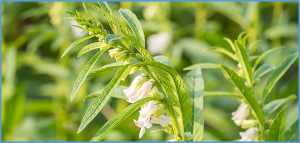
Capsule length (CL) has a positive effect on seed weight and yield in various agronomically important species; however, the molecular mechanism underlying long capsule trait regulation in sesame remains unknown. The inheritance analysis showed that long capsule traits (CL > 4.0 cm) were dominant over normal length (average CL = 3.0 cm) and were controlled by a single gene pair.
Researchers from Brookhaven National Laboratory of the U.S. Department of Energy have engineered enzymes that could generate biomass that can be efficiently converted into biofuels and other useful bioproducts. The paper is published in the Plant Biotechnology Journal. The senior plant biologist at Brookhaven Laboratory, Chang-Jun Liu said, “The concept of biomass to biofuel seems simple, but it is technically very difficult to release the sugars.
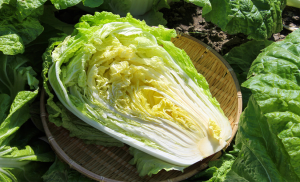
The turnip mosaic virus (TuMV), a potyvirus, has severely threatened Chinese cabbage crops. Existing research suggests that the eukaryotic translation initiation factor (eIF) genes, such as eIF(iso)4E, play a pivotal role in TuMV resistance in Arabidopsis. Researchers at Nanjing Agricultural University used CRISPR-Cas9 genome editing technique on the Chinese cabbage
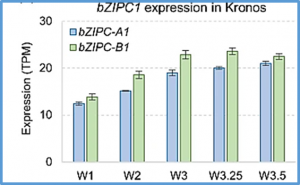
Loss-of-function mutations and natural variation in the gene FLOWERING LOCUS T2 (FT2) in wheat have previously been shown to affect spikelet number per spike (SNS). However, while other FT-like wheat proteins interact with bZIP-containing transcription factors from the A-group, FT2 does not interact with any of them. In this study, we used a yeast-two-hybrid screen with FT2 as bait and identified a grass-specific bZIP-containing transcription factor from the C-group, designated here as bZIPC1
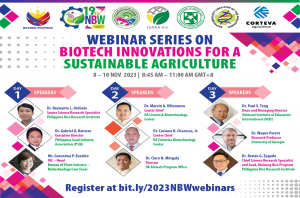
ISAAA Inc., in partnership with the Department of Agriculture Biotechnology Program Office (DA-BPO), Biotechnology Coalition of the Philippines, Inc. (BCP), Bureau of Animal Industry, and Corteva Agriscience, will hold a webinar series on Biotech Innovations for A Sustainable Agriculture from November 8 to 10, 2023, at 8:45 AM (GMT+8). The registration is now open to all interested participants.

ISAAA Inc., in partnership with the Philippine Agriculture and Fisheries Biotech Program (DA Biotech), invites Filipino cartoonists to join BioteKomiks, a comic strip-making contest that centers on the theme "The Wonders of Pinoy Biotek." It aims to capture the perspectives of artists on the impact of Pinoy Biotek on the country's agriculture and fisheries through a four-panel comic strip.
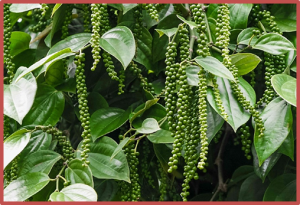
Long non-coding RNAs (lncRNAs) and circular RNAs (circRNAs) are the two classes of non-coding RNAs (ncRNAs) present predominantly in plant cells and have various gene regulatory functions at pre- and post-transcriptional levels. Previously deemed as "junk", these ncRNAs have now been reported to be an important player in gene expression regulation, especially in stress conditions in many plant species. Black pepper, scientifically known as Piper nigrum L., despite being one of the most economically important spice crops, lacks studies related to these ncRNAs.