


News & Events
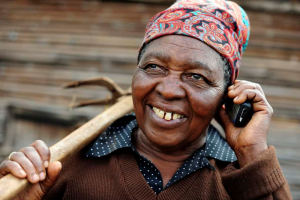
In sub-Saharan Africa, most food is produced by smallholder farmers far from urban consumers. They participate in weak and fragmented market chains, where farmers don’t have enough information to secure a fair price from traders or make the best use of their resources to meet consumer demand. Information and communication technologies (ICTs) such as mobile apps, interactive voice response (IVR) systems or satellite images can directly address the information gap and transform agricultural markets,
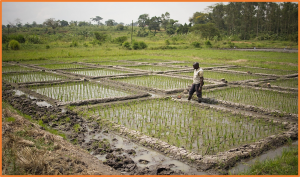
Facility Upgrade and Mechanization Improvement, a fifteen-million-dollar project part of Crops to End Hunger, a multi-funder broad initiative, aims to procure advanced equipment, upgrade infrastructures and establish sustainable service fees at key breeding research stations in Africa. The goal is to transform them into multi-crop hubs delivering high-quality data and supporting breeding programs across the continent.

Grain chalkiness is the main factor determining the market value of rice. Reducing chalkiness is an important breeding goal for genetic improvement of high quality rice. Identification of QTLs or genes controlling chalkiness is the prerequisite for molecular breeding in rice. Here, we conducted a genome-wide association study to identify QTLs associated with grain chalkiness including percentage of grains with chalkiness (PGWC)
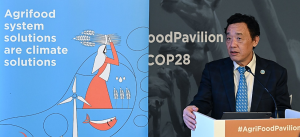
From addressing Heads of State and Government at the World Climate Action Summit to launching a new FAO report and signing three different new memorandums of understanding, QU Dongyu's resounding message echoed through various events, underlining the interwoven challenges of food security and climate change. His leadership unfolded through participation in diverse forums, each emphasizing a unique facet of the urgent agenda.
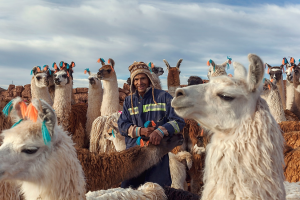
Camelids, including Bactrian camels, dromedary camels, and wild camels, as well as South American camelids such as domesticated llamas and alpacas, and wild vicuñas and guanacos, play a pivotal role in diverse ecosystems. They are particularly important in desert and mountain regions, where they form an integral part of the livelihoods and traditional practices of indigenous communities.
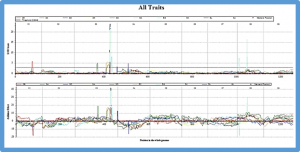
Clubroot caused by Plasmodiophora brassicae is an important disease in brassica crops. Managing clubroot disease of canola on the Canadian prairie is challenging due to the continuous emergence of new pathotypes. Brassica oleracea is considered a major source of quantitative resistance to clubroot. Genotyping-by-sequencing (GBS) was performed in the parental lines; T010000DH3 (susceptible), ECD11 (resistant) and 124 BC1 plants.
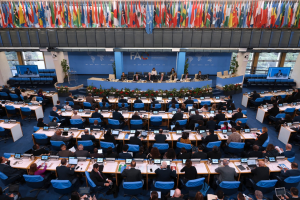
“FAO works for the vulnerable people,” the Director-General said in his opening remarks, adding that the Organization “has a comparative advantage” in areas ranging from its core mandates, such as food and nutrition security and catalyzing agricultural productivity, to increasingly complex ones, such as fostering environmental sustainability, mitigating and adapting to climate change and building resilience among vulnerable people rocked by conflicts.
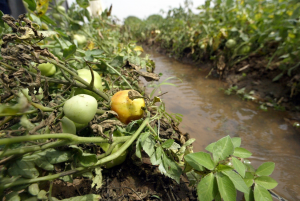
At global celebrations marking World Soil Day 2023, the Food and Agriculture Organization of the United Nations (FAO) underlined the vital link between soil and water in producing our food and the need for integrated management and conservation of these key resources to enable climate change mitigation and adaptation. “We have to produce more with less. As we strive to feed a growing population with better food, we must adopt sustainable agricultural practices that preserve and enhance soil health.,” FAO Director-General QU Dongyu said as he opened the celebrations here.

Seed dormancy (SD) and pre-harvest sprouting (PHS) affect yield, as well as grain and hybrid quality in seed production. Therefore, identification of genetic and regulatory pathways underlying PHS and SD is key to gene function analysis, allelic variation mining and genetic improvement. In this study, 78,360 SNPs by SLAF-seq of 230 maize chromosome segment introgression lines (ILs)

The European Scrutiny Committee of the United Kingdom House of Commons has called for the Government to provide more information on recent EU proposals on gene-edited crops. In July, the European Commission proposed establishing new regulations for plants that are developed through new genomic techniques (NGTs) such as gene editing. Under the EU Proposal, plants with genetic material from the same plant will be subject to simpler and less onerous regulations than was previously the case
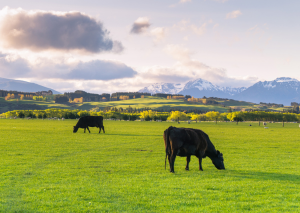
According to the Update, pasture forms the foundation of livestock farming industries in New Zealand. Opportunities from these technologies include greater farm productivity, better animal health, and improved environmental results that may include reduced greenhouse gas emissions and less nitrogen loss that has the potential to contaminate waterways. The Update provides details on the three pasture programs led by AgResearch.
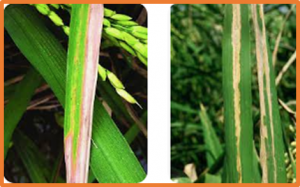
Bacterial blight (BB) and bacterial leaf streak (BLS), caused by Xanthomonas oryzae pv. oryzae (Xoo) and Xanthomonas oryzae pv. oryzicola (Xoc), respectively, are the two most devastating bacterial diseases of rice worldwide. Both bacterial pathogens infect rice plants relying on type III secreted transcriptional activation-like effectors (TALEs) that bind to specific effector binding elements (EBEs) in the promoter of susceptibility (S) genes, and activate its expressions for disease development (Chen et al., 2010)