


News & Events

Salinity stress progressively reduces plant growth and productivity, while plant has developed complex signaling pathways to confront salt stress. However, only a few genetic variants have been identified to mediate salt tolerance in the major crop rice, and the molecular mechanism remains poorly understood. Here, we identify ten candidate genes associated with salt-tolerance (ST) traits by performing a genome-wide association analysis in rice landraces. We characterize two ST-related genes, encoding transcriptional factor OsWRKY53 and Mitogen-activated protein Kinase Kinase OsMKK10.2, that mediate root Na+ flux and Na+ homeostasis.
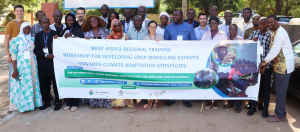
While the world's attention is fixed on COP28 in Dubai, an equally pivotal event unfolds in Saly, Senegal, from December 4 to 10, 2023. The spotlight is on the "Developing Crop Modelling Experts Towards Climate Risk and Adaptation Strategies in Sub-Saharan Africa" through a workshop, hosted by ICRISAT. Here, a diverse assembly of representatives from various institutions convenes to unravel climate risks and pioneer adaptation strategies tailored to the region.

Leading technology giants like Amazon and Google are applauding and supporting the research institute’s innovative uses of artificial intelligence to accelerate the development of high-yielding, nutrition-rich, and climate-resilient rice crops, and to help farmers all over the world enhance their productivity and livelihoods. During his keynote at the AWS re: Invent 2023 conference a few weeks ago, Amazon’s Vice President and Chief Technology Officer Dr. Werner Vogels underscored how AI is not just the technology of the future, but is today being used by companies and organizations to solve problems and make the world better.
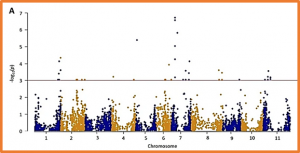
Bean pod phenotype is a complex characteristic defined by the combination of different traits that determine the potential use of a genotype as a snap bean. In this study, the TUM RIL population derived from a cross between ‘TU’ (dry) and ‘Musica’ (snap) was used to investigate the genetic control of pod phenotype. The character was dissected into pod morphological traits (PMTs) and edible pod characteristics (EPC). The results revealed 35 QTL for PMTs located on seven chromosomes, suggesting a strong QTL colocation on chromosomes Pv01 and Pv06. Some QTL were colocated with previously reported QTL, leading to the mapping of 15 consensus regions associated with bean PMTs.
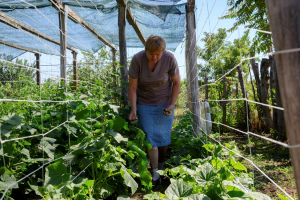
With less than seven years left until the deadline, Europe and Central Asia are making progress in achieving the Sustainable Development Goal (SDG) 2 of Zero Hunger, including tackling food insecurity and all forms of malnutrition, despite serious challenges experienced in the past few years. Even though the average cost of a healthy diet has increased in the region, the number of people who cannot afford a healthy diet has declined in 2022.
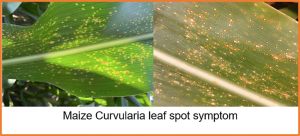
Identification of genes that confer multiple disease resistance (MDR) is crucial for the improvement of maize disease resistance. However, very limited genes are identified as MDR genes in maize. In this study, we characterized a dominant disease lesion mimics 8 (Les8) mutant that had chlorotic lesions on the leaves and showed enhanced resistance to both curvularia leaf spot and southern leaf blight.

The Food and Agriculture Organization of the United Nations (FAO) is deeply alarmed by the deteriorating food security situation in the Gaza Strip, where the entire population of about 2.2 million people is now facing acute hunger, according to a new report published on Thursday by the Integrated Food Security Phase Classification (IPC) global initiative.
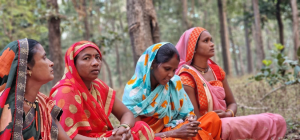
Over the last two years of implementing the CGIAR initiative on agroecology, the team has experienced how the application of its principles varies from one context and country to the other. It is therefore important to witness firsthand these very different pathways to achieve agroecological transformations that all aim at enhancing food system resilience, equity and sustainability. The best-known Indian pathway is Natural Farming and the Initiative decided to go on a tour to see and understand the phenomena.
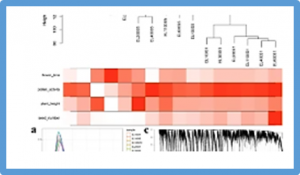
Gene expression levels in allopolyploid plants are not equivalent to the simple average of the expression levels in the parents and are associated with several non-additive expression phenomena, including homoeolog expression bias. However, hardly any information is available on the effect of homoeolog expression bias on traits. Here, we studied the effects of gene expression-related characteristics on agronomic traits using six isogenic resynthesized Brassica napus lines across the first ten generations

To explore the advantages and disadvantages of customized chatbots, International Food Policy Research Institute (IFPRI) researchers have created a virtual food policy expert using ChatGPT and a customizable AI system using training literature drawn from about two dozen food policy research reports or food policy documents. Once the virtual food policy expert was created, a range of questions that one seeking food policy advice might ask were then posed to it to better understand the limits to its expertise,
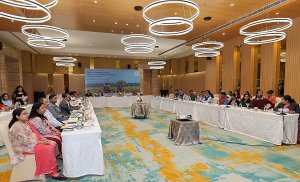
International Water Management Institute (IWMI) and the Council on Energy, Environment and Water (CEEW) organized a state consultation workshop on 14 December 2023 on ‘Policy Coherence in Food, Land, and Water (FLW) Systems: A case study of Odisha’ at Bhubaneswar as a part of the CGIAR Research Initiative on National Policies and Strategies Initiatives (NPS).
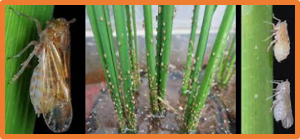
Brown planthopper (BPH), a monophagous phloem feeder, consumes a large amount of photoassimilates in rice and causes wilting. A near-isogenic line ‘TNG71-Bph45’ was developed from the Oryza sativa japonica variety ‘Tainung 71 (TNG71) carrying a dominant BPH-resistance locus derived from Oryza nivara (IRGC 102165) near the centromere of chromosome 4. We compared the NIL (TNG71-Bph45) and the recurrent parent to explore how the Bph45 gene confers BPH resistance.