


News & Events
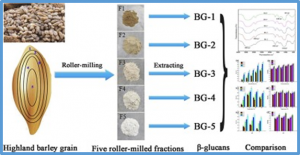
Barley grains are rich in β-glucan, an important factor affecting end-use quality. Previously, we identified several stable marker-trait associations (MTAs) and novel candidate genes associated with β-glucan content in barley grains using GWAS (Genome Wide Association Study) analysis. The gene HORVU3Hr1G096910, encoding β-glucosidase 3, named HvBGlu3, is found to be associated with β-glucan content in barley grains.
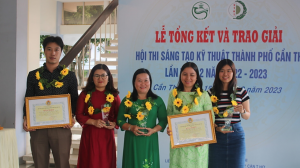
The collaborative effort between the International Rice Research Institute’s (IRRI) Mechanization Team and the Can Tho Department of Crop Production and Plant Protection was awarded second prize in the agriculture category of the 12th Can Tho City Technical Innovation Competition 2022-2023. The awarding ceremony was held in Can Tho City, Vietnam on December 15, 2023.
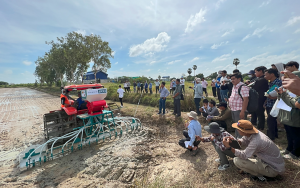
To scale mechanized direct-seeded rice (mDSR) for increasing farming efficiency and reducing carbon footprint in rice production in Cambodia, the International Rice Research Institute (IRRI), in collaboration with the General Directorate of Agriculture (GDA), organized a training workshop and field demonstration on mDSR at the GDA Station in Kampong Speu province, Cambodia on December 1, 2023.
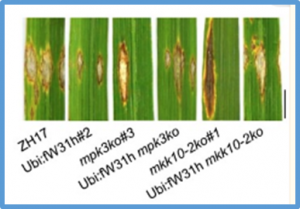
Mitogen-activated protein kinase (MPK) cascades play vital roles in plant innate immunity, growth, and development. Here, we report that the rice (Oryza sativa) transcription factor gene OsWRKY31 is a key component in a MPK signaling pathway involved in plant disease resistance in rice. We found that the activation of OsMKK10-2 enhances resistance against the rice blast pathogen Magnaporthe oryzae and suppresses growth through an increase in jasmonic acid and salicylic acid accumulation and a decrease of indole-3-acetic acid levels
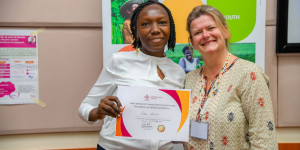
In October 2022, at the CGIAR GENDER Science Exchange organised by the CGIAR GENDER Impact Platform, five early-career researchers put themselves forward for ‘GenderVision!’—an idea contest inspired by the international song competition Eurovision. Contestants pitched their research ideas in a bid to win USD 10,000 to take their dream project forward. Esther Leah Achandi, a post-doctoral fellow at the International Livestock Research Institute (ILRI), was announced the winner for her pitch to investigate context-specific definitions of ‘empowerment’.
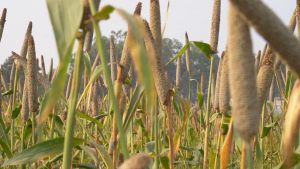
It is not nutritious, wastes scarce water and contributes to climate change. Yet rice is on the plates of most Indians every day. An age-old, but forgotten crop should provide a solution: millet. At India's initiative, the United Nations declared 2023 as the 'Year of Millet'. Kuldeep Singh can endlessly list different varieties of millets. He heads a gene bank in southern India, where the seeds of tens of thousands of variations of all millet varieties are kept in cold storage.
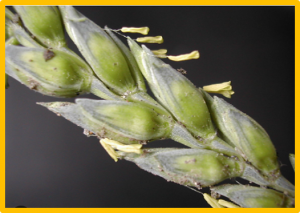
Spike architecture is a key determinant of wheat yield, a crop which supports much of the human diet but whose yield gains are stagnating. Spike architecture mutants offer opportunities to identify genetic factors contributing to inflorescence development. Here, we investigate the locus underlying the compact spike phenotype of mutant line ANK-15 by conducting mRNA-sequencing and genetic mapping using ANK-15 and its non-compact spike near-isogenic line Novosibirskaya 67 (N67).
Despite the global economic and political challenges in 2022, FAO reached a new milestone in resource mobilization by surpassing the USD 2 billion mark. This was made possible by harnessing long-term partnerships with a record number of Resource Partners (+110), among which 32 provided their highest-ever annual contribution.
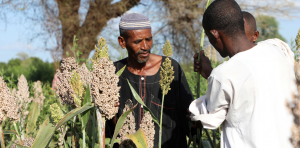
According to the newly released Integrated Food Security Phase (IPC) projections, 17.7 million people across the Sudan, which accounts for 37 percent of the analysed population, are facing high levels of acute food insecurity, classified in IPC Phase 3 or above (Crisis or worse) between October 2023 and February 2024. The most acutely food insecure populations are located in states affected by high levels of organized violence, including Greater Darfur, Greater Kordofan and Khartoum – especially in the tri-city area of Khartoum, Bahri and Omdurman.
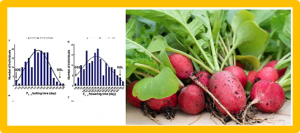
Radish (Raphanus sativus L.) is an important vegetable crop of Cruciferae. The premature bolting and flowering reduces the yield and quality of the fleshy root of radish. However, the molecular mechanism underlying bolting and flowering in radish remains unknown. In YZH (early bolting) × XHT (late bolting) F2 population, a high-density genetic linkage map was constructed with genetic distance of 2497.74 cM and an average interval of 2.31 cM. A total of nine QTLs for bolting time and two QTLs for flowering time were detected. Three QTLs associated with bolting time in radish were identified by QTL-seq using radish GDE (early bolting) × GDL (late bolting) F2 population.
On 25 January 2023, I visited Pandiénou, a village in the Thiès region of western Senegal, together with Québec's Minister of International Relations and La Francophonie, Martine Biron. During this visit to a Farmer Field School (FFS), we met local women and youth who face the impacts of climate change on a daily basis. I listened to their stories and learned about the benefits of hands-on group learning. Pandiénou is more than a village; it encapsulates both the challenges facing smallholder farmers across Senegal and the solutions to tackle the climate crisis that exist within communities.
In Papua New Guinea's highlands, sweet potato is more than a staple food, it's a lifeline for thousands of smallholder farmers. Known locally as 'kaukau,' this tuber has been a cornerstone of sustenance and income. However, the challenges of climate change, pests, and diseases have put this vital crop at risk. In response to this challenge, colleagues in my office, have stepped in, embodying the ethos of 'Better Production' through innovative sweet potato breeding and conservation.