


News & Events
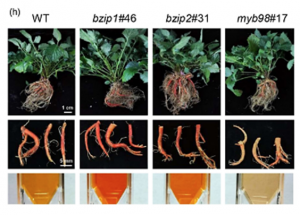
Salvia miltiorrhiza (red sage, Chinese pinyin; danshen) is used in Eastern medicine to treat cardiovascular diseases. S. miltiorrhiza contains water-soluble and lipid-soluble bioactive compounds, including phenolic acids and diterpenoid tanshinones, respectively (Shi et al., 2021); the latter gives its root surface a red colour (Skała and Wysokińska, 2005).
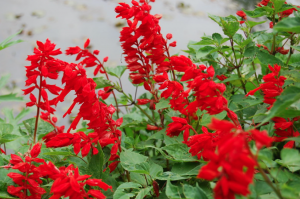
Scientists used CRISPR-Cas9 on Red Sage to boost its capability as a medicinal plant. Their research may help patients with heart disease. Red Sage, or Salvia miltiorrhiza, is a herb that is used to treat cardiovascular diseases. The plant has bioactive compounds, such as phenolic acids and diterpenoid tanshinones, which promote good health to people. However, there are genes that regulate these bioactive compounds in the plant.
Scientists use tools like TALENs, CRISPR, and prime editing to modify plant genes. Traditionally, the gene coding for the editing enzyme, the guide RNA, and selectable markers are introduced into the DNA during plant transformation. However, these markers take up space, limiting the effective number of TALENs or guide RNAs, and could also silence other genes.
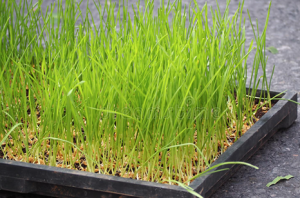
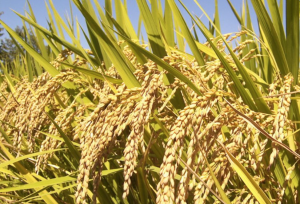
Salt stress is one of the most important factors limiting rice growth and yield increase. Salt tolerance of rice at the bud burst (STB) stage determines whether germinated seeds can grow normally under salt stress, which is very important for direct seeding. However, reports on quantitative trait loci (QTLs) and candidate genes for STB in rice are very limited. In this study, a natural population of 130 indica and 81 japonica rice accessions was used to identify STB-related QTLs and candidate genes using a genome-wide association study (GWAS).
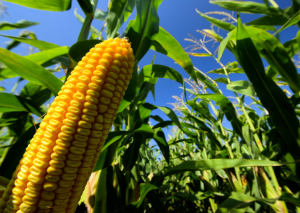
The European Food Safety Authority (EFSA) Panel on Genetically Modified Organisms (GMO Panel) has published the Scientific Opinion which reports on the outcome of its risk assessment of two genetically modified (GM) maize, DP23211 from Corteva Agriscience Belgium, and DP915635 from Pioneer Hi-Bred International. Application EFSA-GMO-NL-2019-163 under Regulation (EC) No 1829/2003 for maize DP23211 is for import, processing, and food and feed uses within the European Union (EU) and does not include cultivation.

Improving cereal crops is vital for ensuring global food security. This is according to the chapter on gene editing tools authored by Arunima Chakraborty from the book Application of ZFNs and TALENs for Improvement in Cereal Crops. Conventional breeding tools are vital in the improvement of crops, but they have limitations. For instance, introducing precise genetic modifications can be tedious and time-consuming, often involving undesirable traits. This is where cutting-edge genome editing Transcription Activator-Like Effector Nucleases (TALENs) come into play.
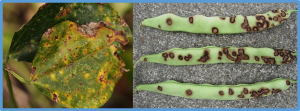
The discovery of resistance gene is a major gain in the bean anthracnose pathosystem research. Among the Indian common bean landraces, KRC-5 exhibit high levels of resistance to the bean anthracnose pathogen Colletotrichum lindemuthianum. To precisely map the anthracnose resistance gene, we used a Recombinant Inbred Line (F2:9 RIL) population (KRC-5 × Jawala).

Nobel laureate and CRISPR innovator Jennifer Doudna, other Nobel Prize winners, and over a thousand scientists are rallying for the benefits of new genomic techniques (NGs) to the EU and the world. They released an open letter addressed to the Members of the European Parliament (MEPs) in light of the upcoming parliamentary decisions regarding the regulation of NGTs in Europe.

Gene editing is a new addition to an array of technologies that biological scientists have developed to improve food stocks and contribute to food accessibility and environmental sustainability. Awareness-building activities are vital in promoting an enabling environment for biotechnological innovations. Gene Genies: Gene Editing by Filipino Scientists is a webinar organized by ISAAA Inc., in collaboration with the Biotechnology Coalition of the Philippines (BCP), held on January 24, 2024.
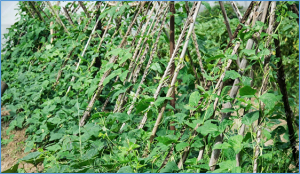
Oligonucleotide-based fluorescence in situ hybridization (Oligo-FISH) provides a powerful chromosome identification system for inferring plant chromosomal evolution. Aiming to understand macrosynteny, chromosomal diversity, and the evolution of bean species from five Vigna subgenera, we constructed cytogenetic maps for eight taxa using oligo-FISH-based chromosome identification.

The U.S. Department of Agriculture's (USDA) Animal and Plant Health Inspection Service (APHIS) has released their review of four plants modified using genetic engineering to determine whether they posed an increased plant pest risk as relative to non-modified comparators.APHIS found that these modified plants were unlikely to pose an increased plant pest risk compared to other cultivated plants and were not subject to regulation under 7 CFR part 340 and could be safely grown and bred in the United States.

ISAAA Inc., in partnership with the Biotechnology Coalition of the Philippines (BCP), will hold the second webinar of the series about gene editing. The second webinar, titled Gene Genies: Gene Editing by Filipino Scientists (Applications in Livestock and Aquaculture), is scheduled on February 26, 2024, at 10:00 AM GMT+8. The pre-registration is now open to all high schools in the Philippines. Each school may submit names of five students and one teacher as participants.