


News & Events
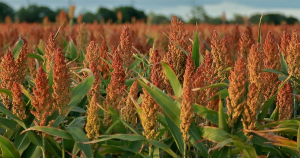
Chilling tolerance in crops can increase resilience through longer growing seasons, drought escape, and nitrogen use efficiency. In sorghum (Sorghum bicolor [L.] Moench), breeding for chilling tolerance has been stymied by coinheritance of the largest-effect chilling tolerance locus, qSbCT04.62, with the major gene underlying undesirable grain proanthocyanidins, WD40 transcriptional regulator Tannin1. To test if this coinheritance is due to antagonistic pleiotropy of Tannin1, we developed and studied near-isogenic lines (NILs) carrying chilling tolerant haplotypes at qCT04.62.

On February 7, 2024, Members of the European Parliament (MEPs) adopted a position for negotiations with member states on the Commission proposal on New Genomic Techniques (NGTs), with 307 votes to 263 and 41 abstentions. The positive vote aims for a more sustainable and resilient food system by developing improved plant varieties that are climate resilient, pest resistant, and give higher yields or that require fewer fertilizers and pesticides. In the European Union, all plants obtained through NGTs are subject to the same rules as genetically modified organisms (GMOs).

Norfolk Healthy Produce announced the online seed sales of their first product, the genetically engineered high-antioxidant purple tomato in the United States. Seeds will be available to home gardeners only in the U.S. where the biotechnology regulatory process has been completed with U.S. Department of Agriculture, Food and Drug Administration, and Environmental Protection Agency. The new tomato variety contains purple antioxidants called anthocyanins also found in blueberries, blackberries, and eggplants.
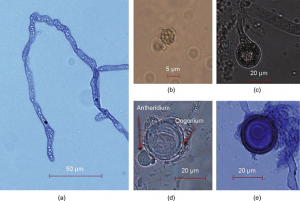
Aphanomyces root rot, caused by Aphanomyces euteiches, is the most important disease of pea (Pisum sativum L.) worldwide. The development of pea-resistant varieties is a major challenge to control the disease. Previous linkage studies identified seven main resistance quantitative trait loci (QTL), including the QTL Ae-Ps4.5 associated with partial resistance in US nurseries infested by the pea pathotype III of A. euteiches. This study aimed to confirm the major effect of Ae-Ps4.5 on A. euteiches pathotype III, refine its interval, and identify candidate genes underlying the QTL.
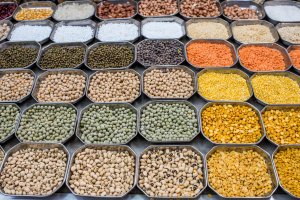
A global event at the headquarters of the Food and Agriculture Organization of the United Nations (FAO) today highlighted the role of pulses in maintaining soil health and providing vital nutrition to communities worldwide, under the theme 'Pulses: Nourishing Soils and People'. The event was held ahead of World Pulses Day 2024 which is observed every year on 10 February. Pulses, such as beans, chickpeas, and peas, are a subgroup of crops belonging to the legume family harvested for their edible seeds, and they are regarded as nutritious foods for both human and environmental health.

The Global Environment Facility (GEF) has greenlighted 48 FAO-led projects worth about $2.9 billion –$294 million in project financing and $2.6 billion in co-financing– that will play a pivotal role in fostering a sustainable agrifood systems transformation to end hunger and conserve the environment. The initiatives, benefitting 4.2 million people in five different regions globally, will restore more than 474,000 hectares of land; improve practices on over 24 million hectares of land and marine habitats;
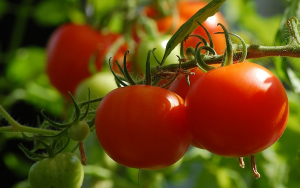
Induced mutations accelerate crop improvement by providing novel disease resistance and yield alleles. However, the alleles with no perceptible phenotype but have an altered function remain hidden in mutagenized plants. The whole-genome sequencing (WGS) of mutagenized individuals uncovers the complete spectrum of mutations in the genome. Genome-wide induced mutation resources can improve the targeted breeding of tomatoes and facilitate functional genomics. In this study, we sequenced 132 doubly ethyl methanesulfonate (EMS)-mutagenized lines of tomato and detected approximately 41 million novel mutations and 5.5 million short InDels not present in the parental cultivar.

Pakistan’s devastating losses from recent disastrous floods and droughts can be measured nationally in percentages of GDP, but in more human terms in displacement, insecurity and loss of livelihoods at a local level. Hundreds of thousands of people have suffered in Punjab and Sindh Provinces recently and ongoing research by the International Water Management Institute (IWMI) under the CGIAR Initiative on Fragility, Conflict, and Migration is examining the role played by ‘digital ecosystems’ during these events.

Cacao of Excellence, a programme of the Alliance of Bioversity International and the International Center for Tropical Agriculture (CIAT) announced today the winners of the 2023 Cacao of Excellence Awards, honouring excellence in the cultivation of cacao, while also supporting and encouraging a more sustainable sector. The full list of Gold, Silver and Bronze winners can be found below and on the Cacao of Excellence website.
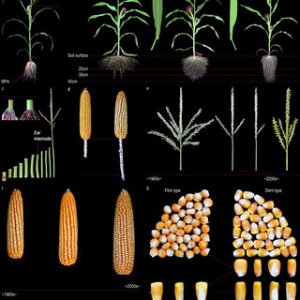
Epigenetics-mediated breeding (Epibreeding) involves engineering crop traits and stress responses through targeted manipulation of key epigenetic features to enhance agricultural productivity. While conventional breeding methods raise concerns about reduced genetic diversity, epibreeding propels crop improvement through epigenetic variations that regulate gene expression, ultimately impacting crop yield. Epigenetic regulation in crops encompasses various modes, including histone modification, DNA modification, RNA modification, non-coding RNA, and chromatin remodeling.
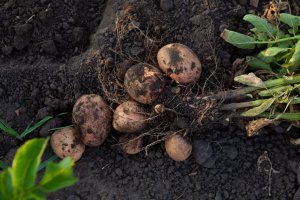
Good root systems are vital in plant growth. In rice, a gene called OsDRO1 helps control root development. Scientists from Yunnan Agricultural University and partners wanted to know if a similar gene in potatoes, called StDRO2, also plays a similar role in root system architecture. The results of their study are released in the Horticultural Plant Journal. Through CRISPR-Cas9 gene editing, the research team developed potatoes with a mutated StDRO2 gene.
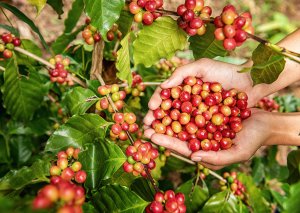
Researchers in Italy have shed light on arabica coffee's large and complex genome, which could help in the development of desirable traits in coffee, such as disease resistance. Arabica coffee represents 60 percent of the world's total coffee production and is generally known for its higher quality than the other dominant commercial coffee species, robusta. The study notes that genetic diversity in arabica coffee is lacking and this is especially troubling because arabica has greater susceptibility to disease and climate change.