


News & Events
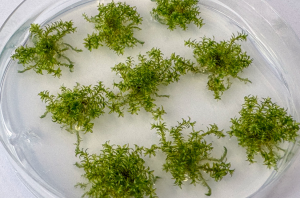
Experts from the Chinese Academy of Sciences and partners reported in Nature Plants about their breakthrough in developing the first artificial plant genome. To date, they have developed a partially synthetic version of the spreading earthmoss (Physcomitrium patens) chromosome. This big leap can turn the moss into a factory of medicines and other products. Redesigning an organism's genome is vital in understanding which sequences are important and how their organization impacts gene functions.
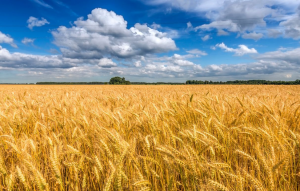
Researchers used CRISPR-Cas9 in wheat, which improved its resistance to rust and increased its yield. Their findings offer germplasm resources that can be used for the breeding of high-resistance and high-yield plants. The immune system of plants is regulated positively and negatively by different factors. An example of a negative regulator of plant immunity is MAP kinase phosphatase1 (MKP1). However, the molecular mechanisms involving MKP1's regulation of wheat (Triticum aestivum) are currently unclear.
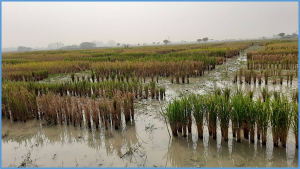
Salt stress is the second most devastating abiotic stress after drought and limits rice production globally. Genetic enhancement of salinity tolerance is a promising and cost-effective approach to achieve yield gains in salt-affected areas. Breeding for salinity tolerance is challenging because of the genetic complexity of the response of rice plants to salt stress, as it is governed by minor genes with low heritability and high G × E interactions.
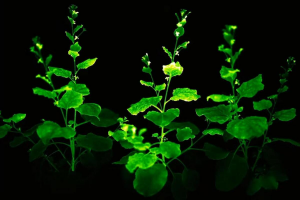
Consumers in the United States can now purchase and grow the genetically engineered Firefly Petunias in their gardens and homes. According to the U.S. Department of Agriculture's Animal and Plant Health Inspection Service (APHIS), this modified petunia is unlikely to pose an increased plant pest risk than other produced petunias. This year, the biotechnology firm Light Bio announced that their plants achieved brighter bioluminescence.
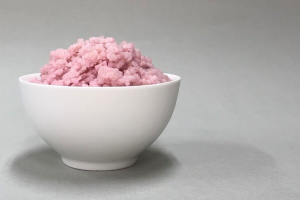
Scientists from Yonsei University developed cultured beef rice, rice grains with animal muscle and fat cells inside. The findings of their study published in Matter show that cultured beef rice has 8% more protein and 7% more fat than regular rice. Animals need biological scaffolds to grow tissues and organs. The researchers used rice grains as a solid scaffold to house animal-derived cells. After coating the rice grains with fish gelatin, cow muscle and fat stem cells were seeded into the rice and allowed to grow in a petri dish from nine to 11 days.
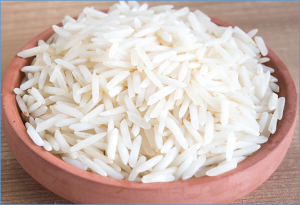
The development of future food is an inevitable task for sustainable humanity. Unfortunately, the future food candidates reported so far have practical limitations in terms of commercialization, such as nutritional imbalance, unfamiliar taste, and poor formability. Accordingly, this study proposes to develop a new food ingredient in which rice grains, nanocoating, and animal cells are integrated.
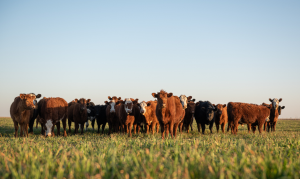
Uruguay has been battling with the New World screwworm infestations for several decades. Screwworm fly larvae, hatched from eggs laid by the female, burrow into cattle flesh, causing fatal wounds if left untreated. Thus, the pest poses a risk to agriculture and the economy. To address this concern, National Institute of Agricultural Research (INIA) experts designed a gene drive to boost the spread of a gene or group of genes in a population.
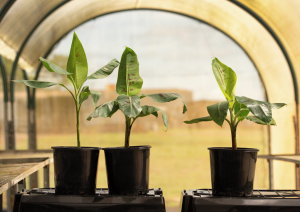
Australia's Office of the Gene Technology Regulator (OGTR) has issued license DIR 199 to Queensland University of Technology (QUT), to commercially cultivate QCAV-4, a genetically modified (GM) variety of Cavendish banana resistant to the fungal disease Fusarium wilt tropical race 4 (TR4), also known as Panama disease. On February 16, 2024, the Food Standards Australia New Zealand (FSANZ) also notified the Food Ministers' Meeting (FMM) that it has approved QCAV-4 as suitable for human consumption.
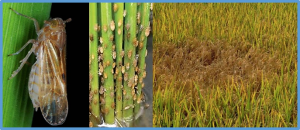
The brown planthopper (BPH), Nilaparvata lugens (Stål), a rice-specific pest, has risen to the top of the list of significant pathogens and insects in recent years. Host plant-mediated resistance is an efficient strategy for BPH control. Nonetheless, BPH resistance in rice cultivars has succumbed to the emergence of distinct virulent BPH populations. Circular RNAs (circRNAs) play a pivotal role in regulating plant-environment interactions;
A special edition of the journal Frontiers in Sustainable Food Systems has brought together expert perspectives on the status of food safety in low- and middle-income countries, including the latest evidence on the burden of foodborne disease at national and sub-national levels, with over half of the 24 papers in the edition featuring research by CGIAR scientists and partners.

In a development aimed at advancing global crop breeding, Genetic Innovation (GI), a science group within CGIAR, has entered into an agreement with the International Rice Research Institute (IRRI). The agreement, signed at IRRI’s headquarters in the Philippines, will help support the effective implementation of GI’s activities, and particularly one of its constituents, Breeding Resources Initiative (BRI).
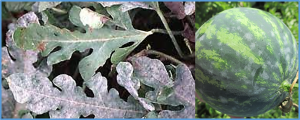
Powdery mildew is one of the most severe fungal diseases reducing yield and quality of watermelon (Citrullus lanatus L.) and other cucurbit crops. Genes responsible for powdery mildew resistance in watermelon are highly valuable. In this study, we first identified the QTL pm-lox for powdery mildew resistance in watermelon, located within a 0.93 Mb interval of chromosome 2, via XP-GWAS method using two F2 populations.