


News & Events

The cumulative impact of CGIAR-related crop technologies reached US$1,334 billion from 1961 to 2020, according to a new peer-reviewed report. Virtually all households in target countries have benefitted from productivity improvements which have increased access to food, and in turn led to decreases in undernutrition and child stunting, says the report.
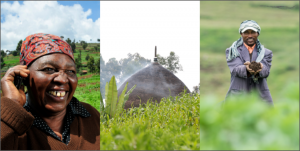
A “Scaling Fund” was launched late last year to help early-stage African innovators think through and formulate “last-mile” efforts to reach as many farmers as possible, specifically by helping them to mitigate, and adapt to, climate change. The Fund was launched on 25 October 2023 by the CGIAR Regional Research Initiative on Diversification in East and Southern Africa (better known as Ukama Ustawi) and the International Livestock Research Initiative (ILRI), with the support of the New Zealand Ministry of Foreign Affairs and Trade.
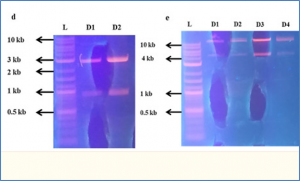
Fungal pathogens are one of the major reasons for biotic stress on rice (Oryza sativa L.), causing severe productivity losses every year. Breeding for host resistance is a mainstay of rice disease management, but conventional development of commercial resistant varieties is often slow. In contrast, the development of disease resistance by targeted genome manipulation has the potential to deliver resistant varieties more rapidly.
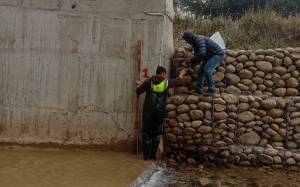
The International Water Management Institute (IWMI) is introducing basic water measurement instruments to an irrigation project in Western Nepal to improve agricultural productivity. This instrumentation, introduced in collaboration with the Department of Water Resources and Irrigation (DWRI), provides real-time data on water availability and usage, assisting irrigation managers in irrigation scheduling, to allocate water according to crop type and stage of plant growth.
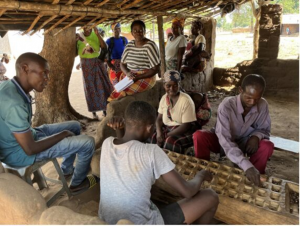
Individuals face immense challenges in displacement contexts, particularly where climate, conflict, and displacement intersect. In Mozambique, climate impacts have combined with conflict to displace nearly a million people. Entire livelihoods, identities, and stability are vanishing. Women, men, girls, and boys are not just losing homes; they are losing their place in traditional societal roles, too. This chaos—and responses by the international community—are reshaping Mozambique’s gender dynamics.
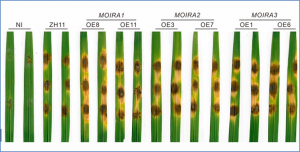
Rice blast disease, caused by the fungal pathogen Magnaporthe oryzae, is a major threat to rice production worldwide. This study investigates the role of long non-coding RNAs (lncRNAs) in rice’s response to this destructive disease, with a focus on their impacts on disease resistance and yield traits. Three specific lncRNAs coded by M. oryzae infection-responsive lncRNAs (MOIRAs),

The challenges of achieving the UN Sustainable Development Goals, the perils of the climate crisis and the complexities of leveraging finance were among the topics discussed at a gathering today of ministers from many of the Asia-Pacific Region’s countries most vulnerable to global economic and climate shocks.

QU Dongyu, Director-General of the Food and Agriculture Organization of the United Nations (FAO), appealed for peace, recognition of the right to food, and reform of multilateral institutions as cardinal imperatives during the G20 Foreign Affairs Ministers Meeting held on Wednesday and Thursday in Brazil. “FAO calls for the prioritization of actions that promote food security globally to achieve the Four Betters: better production, better nutrition, a better environment, and a better life, leaving no one behind,” Qu said at the first session, focused on the G20’s role in dealing with conflicts and ongoing international tensions.
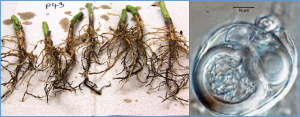
Phytophthora root rot (PRR) is one of the most important diseases in soybean (Glycine max). PRR is well known to be caused by Phytophthora sojae, but recent studies showed that P. sansomeana also causes extensive root rot of soybean. Depending upon the isolate, it might produce aggressive symptoms, especially in seeds and seedlings.

Scientists from the USA produced an antibiotic that can eliminate drug-resistant bacteria. This will help reduce the spread of diseases in humans. Antibiotics hinder the growth of pathogenic bacteria by binding to their ribosomes. This activity interrupts the bacteria's protein-manufacturing process, which causes its death. However, many bacterial species have developed defenses against this attack.
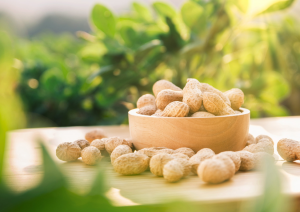
Murdoch University's Food Futures Institute has new findings with great potential for peanut crop improvement. The team identified the AhANT gene, associated with peanut seed and pod weight, on chromosome B06. They also found the gene BSK1, which is associated with peanut-branching habits, and the AhWRI1 gene, encoding an ethylene-responsive transcription factor.
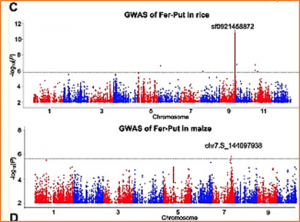
Plants orchestrate drought responses at metabolic level but the genetic basis remains elusive in rice. In this study, 233 drought-responsive metabolites (DRMs) were quantified in a large rice population comprised of 510 diverse accessions at the reproductive stage. Large metabolic variations in drought responses were detected, and little correlation of metabolic levels between drought and normal conditions were observed. Interestingly, most of these DRMs could predict drought resistance in high accuracy.