


News & Events
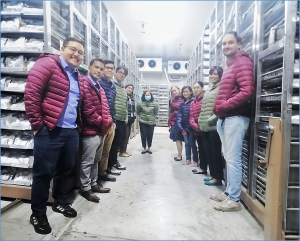
On December 5-7th, 2023, Svetlana Negroustoueva, evaluation function lead at the CGIAR Independent Advisory and Evaluation Services (IAES), visited Manila with the dual purpose of engaging with the Monitoring, Evaluation, Learning, and Impact Assessment (MELIA) Team of the International Rice Research Institute (IRRI) and attending the 4th evaluation conference of the Asia Pacific Evaluation Association (APEA).
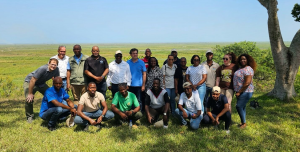
The CGIAR Initiative on NEXUS Gains convened a three-day workshop in Maputo, Mozambique, on “Transboundary multistakeholder platforms (MSPs) and the Incomati Basin.” The objectives were to learn from the experiences of other MSPs in shared basins throughout Africa; identify the role of an MSP in the Incomati Basin and how one could be incorporated within the existing governance structure; and clarify how to build on the capacity of existing stakeholder activities in the three countries of the basin.
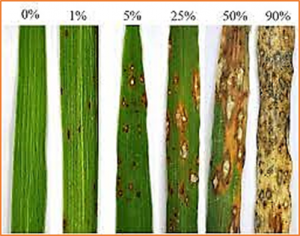
Rice blast is one of the most devastating diseases, causing a significant reduction in global rice production. Developing and utilizing resistant varieties has proven to be the most efficient and cost-effective approach to control blasts. However, due to environmental pressure and intense pathogenic selection, resistance has rapidly broken down, and more durable resistance genes are being discovered. In this paper, a novel wall-associated kinase (WAK) gene, Pb4, which confers resistance to rice blast, was identified through a genome-wide association study (GWAS) utilizing 249 rice accessions. Pb4 comprises an N-terminal signal peptide, extracellular GUB domain, EGF domain, EGF-Ca2+ domain, and intracellular Ser/Thr protein kinase domain.
American researchers produced a predictive model to identify the effects of climate change on rice yields. The strategies from their research may be applied to other crop species. The United States of America is one of the top rice exporters in the world. However, their production is affected by genetics and climate change.
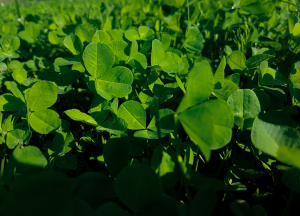
Researchers in Australia are conducting contained field trials of genetically engineered (GE) clover with high levels of condensed tannins. The research aims to reduce methane emissions from livestock by 20% and eliminate bloat risk from consuming clover. One of the main challenges in the research was the growth penalty of inserting the gene for tannin production. The researchers are working on finding an acceptable level of tannins while maintaining the growth and development of the plants.
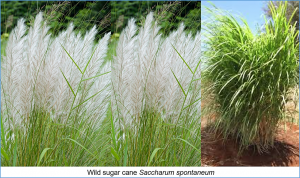
Sugarcane orange rust (SOR) is a threatening emerging disease in many sugarcane industries worldwide. Improving the genetic resistance of commercial cultivars remains the most promising solution to control this disease. In this study, an association panel of 568 modern interspecific sugarcane hybrids (Saccharum officinarum x S. spontaneum) from Réunion’s breeding program was evaluated for its resistance to SOR under natural conditions of infection. Two genome-wide association studies (GWAS) were conducted between disease reactions and 183,842 single nucleotide polymorphism (SNP) markers obtained by targeted genotyping-by-sequencing.
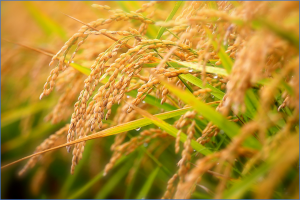
A study published in the Plant Biotechnology Journal shows that manipulating the expression of jasmonate (JA) pathway genes in rice can modulate diurnal flower-opening time (DFOT) to improve the yield of F1 hybrid seed production (FHSP) and reduce seed production costs. Hybrid rice breeding has significantly boosted rice yields, especially in inter-subspecific indica–japonica hybrids, which can increase yields by up to 30%.
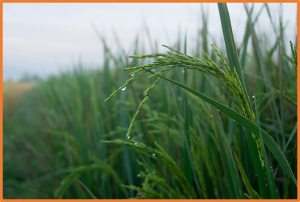
A study published in Plant, Cell & Environment demonstrates the potential of breeding chilling-tolerant rice by editing the OsEIL2 gene in rice. Low temperatures can significantly affect rice growth and productivity. Thus, the study also explores the OsEIN2-OsEIL1/2 pathway in increasing rice tolerance to low temperatures.
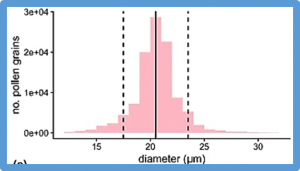
In diploid potato the production of unreduced gametes with a diploid (2n) rather than a haploid (n) number of chromosomes has been widely reported. Besides their evolutionary important role in sexual polyploidisation, unreduced gametes also have a practical value for potato breeding as a bridge between diploid and tetraploid germplasm. Although early articles argued for a monogenic recessive inheritance, the genetic basis of unreduced pollen production in potato has remained elusive.
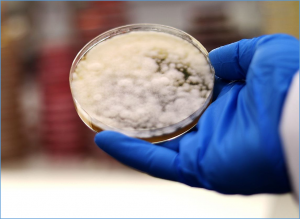
Researchers developed a gene editing toolkit for a fungus used in making fermented foods. Their research may help broaden the variety of healthy products in the market. Aspergillus oryzae or koji mold is an edible fungus that is utilized in protein production, fermented foods, and meat alternatives. Its genetic modification, along with other filamentous fungi, demonstrates great potential in improving fungal foods' scalability, sensory appeal, and nutritional value. However, there are limited genetic tools and applications in this area of research.
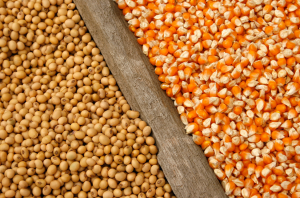
A recent study conducted by the U.S. Department of Agriculture (USDA) Economic Research Service (ERS) modeled how climate-linked changes in temperatures and precipitation might affect future U.S. corn and soybean yields and what that would mean for markets and trade through the middle of the next decade. The study used 2016 as a base year, and the model estimated an increase in U.S. corn yields but a decrease in soybean yields by the year 2036.
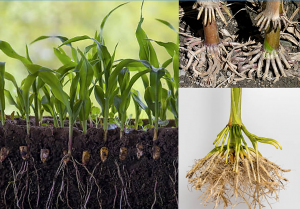
By releasing specialized metabolites, plants modify their environment. Whether and how specialized metabolites protect plants against toxic levels of trace elements is not well understood. We evaluated whether benzoxazinoids, which are released into the soil by major cereals, can confer protection against arsenic toxicity. Benzoxazinoid-producing maize plants performed better in arsenic-contaminated soils than benzoxazinoid-deficient mutants in the greenhouse and the field. Adding benzoxazinoids to the soil restored the protective effect, and the effect persisted to the next crop generation via positive plant–soil feedback.