


News & Events

Statisticians from the University of Wollongong (UOW) in Australia, led by Senior Professor Brian Cullis are developing a new software called Dependent Wollongong Restricted Maximum Likelihood (DWReml) designed to analyze large datasets from crop breeding experiments conducted across multiple locations and years. This data will help improve crop yields by allowing researchers to identify plant varieties that thrive in a wide range of conditions or are suited to specific environments.

Researchers from the University of California, Los Angeles (UCLA) suggest that genetically engineered dendritic cells could improve stronger immune responses against lung cancer. This method enhances the effectiveness of a type of immunotherapy called immune checkpoint blockade. Their study is published in Cell. Checkpoint blockade immunotherapy is a treatment for cancer that uses immune checkpoint inhibitors to keep the body's immune system strong and enhance its ability to fight off cancer cells.

Recombination events during meiosis provide the foundation and premise for creating new varieties of crops. The frequency of recombination in different genomic regions differs across eukaryote species, with recombination generally occurring more frequently at the ends of chromosomes.
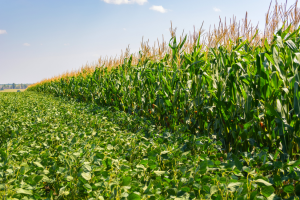
China continues to push for agricultural efficiency with the approval of large-scale, commercial planting of genetically modified (GM) crops. To date, GM soybeans, maize, cotton, and papaya have been approved for commercial planting in the country. In 2023, 37 GM maize varieties and 14 GM soybean varieties have been approved for planting. In March, 27 GM maize and 3 GM soybean varieties were added to the list of approved GM crops.
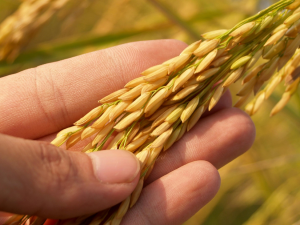
A group of researchers from Bacha Khan University in Pakistan and other institutions investigated a type of plant protein called MYB transcription factors (MYB TFs) to see if they could improve crop yields under stressful conditions like heat, salt, and drought. Their findings are published in GM Crops & Food.
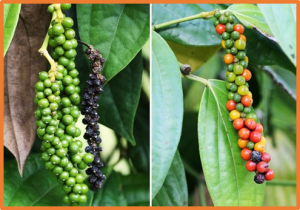
Phytophthora capsici and P. tropicalis are the two species of Phytophthora associated with foot rot disease of black pepper in India. High genetic diversity amongst the Phytophthora species contributes to its wide host range and variability in the virulence pattern. In the present study, genetic diversity of Phytophthora species infecting black pepper was analysed using RAMS (Random Amplified Microsatellites) and REP (Repetitive Extragenic Palindromic)-PCR fingerprinting.
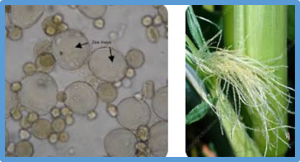
Maize gene ZmADF1 negatively regulates pollen vitality, according to Zhejiang Academy of Agricultural Sciences researchers and partners. Their findings are reported on Biochemical and Biophysical Research Communications. Normal pollen grain development and achievement of double fertilization are vital in the sexual reproduction of angiosperms and the production of grains. Actin depolymerizing factor (ADF) controls the growth, development, and responses to environmental stress and diseases by binding to actin in plants.

Using CRISPR-Cas9, a study published in the Journal of Integrative Plant Biology shows that the null mutants of OsGA2ox7 exhibit an increase in the seed germination ability of rice under salt stress. The findings of the study highlight the role of OsHAK9 in helping seeds germinate much better in salty environments. Salt stress significantly affects rice growth and productivity, with 50% yield losses reported at low salinities. In this study, the researchers used MutMap to pinpoint the gene responsible for this issue.
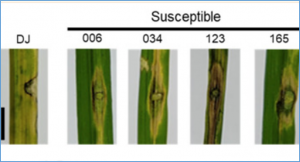
Rice is an important cereal crop worldwide, the growth of which is affected by rice blast disease, caused by the fungal pathogen Magnaporthe oryzae. As climate change increases the diversity of pathogens, the disease resistance genes (R genes) in plants must be identified. The major blast-resistance genes have been identified in indica rice varieties; therefore, japonica rice varieties with R genes now need to be identified. Because leucine-rich repeat (LRR) domain proteins possess R-gene properties, we used bioinformatics analysis to identify the rice candidate LRR domain receptor-like proteins (OsLRR-RLPs).
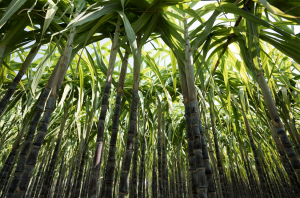
Sugarcane's complicated genetics made it the last major crop without a complete and highly accurate genome. Scientists from France, Australia, Czech Republic, and the United States led by the U.S. Department of Energy Joint Genome Institute (JGI) have developed and combined multiple techniques to successfully map out sugarcane's genetic code. Sugarcane's genome is large and contains more copies of chromosomes than a typical plant, a feature called polyploidy.
Public trust in government agencies greatly influences public perceptions and opinions on policy issues. With the emergence of gene drive technology, understanding public trust in regulatory agencies is crucial in supporting policy development. A study published in Review of Policy Research explores public trust in regulatory agencies that may lead to enabling policies for gene drive applications and research.

A technique for chromosomal insertion of large DNA segments is much needed in plant breeding and synthetic biology to facilitate the introduction of desired agronomic traits and signaling and metabolic pathways. Here we describe PrimeRoot, a genome editing approach to generate targeted precise large DNA insertions in plants. Third-generation PrimeRoot editors employ optimized prime editing guide RNA designs