


News & Events
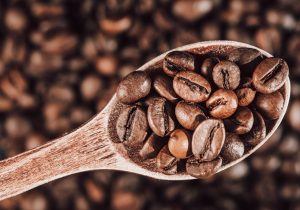
Researchers produced a high-quality reference genome of Arabica coffee (Coffea arabica), which reveals its origin story and future under climate change. Arabica is the most well-known coffee species in the world. By studying its origin and breeding history, new Arabica cultivars may be developed that will be more adapted to climate change. Researchers from various institutions used DNA sequencing technology and data science to sequence an 18th-century specimen and 39 Arabica varieties.

Despite being the world's largest producer of food staples like rice and vegetable oil, food security is a critical issue in Asia. World Scientific released a new book titled Food Security Issues in Asia edited by food security expert Dr. Paul Teng from Nanyang Technological University, Singapore. The book addresses the food security challenge by exploring the impact of COVID-19 on food security and future trends in production and consumption of key foods in Asia.
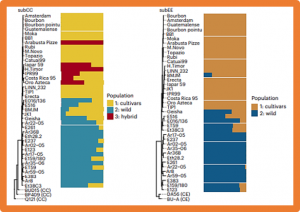
Coffea arabica, an allotetraploid hybrid of Coffea eugenioides and Coffea canephora, is the source of approximately 60% of coffee products worldwide, and its cultivated accessions have undergone several population bottlenecks. We present chromosome-level assemblies of a di-haploid C. arabica accession and modern representatives of its diploid progenitors, C. eugenioides and C. canephora. The three species exhibit largely conserved genome structures between diploid parents and descendant subgenomes, with no obvious global subgenome dominance.

The webinar was attended by 37 participants representing different agencies in the Philippines, such as the National Committee on Biosafety of the Philippines (NCBP), Bureau of Fisheries and Aquatic Resources (BFAR), Bureau of Animal Industry (BAI), and Food and Drug Administration (FDA). The participants were welcomed by Ms. Maria Lorelie Agbagala, Assistant Scientist and Head Secretariat of NCBP and the DOST Biosafety Committee (DOST-BC).
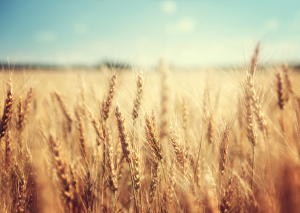
Australia's Office of the Gene Technology Regulator (OGTR) has issued license DIR 201 to The University of Adelaide, allowing the field trial of wheat and barley genetically modified (GM) for yield enhancement. The field trial will be conducted on one site in Light Regional Council in South Australia, with a maximum planting area of 2 hectares each year. The trial will run from May 2024 to January 2029. The purpose of the field trial is to assess the performance of GM wheat and barley under field conditions in Australia.
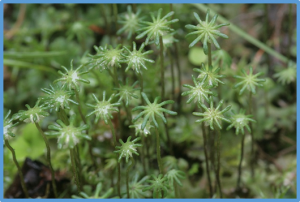
Adenosine 3′,5′-cyclic monophosphate (cAMP) is a universal signaling molecule that acts as a second messenger in various organisms. It is well established that cAMP plays essential roles across the tree of life, although the function of cAMP in land plants has long been debated. We previously identified the enzyme with both adenylyl cyclase (AC) and cAMP phosphodiesterase (PDE) activity as the cAMP-synthesis/hydrolysis enzyme COMBINED AC with PDE (CAPE) in the liverwort Marchantia polymorpha.

Ameriacan Biotechnology holds promise for a more sustainable and secure global food supply. This technology can improve food production through increased yield, disease resistance, and better adaptability to climate change. Dr. Eric Hallerman, professor at the Virginia Polytechnic Institute and State University, and his co-authors, tackled the importance of enabling regulations for animal biotech in a review article published in CABI Agriculture and Bioscience.
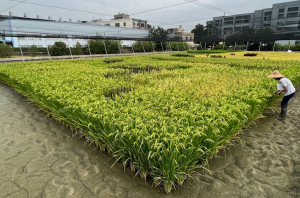
A team of scientists from the University of Geneva (UNIGE), ETH Zurich, and Taiwan's National Chung Hsing University (NCHU) have successfully increased the Vitamin B1 content of rice grains, a significant achievement in the fight against vitamin B1 deficiency, which is associated with a rice-based diet. Rice is a staple food for half the world's population, particularly in the tropical countries of Asia, South America, and Africa. But rice grains are low in vitamin B1, and processing such as polishing reduces it even further, taking 90 percent with them.
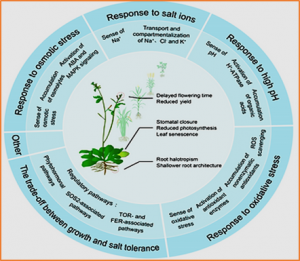
Excess soil salinity affects large regions of land and is a major hindrance to crop production worldwide. Therefore, understanding the molecular mechanisms of plant salt tolerance has scientific importance and practical significance. In recent decades, studies have characterized hundreds of genes associated with plant responses to salt stress in different plant species. These studies have substantially advanced our molecular and genetic understanding of salt tolerance in plants and have introduced an era of molecular design breeding of salt-tolerant crops.
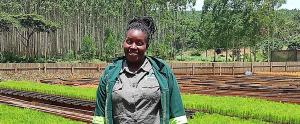
The Food and Agriculture Organization of the United Nations (FAO) has launched a 15 million euro ($16.29 million) project funded by the European Union (EU) to help Uganda’s forestry sector contribute more sustainably to the economy and the environment. The five-year Sustainable Wood-Based Value Chains in Uganda initiative, to be implemented by FAO, aims to ensure the sustainable supply of legal wood raw material from planted forests, enhance the processing capacity and market demand for wood products and improve the availability of and access to affordable finance.
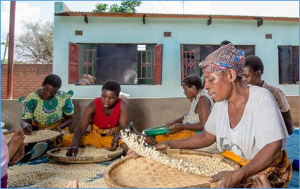
Malawi is facing a severe drought crisis linked to the El Niño climate phenomenon. On March 23, President Lazarus Chakwera declared a state of disaster in 23 of Malawi’s 28 districts in anticipation of a poor harvest and appealed for more than $200 million in humanitarian assistance. El Niño has brought about spells of dry weather across much of Southern Africa in recent months, leading to poor agronomic conditions in the current growing season and potentially severe impacts on harvests.
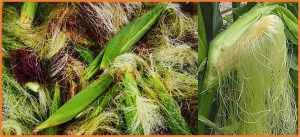
Colorless silk is a key characteristic contributing to the visual quality of fresh corn intended for market distribution. Nonetheless, the identification of Mendelian trait loci and associated genes that control silk color has been scarce. In this study, a F2 population arising from the hybridization of the single-segment substitution line qSRC3MT1 with red silk, carrying an introgressed allele from teosinte (Zea mays ssp. mexicana),