


News & Events

Dr Ehui accompanied by World Bank Director of Agriculture for Central Africa Dr Abel Lufafa, visited Cameroon to strengthen partnerships and advance regional agricultural development. During his stay, he engaged in high-level meetings with notable figures, including the World Bank Director of Operations for Cameroon and Central Africa, the African Development Bank (AfDB) Regional Director for Central Africa, and several Ministers from the Cameroon government.

A five-year cooperation agreement between the Asian Development Bank (ADB) and CGIAR aims to accelerate and scale agricultural innovations and solutions for the sustainable and inclusive development of agrifood systems in Asia. The agreement was signed at the Asia and the Pacific Food Security Forum 2024, hosted by ADB. CGIAR, the world’s largest publicly-funded agricultural innovation network, will support ADB in identifying and developing future investment opportunities and preparing and implementing investment projects and knowledge programs

Grapevine (Vitis vinifera L.) is an economically important fruit crop cultivated worldwide. In China, grapevine cultivation is very extensive, and a few Vitis grapes have excellent pathogen and stress resistance, but the molecular mechanisms underlying the grapevine response to stress remain unclear. In this study, a microRNA (miRNA; miR827a), which negatively regulates its target gene VqMYB14, a key regulatory role in the synthesis of stilbenes, was identified in Vitis quinquangularis (V. quinquangularis) using transcriptome sequencing
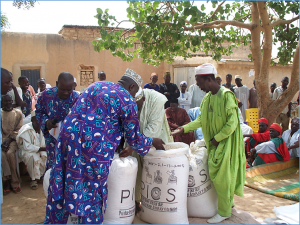
Postharvest loss has been a significant threat to achieving food security and safety in most developing countries across sub-Saharan Africa (SSA) for many years. Most cereals, pulses, and oilseeds are prone to infestation by larger grain borer (LGB), weevils, bruchids, and aflatoxin contamination after harvest. Concurrently, smallholder farmers often use ineffective traditional storage structures and grain protectants—ash, soil, and plant oils as storage techniques.

In a major development that will change the research and food security efforts of IITA–CGIAR in Zambia, the government has granted IITA full diplomatic status. This new status emphasizes the importance of IITA’s research to Zambia’s agricultural and economic transformation and the development of the Southern region. The announcement came on the eve of the launch of IITA’s Southern Africa Research and Administrative Hub (SARAH) and food system research and delivery facilities in the country’s capital, Lusaka.
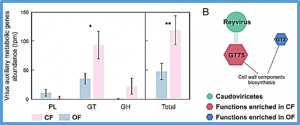
Organic carbon availability in soil is crucial for shaping microbial communities, yet, uncertainties persist concerning microbial adaptations to carbon levels and the ensuing ecological and evolutionary consequences. We investigated organic carbon metabolism, antibiotic resistance, and virus–host interactions in soils subjected to 40 y of chemical and organic fertilization that led to contrasting carbon availability: carbon-poor and carbon-rich soils, respectively

Planet vs. Plastics unites students, parents, businesses, governments, churches, unions, individuals, and NGOs in an unwavering commitment to call for the end of plastics for the sake of human and planetary health, demanding a 60% reduction in the production of plastics by 2040 and an ultimate goal of building a plastic-free future for generations to come.
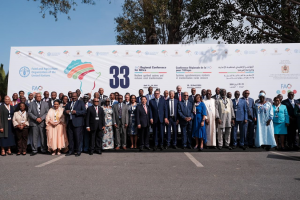
Hunger levels in Africa have increased in the past two years, due to lingering effects of the COVID-19 pandemic, ongoing conflicts, the climate crisis and economic shocks, but the continent’s possibilities are vast and optimism about the opportunities that lie ahead is in order, QU Dongyu, Director-General of the Food and Agriculture Organization of the United Nations (FAO), said today at the 33rd Session of the FAO Regional Ministerial Conference for Africa (ARC33).
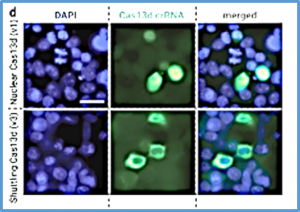
CRISPR/Cas13 systems are programmable tools for manipulating RNAs and are used in a variety of RNA-targeting applications. Within the Cas13 family, Cas13d is the most active subtype in mammalian cells. Recently, Cas13d was harnessed as an antiviral against diverse human RNA viruses. However, Cas13d is barely active in the cytosol of mammalian cells, restricting its activity to the nucleus, which limits applications such as programmable antivirals.
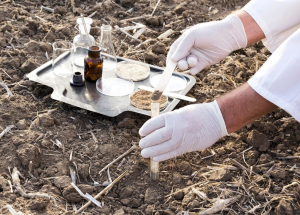
Chinese researchers produced a chip that allows on-site determination of nutrients in soil. This tool will help boost crop growth in farms. Nutrients, such as potassium, nitrogen, and phosphorus, are crucial for crop growth and agricultural production. That is why it is important to quickly and accurately detect soil nutrients to guide fertilization practices.

Scientists from Helmholtz Munich and the Technical University of Munich (TUM) devised a new CRISPR tool called Cas13d-NCS, which allows CRISPR RNA molecules to move to the cytoplasm and make it highly effective for neutralizing RNA viruses. The findings of their study are reported in Cell Discovery. RNA viruses like SARS-CoV-2 continue to become a global threat due to its increasing number of cases.
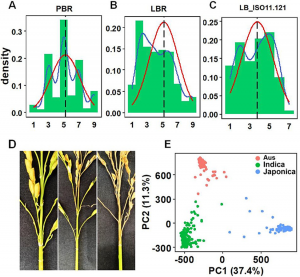
Cultivating rice varieties with robust blast resistance is the most effective and economical way to manage the rice blast disease. However, rice blast disease comprises leaf and panicle blast, which are different in terms of resistance mechanisms. While many blast resistant rice cultivars were bred using genes conferring resistance to only leaf or panicle blast, mining durable and effective quantitative trait loci (QTLs) for both panicle and leaf blast resistance is of paramount importance.