


News & Events
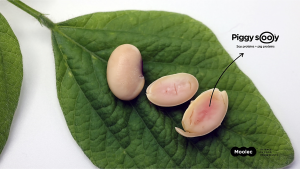
Moolec Science's genetically engineered soybean with pork proteins known as Piggy Sooy has received the response to their request for regulatory status review from USDA Animal and Plant Health Inspection Service. APHIS concluded that Piggy Sooy is unlikely to pose an increased plant pest risk compared to the conventional soybeans. Thus, it is not subject to the APHIS regulation governing movement of genetic engineered organisms or products.

In the past decade, gene editing and other breakthroughs in molecular biology led to new techniques for easing genetic improvement. These techniques do not lead to different results from those that earlier techniques could obtain; they just allow scientists to reach the same results easily, faster, and with increased knowledge/control of the outcome. These techniques are now being discussed globally and many have asked questions about the regulation of gene editing.
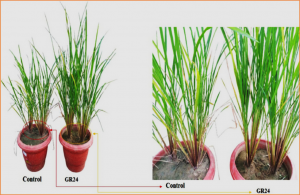
Strigolactones (SLs) are a new class of plant hormones that play a significant role in regulating various aspects of plant growth promotion, stress tolerance and influence the rhizospheric microbiome. GR24 is a synthetic SL analog used in scientific research to understand the effects of SL on plants and to act as a plant growth promoter. This study aimed to conduct hormonal seed priming at different concentrations of GR24 (0.1, 0.5, 1.0, 5.0 and 10.0 µM with and without arbuscular mycorrhizal fungi (AMF)
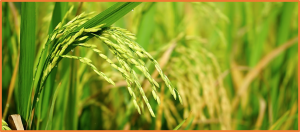
Southeast Asia produces an estimated 7,767 Gg CH4/year or 194,186 Gg CO2e/year from 48.5 million ha of paddy rice and globally is the region with the second-highest emissions from rice. Vietnam is distinctive in the region for its high proportion of irrigated, rather than rainfed, rice. Of the total annually cultivated rice area of about 3 million hectares, 2.96 million hectares are irrigated and are usually planted with two to three rice crops per year.

The Food and Agriculture Organization of the United Nations today held an official launch here of its Green Cities Initiative, which is already being piloted in Cameroon, with seven municipalities submitting letters of intent to join the initiative. In remarks at the launch event, FAO Director-General QU Dongyu noted that with two thirds of the world’s population expected to live in cities by 2050 - urban areas are facing major challenges.
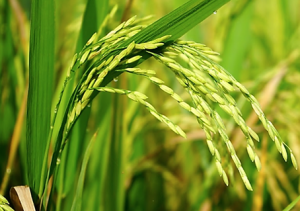
Climate change and cadmium (Cd) contamination pose severe threats to rice production and food security. Biochar (BC) has emerged as a promising soil amendment for mitigating these challenges. To investigate the BC effects on paddy soil upon GHG emissions, Cd bioavailability, and its accumulation, a meta-analysis of published data from 2000 to 2023 was performed. Data Manager 5.3 and GetData plot Digitizer software were used to obtain and process the data for selected parameters.
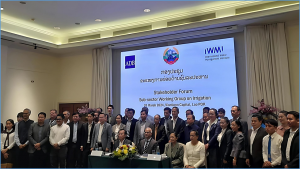
Water management for irrigated agriculture was discussed to enhance irrigation efficiencies in the first stakeholder forum of the year 2024 on 20 March 2024 in Vientiane Capital, Laos. The results of the irrigation sub-sector review conducted in 2018/19, was used as inputs for the discussion, in addition the Irrigation Development Plan from 2024-2025 and Vision to 2030 of the Department of Irrigation of the Ministry of Agriculture and Forestry.
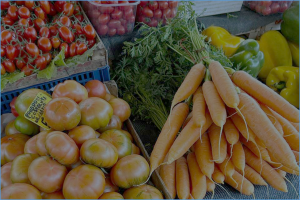
A ground-breaking new paper published in Nature Food from the Periodic Table of Food Initiative (PTFI) exposes a critical gap in our scientific understanding of the foods we eat. It unveils a meticulously curated list of 1,650 nutritionally and culturally diverse foods for biochemical analysis, of which more than 1,000 are not included in any globally recognized food composition databases. Such databases are typically used to issue dietary guidelines and to guide agricultural policies.
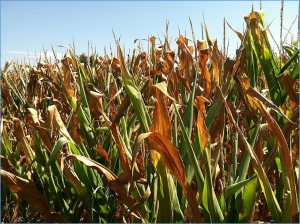
High temperatures are increasingly becoming a prominent environmental factor accelerating the adverse influence on the growth and development of maize (Zea mays L.). Therefore, it is critical to identify the key genes and pathways related to heat stress (HS) tolerance in maize. Great challenges have been faced in dissecting genetic mechanisms and uncovering master genes for HS tolerance.
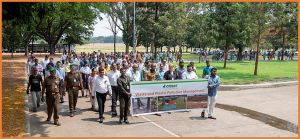
Dr Jacqueline Hughes, Director General of ICRISAT, announced the initiative timed to coincide with Earth Day on April 22. "In a week's time, we will eliminate all single use plastic items across our campus, and minimize the use of any disposable plastic items. This action underlines our commitment to this year's Earth Day theme, Planet vs. Plastics," stated Dr Hughes.
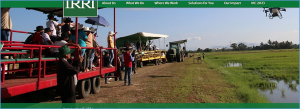
Aimed at leveraging the power of drone technology to boost farmers’ productivity and sustainability, the International Rice Research Institute (IRRI) and the Department of Agriculture - Philippine Rice Research Institute (DA-PhilRice) have launched the Drones4Rice Project during the Inception Workshop held at the IRRI Headquarters in Los Baños, Laguna on 16-17 April 2024.
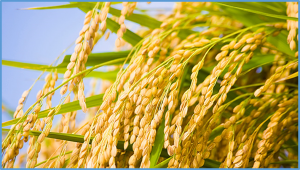
Climate change has a significant impact on rice grain appearance quality; in particular, high temperatures during the grain filling period increase the rate of chalky immature grains, reducing the marketability of rice. Heat-tolerant cultivars have been bred and released to reduce the rate of chalky grain and improve rice quality under high temperatures, but the ability of these cultivars to actually reduce chalky grain content has never been demonstrated due to the lack of integrated datasets