


News & Events
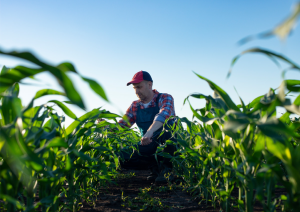
The European Food Safety Authority (EFSA) Panel on Genetically Modified Organisms (GMO Panel) has published separate Scientific Opinions that report on the outcome of its risk assessment for two genetically modified (GM) maize, MON 89034 × 1507 × NK603 from Corteva Agriscience Belgium and Bayer Agriculture, and MON 94804 from Bayer Agriculture.

Kenya is seeking to strengthen its biosafety communication strategies in a bid to effectively combat biosafety-related misinformation and enhance public trust on science-based biosafety decisions. This emerged during a biosafety communication training held in Nairobi on May 2-3, 2024. Speaking during the workshop, Dr. Roy Mugiira, the Chief Executive Officer of Kenya's National Biosafety Authority (NBA) hinted that the Authority will soon roll out a new corporate communication strategy that recognizes the need to proactively reduce the harm of misinformation about biosafety issues.
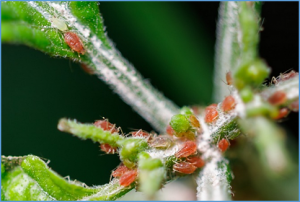
Arthropod herbivory poses a serious threat to crop yield, prompting plants to employ intricate defense mechanisms against pest feeding. The generalist pest 2-spotted spider mite (Tetranychus urticae) inflicts rapid damage and remains challenging due to its broad target range. In this study, we explored the Arabidopsis (Arabidopsis thaliana) response to T. urticae infestation, revealing the induction of abscisic acid (ABA),
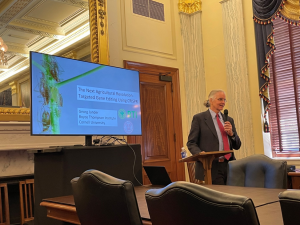
Georg Jander, a professor from the Boyce Thompson Institute addressed an audience in the United States Senate Committee on Agriculture, Nutrition, and Forestry on April 23, 2024, in a session and call to action for policymakers to support and fund the technologies that will define the future of agriculture. In a compelling presentation titled "The Next Agricultural Revolution: Targeted Gene Editing Using CRISPR," Jander outlined the transformative potential of CRISPR technologies in agriculture.

ASCA7 targets to equip Asian scientists, regulators, and other stakeholders with the knowledge and skills to navigate the complexities of agri-biotech. The program focuses on three key areas: agri-biotech applications, policy environment, and biotech communication. This comprehensive approach empowers participants to contribute towards implementation of science-based regulations that support the commercialization and trade of agri-biotech products.
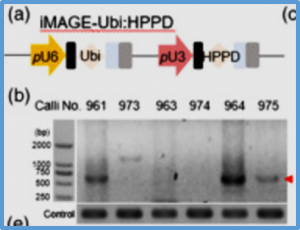
The CRISPR/Cas type V-I is a family of programmable nuclease systems that prefers a T-rich protospacer adjacent motif (PAM) and is guided by a short crRNA. In this study, the genome-editing application of Cas12i3, a type V-I family endonuclease, was characterized in rice. We developed a CRIPSR/Cas12i3-based Multiplex direct repeats (DR)-spacer Array Genome Editing (iMAGE) system that was efficient in editing various genes in rice.
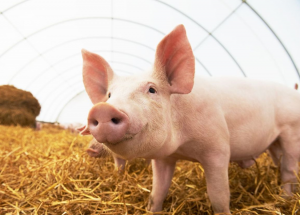
Researchers developed a platform to visually screen the efficiency of gene editing in porcine. The platform is a simple, rapid, and effective way to assess gene knockout efficiency. Gene-edited pigs are typically produced using CRISPR-Cas9 and somatic cell nuclear transplantation (SCNT). The efficiency in getting gene-edited nuclear donors is affected by the chosen CRISPR-Cas9 form. However, there is no direct technique to assess the efficiency of CRISPR-Cas9 in porcine.

The increasing number of antimicrobial resistance (AMR) calls for an urgent need for innovative tools to combat AMR. In a presentation at the ESCMID Global Congress, Dr Rodrigo Ibarra-Chávez from the University of Copenhagen, Denmark, discussed how CRISPR technology can be used to modify and attack AMR bacteria. Their research involves developing guided systems to combat AMR genes, which are aimed to treat infections and halt the spread of resistant genes
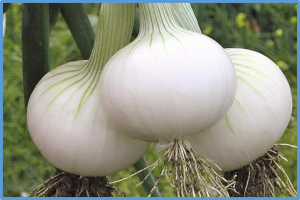
White bulb colors in onion (Allium cepa L.) are determined by either the C or I loci. The causal gene for the C locus was previously isolated, but the gene responsible for the I locus has not been identified yet. To identify candidate genes for the I locus, an approximately 7-Mb genomic DNA region harboring the I locus was obtained from onion and bunching onion (A. fistulosum) whole genome sequences using two tightly linked molecular markers
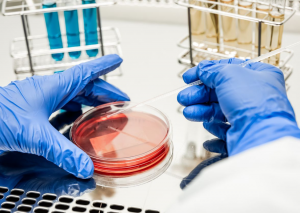
American scientists produce synthetic cells that are similar in appearance and function to living cells. Their research may play an important role in diagnostic tools, drug delivery systems, and regenerative medicine. Living cells are composed of proteins that perform tasks and create structures. Proteins are needed to form the cytoskeleton of the cell, which is crucial for the cell to function.
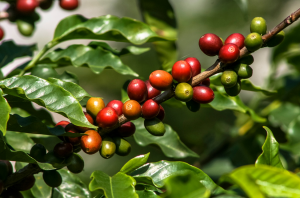
An international team of researchers co-led by Nanyang Technological University, Singapore (NTU Singapore) has made a breakthrough to help protect Arabica plants against the fungal disease coffee leaf rust. Globally, Arabica coffee is the most economically important coffee, accounting for 60 percent of coffee products worldwide. Coffee leaf rust disease, caused by the Hemileia vastatrix fungi has wreaked havoc on coffee-producing farms worldwide.
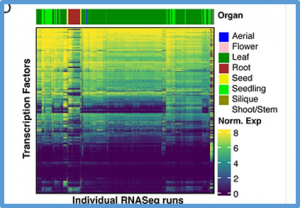
Organ-specific gene expression datasets that include hundreds to thousands of experiments allow the reconstruction of organ-level gene regulatory networks (GRNs). However, creating such datasets is greatly hampered by the requirements of extensive and tedious manual curation. Here, we trained a supervised classification model that can accurately classify the organ-of-origin for a plant transcriptome.