


News & Events
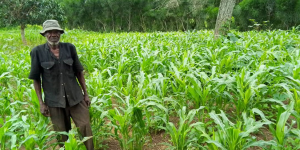
In Ghana, pests and diseases cause food and agriculture-related losses valued at USD 1 billion annually, impacting the economy and the livelihoods of smallholder farmers. Climate change makes the challenge harder to address as warmer temperatures attract more invasive species. So, 11 public and private sector organizations collaboratively developed an Early Warning and Rapid Response System for Pests and Diseases to protect the country’s food system.

In a strategic move to align multilateral partnerships for food and nutrition security in Africa, a maiden edition of the Agribusiness for Food Security Initiative was held recently at IITA headquarters in Ibadan. The high-profile event, hosted by Oyo State Governor Engineer Seyi Makinde and chaired by former Nigerian President and IITA Honorary Ambassador Chief Olusegun Obasanjo, critically explored research and private sector involvement in addressing the challenges of food and nutrition insecurity at state, national, and continental levels.
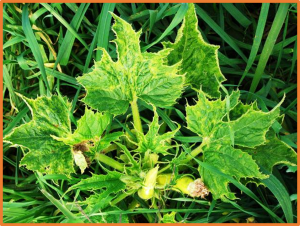
Leaf size is a critical determinant of plant architecture in cucumbers, yet only a few genes associated with this trait have been mapped or cloned. Here, we identified and characterized a mutant with little and wrinkled leaves, named lwl-1. Genetic analysis revealed that the phenotype of the lwl-1 was controlled by a single recessive gene. Through map-based cloning, the lwl-1 locus was narrowed down to a 12.22-kb region exclusively containing one fully annotated gene CsGME (CsaV3_2G004170).

Cassava, known for its versatility and resilience, offers numerous opportunities for value addition, transforming it from a basic staple into a valuable commodity. Value addition in cassava involves processing it into various products, increasing its economic value and marketability. The IITA-Malawi Cassava Unit organized Cassava Chat every Friday to educate and enrich staff’s knowledge of cassava. Given the changing climate and the impact of inflation on maize production in Malawi, cassava is emerging as a potential solution.
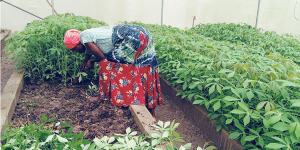
The Ministry of Agriculture of Tanzania, in collaboration with the Tanzania Cassava Producers and Processors Association (TACAPPA), IITA, and AGRA – Sustainably Growing Africa’s Food Systems, organized a cassava business and investment forum in Dodoma on 29 April. The event aimed to engage stakeholders, especially private-sector cassava producers, seed producers, researchers, and policymakers, to foster insightful discussions on promoting cassava in food systems diversification, commercialization, and trade at national, regional, and international levels.
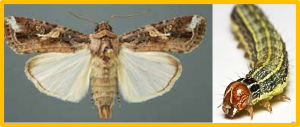
Phytophagous insects have evolved sophisticated detoxification systems to overcome the antiherbivore chemical defenses produced by many plants. However, how these biotransformation systems differ in generalist and specialist insect species and their role in determining insect host plant range remains an open question. Here, we show that UDP-glucosyltransferases (UGTs) play a key role in determining the host range of insect species within the Spodoptera genus

In the face of intensifying El Niño and La Niña weather events, effective anticipatory action is crucial to shield and better equip communities ahead of shocks as it helps to save lives and protect livelihoods by preventing damage and losses to crops, livestock, productive lands, water and infrastructure, said Beth Bechdol, Deputy Director-General of the Food and Agriculture Organization of the United Nations (FAO).
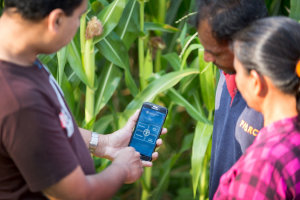
The Food and Agriculture Organization of the United Nations (FAO) is marking this year’s International Day of Plant Health by shining a light on the importance of leveraging innovation to protect plants, which are indispensable for sustaining life on earth. This year’s observance on May 12 focuses on the many innovations that cut across areas where plant health is crucial – such as plant pest monitoring to protect agricultural production – and digital systems to ensure the safe international trade in plants.
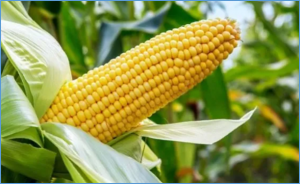
Soil salinization is one of the leading threats to global ecosystems, food security, and crop production. Plant growth-promoting rhizobacteria (PGPRs) are potential bioinoculants that offer an alternative eco-friendly agricultural approach to enhance crop productivity from salt-deteriorating lands. The current work presents bacterial strain CNUC13 from maize rhizosphere soil that exerted several PGPR traits and abiotic stress tolerance.

A study published in The Plant Journal investigated the role of NtG3BPL1 in tobacco resistance against chilli veinal mottle virus (ChiVMV) infection. This research opens opportunities to develop antiviral strategies against ChiVMV through gene editing. ChiVMV is a plant virus that infects plants causing mottled leaves, leaf curling, chlorosis, and reduced overall quality of crops. These symptoms contribute to significant yield losses of tobacco plants.
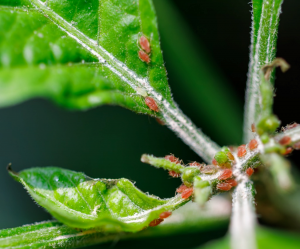
Scientists have discovered that a drought stress hormone of plants is used to block spider mites. Their findings may help with future crop breeding programs that seek to improve broad-scale pest management. Pests greatly affect the yield of crops, which causes plants to use defense mechanisms against these pests. However, spider mite causes quick damage and is hard to address because of its broad target range.
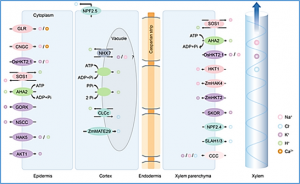
Excess soil salinity affects large regions of land and is a major hindrance to crop production worldwide. Therefore, understanding the molecular mechanisms of plant salt tolerance has scientific importance and practical significance. In recent decades, studies have characterized hundreds of genes associated with plant responses to salt stress in different plant species. These studies have substantially advanced our molecular and genetic understanding of salt tolerance in plants and have introduced an era of molecular design breeding of salt-tolerant crops.