


News & Events

Researchers from the University of Sydney produced seekRNA, a gene editing tool that has higher accuracy and flexibility compared to CRISPR. The technique has successfully been tested in bacteria and will be investigated if it can be applied to complex eukaryotic cells. CRISPR creates a break in the two strands of DNA and requires other proteins to add the new DNA sequence. Even though CRISPR has multiple applications in different industries, this method can introduce unintentional errors in the DNA.
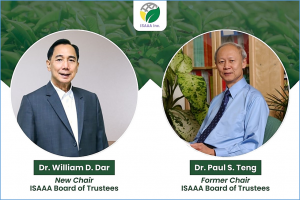
ISAAA Inc. recognizes Dr. Paul S. Teng who has been the Chair of ISAAA Board of Trustees from 2013 to June 1, 2024. Dr. Teng has been the Dean and Managing Director of the National Institute of Education International at Nanyang Technological University (NTU) in Singapore since 2018. He previously held other leadership positions at the same institute since 2004.
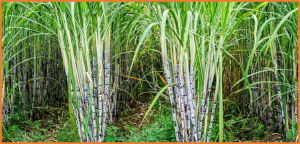
Sugarcane, the world's most harvested crop by tonnage, has shaped global history, trade and geopolitics, and is currently responsible for 80% of sugar production worldwide1. While traditional sugarcane breeding methods have effectively generated cultivars adapted to new environments and pathogens, sugar yield improvements have recently plateaued2.

Scientists from the Massachusetts Institute of Technology (MIT) produced a novel method to store DNA in a new type of polymer. Their creation can fit the entire human genome and may store digital information on DNA. Current methods of DNA storage require freezing temperatures, which are not feasible in other parts of the world. Those methods also consume a large amount of energy, which make them expensive and unscalable.

Researchers from New York University Langone Health developed a new method that can detect molecular changes in DNA before they become permanent mutations. Most mutations originate in DNA changes that are found in only one DNA strand. These changes are the result of a DNA strand that is incorrectly copied during replication or when a strand is damaged due to heat or chemicals in the body. Unfortunately, single-strand changes cannot be identified using existing testing methods.
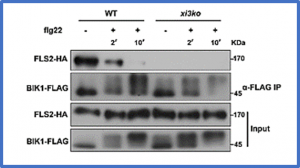
Plants rely on immune receptor complexes at the cell surface to perceive microbial molecules and transduce these signals into the cell to regulate immunity. Various immune receptors and associated proteins are often dynamically distributed in specific nanodomains on the plasma membrane (PM). However, the exact molecular mechanism and functional relevance of this nanodomain targeting in plant immunity regulation remain largely unknown.
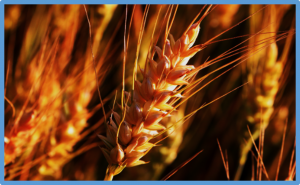
A decade-long cross-institutional collaboration led by scientists from the John Innes Centre (JIC) and the Agricultural Genomics Institute at Shenzhen, Chinese Academy of Agricultural Sciences (CAAS), has discovered huge genetic potential that is untapped in modern wheat varieties. Dr. Simon Griffiths at JIC and Professor Shifeng Cheng at CAAS studied the historic A.E. Watkins Landrace Collection, which contains a collection of local wheat varieties which are no longer grown anywhere in the world, and compared this with modern wheats.
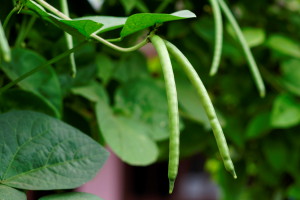
Media coverage of genetically modified organisms (GMOs) has significantly affected public perception of the technology. A study published in GM Crops & Food explores the evolution of media reportage on GMOs in Ghana following the approval of Bt cowpea, the country's first GM crop, in 2022. The study analyzed GMO stories reported by three major digital news outlets in Ghana from January 2021 to December 2023 using eight keywords to identify relevant articles,
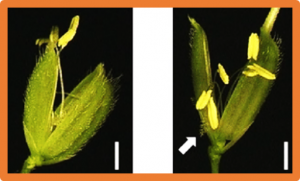
Temperate Geng/Japonica (GJ) rice yields have improved significantly, bolstering global food security. However, GJ rice breeding faces challenges, including enhancing grain quality, ensuring stable yields at warmer temperatures, and utilizing alkaline land. In this study, we employed CRISPR/Cas9 gene-editing technology to knock out the GS3 locus in seven elite GJ varieties with superior yield performance.

ASCA7 targets to equip Asian scientists, regulators, and other stakeholders with the knowledge and skills to navigate the complexities of agri-biotech. The program focuses on three key areas: agri-biotech applications, policy environment, and biotech communication. This comprehensive approach empowers participants to contribute towards implementation of science-based regulations that support the commercialization and trade of agri-biotech products.
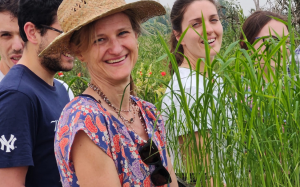
Researchers from the University of Milan have initiated the first field trial of gene-edited crops in Italy for a new rice variety named “RIS8imo,” a modified version of the Italian Arborio rice commonly used in risotto. Researchers targeted three genes exploited by the rice blast fungus and removed small parts of the DNA code to render them ineffective for the pathogen. Small fragments of DNA were removed from RIS8imo to enhance its resistance against the rice blast disease, a severe threat to cereal crops globally.
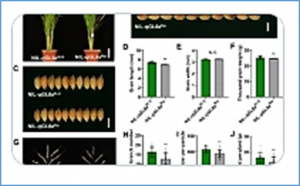
Grain size is a crucial agronomic trait that determines grain weight and final yield. Although several genes have been reported to regulate grain size in rice (Oryza sativa), the function of Wall-Associated Kinase family genes affecting grain size is still largely unknown. In this study, we identified GRAIN WEIGHT AND NUMBER 1 (GWN1) using map-based cloning. GWN1 encodes the OsWAK74 protein kinase, which is conserved in plants.