


News & Events
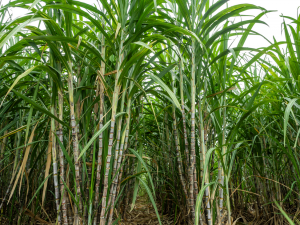
Pakistan’s Technical Advisory Committee of the Environment Protection Agency released commercialization approvals for two high-yielding sugarcane varieties developed by experts from the University of Agriculture, Faisalabad. While sugarcane meets a significant 70% of global sugar demandand holds promise as a key bioethanol source, Pakistan ranks 5th in sugarcane cultivation but only 11th in worldwide production.
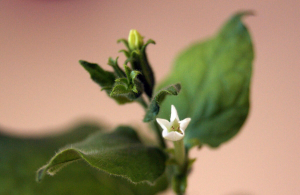
A study led by scientists from the University of California Berkeley, and the University of California, Davis demonstrated the potential of genetically engineered plants to produce prebiotic sugars found in human breast milk. The findings of the study, published in Nature Food, could provide significant insights into producing a healthier, non-dairy plant milk alternative for babies.
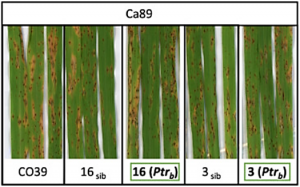
A critical step to maximize the usefulness of genome-wide association studies (GWAS) in plant breeding is the identification and validation of candidate genes underlying genetic associations. This is of particular importance in disease resistance breeding where allelic variants of resistance genes often confer resistance to distinct populations, or races, of a pathogen. Here, we perform a genome-wide association analysis of rice blast resistance in 500 genetically diverse rice accessions. To facilitate candidate gene identification, we produce de-novo genome assemblies of ten rice accessions with various rice blast resistance associations.

Director-General QU Dongyu today welcomed farmers from around the globe to FAO headquarters for the 2024 Annual Meeting of the World Farmers’ Organisation (WFO). “You are the game changers of agrifood systems,” he said, noting that precisely those systems need to be urgently transformed to address hunger and other global challenges. Most of the worlds 608 million farms are run by an individual or a family and rely primarily on family labor, operating at a small scale yet producing the vast majority of the world’s food in value terms.

Crop pests and diseases pose significant challenges to cotton productivity and fiber quality. A study published in New Phytologist explores the role of Gossypium Pigment Gland Size (GoPGS) as a novel regulator of pigment gland development of cotton. Their findings contribute to the development of gene-edited cotton with enhanced tolerance to the major biotic stressors. Pigment glands synthesize and store various terpenoids that naturally resist insects and pathogens, such as cotton bollworm and fungal plant pathogen Verticillium dahliae.
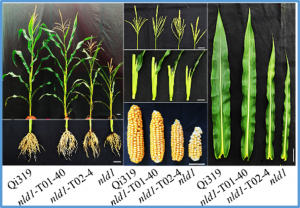
Endoplasmic reticulum (ER)–associated degradation (ERAD) plays key roles in controlling protein levels and quality in eukaryotes. The Ring Finger Protein 185 (RNF185)/membralin ubiquitin ligase complex was recently identified as a branch in mammals and is essential for neuronal function, but its function in plant development is unknown. Here, we report the map-based cloning and characterization of Narrow Leaf and Dwarfism 1 (NLD1)
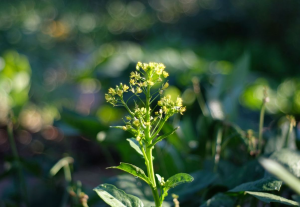
Scientists from the U.S. Department of Energy's Brookhaven National Laboratory used CRISPR to develop a high-oil variety of Camelina sativa. Their research may help achieve a net-zero carbon bioeconomy. Camelina (Camelina sativa) is a close relative of canola and it is being developed to serve as a source of plant oil for the production of biofuel feedstocks. However, a yellow seed phenotype of Camelina is necessary to acquire a high oil content from the plant but it is currently unknown.
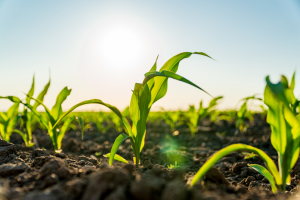
Researchers from China Agricultural University and Origin Agritech optimized maize's leaf angles at different canopy layers to boost yield through gene editing. Their findings, published in Nature, provide insight into improving maize yield and revolutionizing maize cultivation. According to Origin Agritech, the method is the world's first efficient genetic transformation system for maize induction line Hi3. The system is designed for rapid editing of maize lines. This method also enables accurate modifications in maize lines within one year, saving 3 to 4 years in maize breeding.
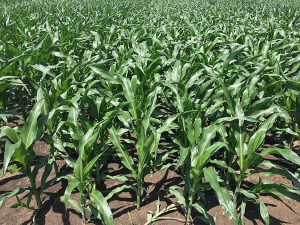
Increasing planting density is a key strategy to enhance maize yields1-3. An ideotype for dense planting requires a ‘smart canopy’ with leaf angles at different canopy layers differentially optimized to maximize light interception and photosynthesis4-6, amongst other features. Here, we identified leaf angle architecture of smart canopy 1 (lac1), a natural mutant possessing upright upper leaves, less erect middle leaves and relatively flat lower leaves.
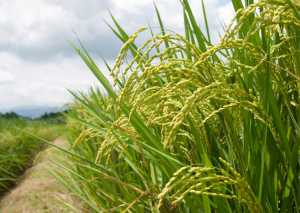
A team from the University of California, Berkeley's (UCB) Innovative Genomics Institute (IGI) has produced an increase in gene expression in a food crop by changing its upstream regulatory DNA. Other studies used CRISPR-Cas9 gene editing to knock out or decrease gene expression, this new research however, is the first unbiased gene editing approach to increase gene expression and downstream photosynthetic activity.

Researchers from the Broad Institute of MIT and Harvard and partners developed a system that can insert or substitute genes in human cells. Their study demonstrates great potential for therapeutic applications of human diseases. Current methods of inserting genes in mammalian genomes have low programmability, efficiencies, or specificities. Due to this, it is difficult to treat genetic diseases, such as cystic fibrosis and phenylketonuria.
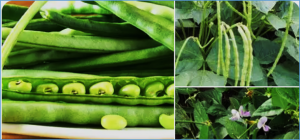
Seed dormancy in wild cowpea may be useful in breeding cultivated cowpea with pre-harvest sprouting resistance. A previous study identified a major quantitative trait locus (QTL) for seed dormancy, Sdp1.1+ , using the population of the cross between cultivated cowpea ‘JP81610’ and wild cowpea ‘JP89083.’ However, the molecular basis of seed dormancy in cowpea is not yet known. In this study, we aimed to finely map the locus Sdp1.1+ and identify candidate gene(s) for it.