


News & Events
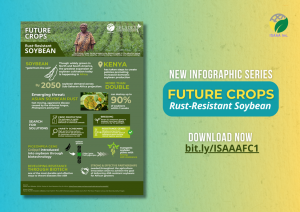
ISAAA Inc. tackles the role of biotech crops in food security, climate change mitigation, and sustainability with a new infographic series titled Future Crops. The first installment focuses on Rust-Resistant Soybean, a biotech solution being developed by 2Blades and partners to combat a major threat to Africa's growing soybean industry—Asian Soybean Rust (ASR).

A recent study published in Nature reveals a technology designed to enhance the efficiency of plant gene editing called Transposase-Assisted Target Site Integration (TATSI). This method used transposable elements to integrate custom DNA into specific locations in plant genomes. By improving the precision and frequency of DNA integration, TATSI aims to make the production of genetically enhanced crops faster and more cost-effective.
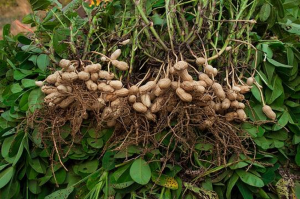
Peanut (Arachis hypogaea L.) is a globally staple oilseed crop, extensively cultivated in tropical and subtropical regions. Due to its substantial oil (approximately 46%–58%) and protein (around 22%–32%) content, the peanut plays a pivotal role in addressing malnutrition and ensuring food security in many regions. The fatty acid profiles of vegetable oil and foods have recently garnered increased attention due to the potential impact on human health.
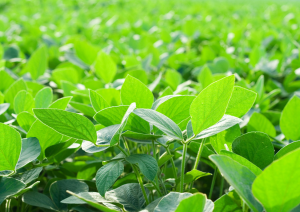
The U.S. Department of Agriculture's (USDA) Animal and Plant Health Inspection Service (APHIS) has released their review of seven plants modified using genetic engineering to determine whether they posed an increased plant pest risk relative to non-modified comparators. APHIS found that these modified plants were unlikely to pose an increased plant pest risk compared to other cultivated plants and were not subject to regulation under 7 CFR part 340 and may be safely grown and bred in the United States.

The International Service for the Acquisition of Agri-biotech Applications, Inc. (ISAAA Inc.) and the Malaysian Biotechnology Information Centre (MABIC) are now accepting registrations for the 7th Asian Short Course on Agribiotechnology, Biosafety Regulation, and Communication (ASCA7). This intensive 5-day program, to be held on September 2-6, 2024 at the Maruay Garden Hotel in Bangkok, Thailand, is co-hosted by the Department of Agriculture and Biotechnology Alliance Association.
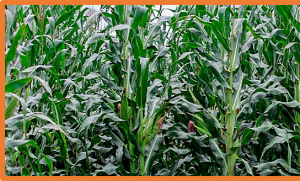
The effects of climate change in the form of drought, heat stress, and irregular seasonal changes threaten global crop production. The ability of multi-omics data, such as transcripts and proteins, to reflect a plant’s response to such climatic factors can be capitalized in prediction models to maximize crop improvement. Implementing multi-omics characterization in field evaluations is challenging due to high costs.
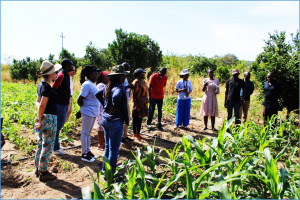
The CGIAR Initiative on Agroecology works in eight countries of the Global South. From the beginning, country teams aimed at learning from each other while co-developing with their national partners the vision and actions required to achieve agroecological transitions. The International Network of Agroecology Living Landscapes (INALL) is the mechanism that the Initiative designed to provide an opportunity for its members to share knowledge.
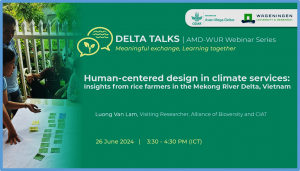
Ms. Luong Van Lam, a visiting researcher at the Alliance of Bioversity International and CIAT, talked about the results of their study examining how rice farmers in the Mekong River Delta (MRD) access and utilize climate information. She discussed the current information sources of climate information and advisory for rice farmers in MRD, how farmers experience the Agro-climatic Bulletin (ACB), and different user groups based on needs and preferences. The research focused on Hau Giang and Soc Trang provinces in Vietnam.
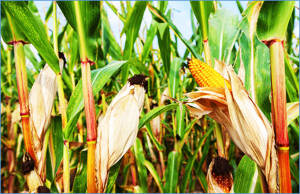
Barley yellow dwarf (BYD) is one of the economically most important virus diseases of cereals worldwide, causing yield losses up to 80%. The means to control BYD are limited, and the use of genetically resistant cultivars is the most economical and environmentally friendly approach. The objectives of this study were i) to identify the causative gene for BYD virus (BYDV)-PAV resistance in maize, ii) to identify single nucleotide polymorphisms and/or structural variations in the gene sequences,
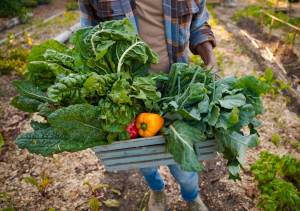
Researchers from Lupane State University in Zimbabwe and partners reviewed the applications of CRISPR-Cas9 in producing climate-resilient crops that will help smallholder farmers in Africa.The growth of the African population is threatened by malnutrition, food insecurity, and climate change. Africa's crop productivity is also declining due to drought and unpredictable precipitation patterns. To address these challenges, scientists use CRISPR-Cas9 to develop crops with enhanced traits, such as nutrition, drought tolerance, and disease resistance.
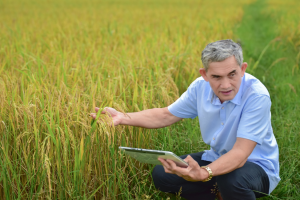
Researchers from Shanghai Jiao Tong University in China and partners explored the role of circular RNAs in rice and their interaction with pathogenic bacteria. Before their investigation, the regulatory mechanisms of circular RNAs in such interactions were unknown. Knocking down circular RNAs in plants has been a challenge because their sequences are similar to their parent genes. To address this, the research team developed a CRISPR-Cas13d system to specifically target and reduce the expression of a rice circular RNA named Os-circANK.
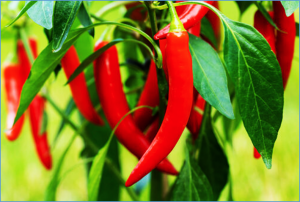
The concave shape of the fruit tip in pepper plants is highly susceptible to drought and low temperature stresses, resulting in the appearance of a pointed tip fruit, which affects its commercial value. However, few studies on the process of fruit tip development and regulatory genes in pepper have been reported. Herein, the developmental process of the ovary before anthesis, especially changes in the shape of the ovary tip, was studied in detail.