


News & Events
Good land and water governance and tenure security is a building block for sustainable food production systems. As we develop the new CGIAR Mega Programs we have an opportunity to increase our research investment in land and water governance and make it a core pillar of our research portfolio. In 2023, the CGIAR became a member of the International Land Coalition (ILC), a coalition made up of people-led organisations, international NGOs, research institutes, land networks and UN agencies, among others
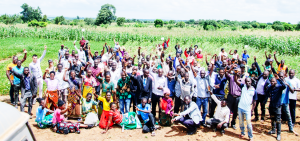
Agriculture players in Malawi have described the 2023/24 season as the toughest in a decade. Farmers have experienced significantly reduced and unstable rains, resulting to be one of the highest crop failures and losses ever recorded. This is challenging traditional agricultural practices and highlighting the urgent need for new approaches and a deeper understanding of sustainable farming techniques.
Circular RNAs (circRNAs), a class of non-coding RNA molecules, are recognized for their unique functions; however, their responses to herbicide stress in Brassica napus remain unclear. In this study, the role of circRNAs in response to herbicide treatment was investigated in two rapeseed cultivars: MH33, which confers non-target-site resistance (NTSR), and EM28, which exhibits target-site resistance (TSR).
Habtamu Sibilu sets a dynamic cone penetrometer upright on a flat patch of grass. He lifts up the weight, drops it and records how many centimetres into the soil the penetrometer penetrates. After doing this as many times as it takes to reach 20 cm deep into the soil, Sibilu looks over his shoulder to check if the water in his infiltration experiment has drained into the soil.
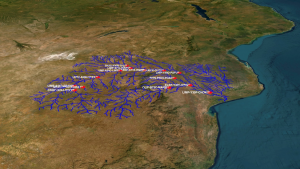
The idea of creating a complete virtual representation, or Digital Twin, of a natural system opens up future in which decision-makers can easily identify and respond to environmental issues. Advances in remote sensing and cloud computing mean that it is technically feasible, but how can it practically be achieved in the context of the global South?
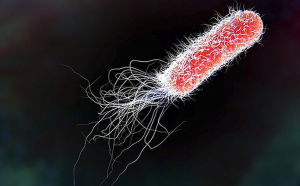
In 1967, in this journal, Evelyn Witkin proposed the existence of a coordinated DNA damage response in Escherichia coli, which later came to be called the “SOS response.” We revisited this response using the replication inhibitor azidothymidine (AZT) and RNA-Seq analysis and identified several features. We confirm the induction of classic Save our ship (SOS) loci and identify several genes, including many of the pyrimidine pathway, that have not been previously demonstrated to be DNA damage-inducible.

Researchers from Pennsylvania State University discovered that heparan sulfate–modified proteins may serve as a target for early Alzheimer's treatment. Alzheimer's disease has a widespread impact around the globe, but its biological cause or mechanism is still unclear. Heparan sulfate–modified proteins have been suggested to cause Alzheimer's, but further research is necessary to identify their role in inducing the disease.
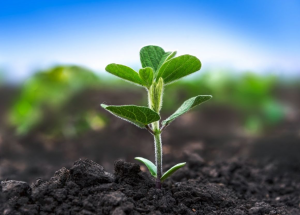
Scientists from La Trobe University and partners have identified that the FUN gene regulates the conversion of atmospheric nitrogen to usable nutrients. Legumes, such as peas and beans, coordinate with soil bacteria to transform atmospheric nitrogen into nutrients that will help boost the growth of crops. However, this process is minimized when the soil has plenty of available nitrogen due to natural processes or through the usage of fertilizers.
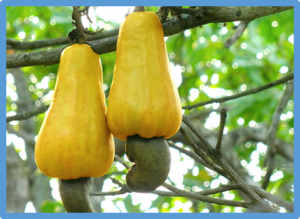
Vietnam is currently one of the largest producers and exporters of cashew nuts in the world. Cashew (Anacardium occidentale L.) is one of the main industrial crops cultivated in Dak Lak Province of Vietnam. Comprehending the endophytic bacteria of this plant, a new biofertilizer for sustainable cashew nut production can be progressed. In this report, the cashew root sample was collected from cashew fields in 2021 in Dak Lak.

In a study published in the Plant Biotechnology Journal, researchers investigated the reduction of very long-chain fatty acids (VLCFAs) in peanut kernels. Through CRISPR-Cas9 technology, the study aims to enhance the nutritional quality of peanuts by reducing VLCFAs which are linked to the development of cardiovascular diseases. Natural high levels of VLCFAs in peanuts are detrimental to human health.
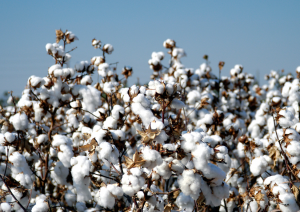
Bayer Australia has announced the commercial release of XtendFlex® herbicide tolerant XtendFlex cotton in Australia, providing growers with enhanced flexibility in weed control through tolerance to glyphosate, dicamba, and glufosinate. XtendFlex herbicide tolerance technology is Bayer's latest development in cotton herbicide tolerant traits.
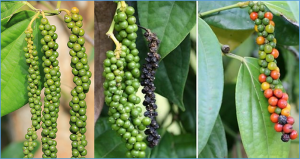
Despite the economic importance of Piper nigrum (black pepper), a highly valued crop worldwide, development and utilization of genomic resources have remained limited, with diversity assessments often relying on only a few samples or DNA markers. Here we employed restriction-site associated DNA sequencing to analyze 175 P. nigrum accessions from eight main black pepper growing regions in Sri Lanka. The sequencing effort resulted in 1,976 million raw reads, averaging 11.3 million reads per accession, revealing 150,356 high-quality single nucleotide polymorphisms (SNPs) distributed across 26 chromosomes.