


News & Events
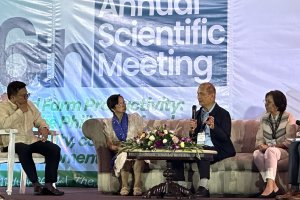
ISAAA Inc. participates in the 46th Annual Scientific Meeting (ASM) of the National Academy of Science and Technology, Philippines (NAST PHL) on July 10-11, 2024, with the theme Beyond Farm Productivity: Transforming the Philippine Food System to Address Equity, Consumer Health, and Environmental Issues. The 46th ASM brought national scientists, academicians, and experts together to provide a platform for dialogue and in-depth discussions addressing crucial topics influencing food systems.

A research team from Gladstone Institutes developed a gene editing method that allows simultaneous precision editing in multiple locations within a cell. The findings of their study, published in Nature Chemical Biology, could overcome a limitation of current genome editing methods. Gene editing has been adopted and used by scientists to study and develop crop varieties aimed at resisting various pests, insecticides, and diseases. However, current approaches limit gene editing to one location only at a time.
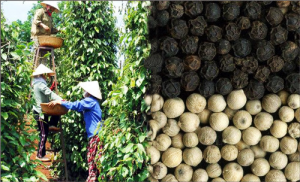
Piper nigrum L. (black and white peppercorn) is one of the most common culinary spices used worldwide. The current study aims to dissect pepper metabolome using 1H-NMR targeting of its major primary and secondary metabolites. Eighteen metabolites were identified with piperine detected in black and white pepper at 20.2 and 23.9 μg mg-1, respectively. Aroma profiling using HS-SPME coupled to GC-MS analysis and in the context of autoclave treatment led to the detection of a total of 52 volatiles with an abundance of β-caryophyllene at 82% and 59% in black and white pepper, respectively.
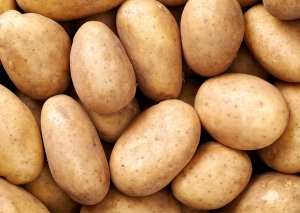
Potato breeder Dave Douches, professor in the Department of Plant, Soil and Microbial Sciences and Director of the Michigan State University (MSU) Potato Breeding and Genetics Program, has developed a genetically engineered potato that can be stored in cool temperatures for long periods and produce healthier and higher-quality potato chips. Kal91.3 was genetically engineered to silence a gene that produces an enzyme used to convert sucrose into reducing sugars such as fructose and glucose.

The International Service for the Acquisition of Agri-biotech Applications, Inc. (ISAAA Inc.) and the Malaysian Biotechnology Information Centre (MABIC) are now accepting registrations for the 7th Asian Short Course on Agribiotechnology, Biosafety Regulation, and Communication (ASCA7). This intensive 5-day program, to be held on September 2-6, 2024 at the Maruay Garden Hotel in Bangkok, Thailand, is co-hosted by the Department of Agriculture and Biotechnology Alliance Association.
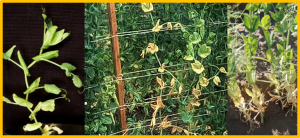
Pea Fusarium wilt, incited by Fusarium oxysporum f. sp. pisi (Fop), has always been a devastating disease that causes severe yield losses and economic damage in pea-growing regions worldwide. The utilization of pea cultivars carrying resistance gene is the most efficient approach for managing this disease. In order to finely map resistance gene, F2 populations were established through the cross between Shijiadacaiwan 1 (resistant) and Y4 (susceptible). The resistance genetic analysis indicated that the Fop resistance in Shijiadacaiwan 1 was governed by a single dominant gene, named FwS1. Based on the bulked segregant analysis sequencing analyses,
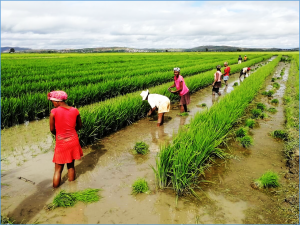
Emerging economies have increasingly driven global agricultural market developments over the last 20 years and are projected to continue to do so over the next decade, but with regional shifts linked to changing demographics and new economic affluence, according to a report released today by the Food and Agriculture Organization of the United Nations (FAO)and the Organisation for Economic Co-operation and Development (OECD).
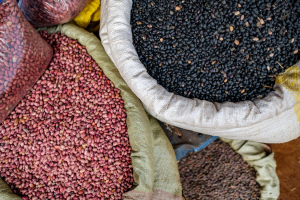
An initiative to build resilient agrifood systems grounded in diverse, nutritious, and climate-adapted crops grown in healthy soils, today marked another milestone through a new partnership between the Food and Agriculture Organization of the United Nations (FAO) and CIMMYT, a CGIAR Research Center. FAO and CIMMYT signed a Memorandum of Understanding establishing a Partnership for the Vision for Adapted Crops and Soils (VACS) initiative.
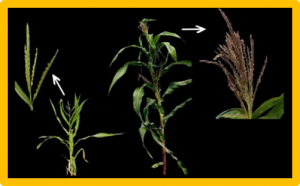
Doubled haploid (DH) line production through in vivo maternal haploid induction is widely adopted in maize breeding programs. The established protocol for DH production includes four steps namely in vivo maternal haploid induction, haploid identification, genome doubling of haploid, and self-fertilization of doubled haploids. Since modern haploid inducers still produce relatively small portion of haploids among undesirable hybrid kernels
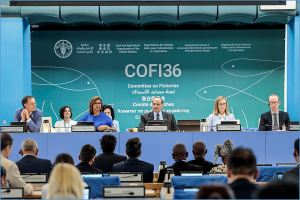
The Committee on Fisheries (COFI) is the largest global gathering of policymakers, experts and partners in the fisheries and aquaculture sector. This week’s (8-12 July) COFI36 meeting will focus on the vital role of fisheries and aquaculture in tackling food insecurity, malnutrition, and poverty, stressing their ability to alleviate hunger, drive sustainable growth, and reverse environmental degradation.

FAO Director-General, QU Dongyu, today expressed his gratitude to Italy’s Ministry of Infrastructure and Transport for providing 7 million euros to support a major refurbishment of the agency’s Rome headquarters.The plans include the restructuring and improvement of several areas, facilities and green areas serving FAO’s employees and visitors.
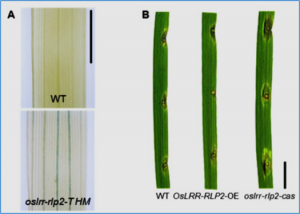
Rice is an important cereal crop worldwide, the growth of which is affected by rice blast disease, caused by the fungal pathogen Magnaporthe oryzae. As climate change increases the diversity of pathogens, the disease resistance genes (R genes) in plants must be identified. The major blast-resistance genes have been identified in indica rice varieties; therefore, japonica rice varieties with R genes now need to be identified.