


News & Events
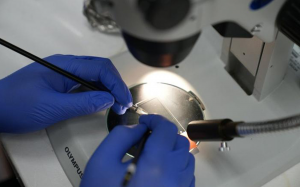
A member of the Virginia Tech research team analyzes a mosquito under a microscope. Photo Source: Max Esterhuizen for Virginia Tech. Researchers from Virginia Polytechnic Institute and State University (Virginia Tech) have found a new way to identify genetic targets that are useful for the control of mosquito populations, potentially offering an alternative to insecticides.

The International Service for the Acquisition of Agri-biotech Applications, Inc. (ISAAA Inc.) and the Malaysian Biotechnology Information Centre (MABIC) invite agribiotechnology stakeholders to join the 7th Asian Short Course on Agribiotechnology, Biosafety Regulation, and Communication (ASCA7). This intensive 5-day program, to be held on September 2-6, 2024 at the Maruay Garden Hotel in Bangkok, Thailand, is co-hosted by Thailand's Department of Agriculture and Biotechnology Alliance Association.
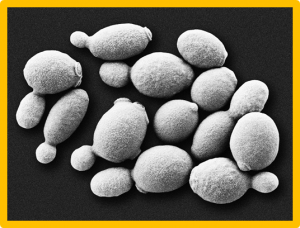
The EFSA Panel on Food Additive and Flavourings (FAF Panel) provides a scientific opinion on the safety of soy leghemoglobin from genetically modified Komagataella phaffii as a food additive in accordance with Regulation (EC) No 1331/2008. The proposed food additive, LegH Prep, is intended to be used as a colour in meat analogue products. The yeast Komagataella phaffii strain MXY0541 has been genetically modified to produce soy leghemoglobin;
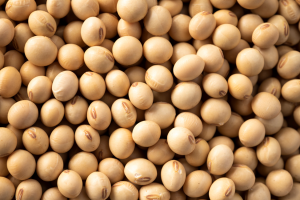
The European Food Safety Authority (EFSA) Panel on Food Additive and Flavourings (FAF) released a scientific opinion on the proposed food additive called LegH Prep which contains soy leghemoglobin derived from genetically modified (GM) Komagataella phaffii. The amount of haem iron from soy leghemoglobin in the proposed uses is comparable to similar amounts of different types of meat.
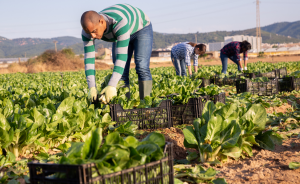
The Food and Agriculture Organization of the United Nations (FAO) is set to release the 2024 State of Food Security and Nutrition in the World (SOFI) during the G20 Global Alliance against Hunger and Poverty Task Force Ministerial Meeting on July 24, 2024. The annual report highlights the global progress in the efforts to end hunger, attain food security, and enhance nutrition.
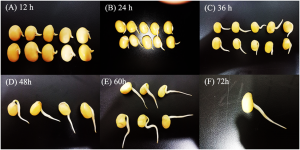
Low temperature is a critical factor affecting the geographical distribution, growth, development, and yield of soybeans, with cold stress during seed germination leading to substantial productivity loss. In this study, an association panel comprising 260 soybean accessions was evaluated for four germination traits and four cold tolerance index traits, revealing extensive variation in cold tolerance.
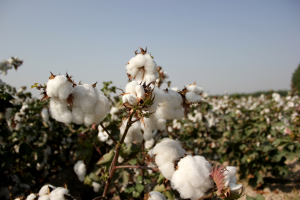
Mississippi State scientists have developed a cotton quality module, which enables farmers to check the quality of their crops under fluctuating environmental conditions. The new module will be added into the GOSSYM program. The quality of cotton affects the income of farmers. To boost the crop's quality, it must receive the optimum amount of water and nutrients that are necessary for its growth. These factors are dependent on the planting date for a particular location and cultivar.
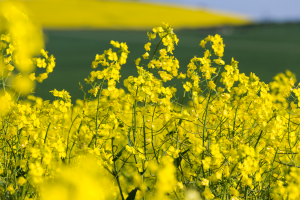
The Ministry of Agriculture, Forestry, and Fisheries (MAFF) in Japan has released new data on their regular annual surveys and detailed reports on various genetically modified (GM) crops. Japan has been monitoring GM crop cultivation sites to ensure no cross-contamination with non-GM crops of the same species within the area. Their newly released data addresses public concerns about the “accidental spillage” of GM crops.

This analysis evaluates the most recent developments in genetic modification investigation worldwide. Recent challenges in genetically modified technology include regulatory hurdles, ethical concerns, and the ecological impacts of genetically modified organisms (GMOs). Developments such as CRISPR-Cas9 and other genome-editing technologies have revolutionized the field, offering more precise and efficient methods for genetic modification. We followed a bibliometric analysis approach based on the bibliographic details retrieved from the Web of Science core collection in January 2020
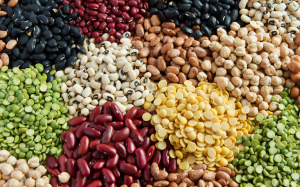
Researchers from Aarhus University (Denmark), Polytechnic University of Madrid (Spain), and the European Synchrotron Radiation Facility in France have discovered that zinc plays a crucial role in the nitrogen fixation process of legumes. The study also found that the transcriptional regulator Fixation Under Nitrate (FUN) is a novel type of zinc sensor, which decodes zinc signals in nodules and regulates nitrogen fixation.
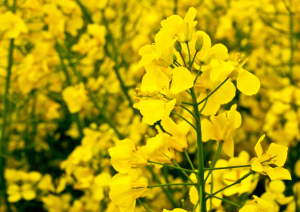
The Australian Gene Technology Regulator (OGTR) is inviting comments on an application from the Commonwealth Scientific and Industrial Research Organisation (CSIRO) to conduct a field trial of canola genetically modified for increased abiotic stress tolerance. The trial is proposed to take place at up to three sites with a total area of up to six hectares per year over six years. The field trial sites will be in New South Wales and South Australia. The GM plants grown in this field trial would not be used for human food or animal feed.
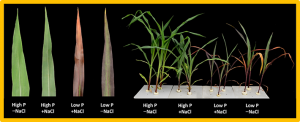
Phosphorus (P) is an essential element for plant growth, and its deficiency can cause decreased crop yield. This study systematically evaluated the low-phosphate (Pi) response traits in a large population at maturity and seedling stages, and explored candidate genes and their interrelationships with specific traits. The results revealed a greater sensitivity of seedling maize to low-Pi stress compared to that at maturity stage.