


News & Events
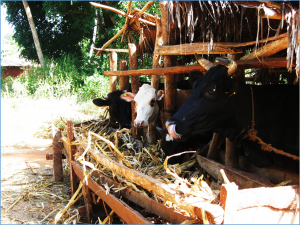
Feed resource availability, quality, accessibility and seasonal variations significantly affect food and nutritional security in Tanzania. Alongside climate variability, these factors are major determinants of animal health and productivity, and thus the incomes of farmers. As part of measures to optimize feed use and animal productivity to improve farm yields and revenues, the International Livestock Research Institute (ILRI) has started a comprehensive animal feed assessment and inventory training program for smallholder livestock keepers Tanzania.

For the twelfth installment of Delta Talks, the CGIAR Initiative on Asian Mega-Deltas (AMD) and Wageningen University & Research (WUR) presented a webinar on understanding the diet of the Cambodia-Mekong Delta. Pirom Khiev of the Cambodia Development Resource Institute, Sokcheng Phay of WorldFish-Cambodia, and Liz Ignowski of the World Vegetable Center discussed food consumption patterns in Cambodia
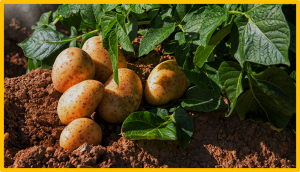
This study deploys recent advancements in polyploid analytical approaches to perform complex trait analyses in cultivated tetraploid potato. The study employs a ‘fixed’ SNP Infinium array platform and a ‘flexible and open’ genome complexity reduction-based sequencing method (GBS, genotyping-by-sequencing) to perform genome-wide association studies (GWAS) for several key potato traits including the assessment of population structure and linkage disequilibrium (LD) in the studied population.

FAO Director-General QU Dongyu received Cabo Verde’s highest honour, the Award of the Order of Amilcar Cabral on behalf of the Food and Agriculture Organization of the United Nations (FAO), in recognition of what President José Maria Neves said was FAO’s “invaluable contribution” to the development of Cabo Verde. Bestowing the Award to Qu on behalf of President Neves, Cabo Verde’s Prime Minister Ulisses Correia e Silva cited the presidential decree conferring the honour which describes FAO’s longstanding relationship with the country.
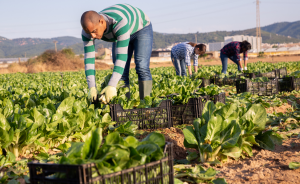
The Food and Agriculture Organization of the United Nations (FAO) is set to release the 2024 State of Food Security and Nutrition in the World (SOFI) during the G20 Global Alliance against Hunger and Poverty Task Force Ministerial Meeting on July 24, 2024. The annual report highlights the global progress in the efforts to end hunger, attain food security, and enhance nutrition.
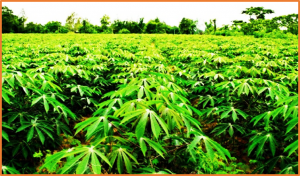
Cassava productivity is constrained by low soil nitrogen, which is predominant in most cassava-growing regions in the tropics and subtropical agroecology. Improving the low nitrogen tolerance of cassava has become an important breeding objective. The current study aimed to develop cassava varieties with improved nitrogen use efficiency by identifying genomic regions and candidate genes linked to nitrogen use efficiency in cassava. A genome-wide association study (GWAS) was performed using the Genome Association and Prediction Integrated Tool (GAPIT).
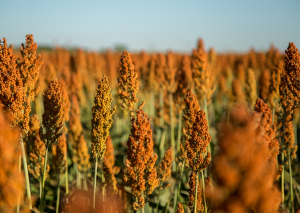
A research team from Ethiopia has identified potential Striga-suppressing rhizobacteria associated with sorghum. The rhizobacteria have been shown to significantly reduce Striga seed germination rates. To identify the Striga-suppressive rhizobacteria, 117 bacterial isolates were collected from the rhizosphere of 12 sorghum varieties in three regions of Ethiopia. These isolates were screened for hydrogen cyanide (HCN) and indole-3-acetic acid (IAA).
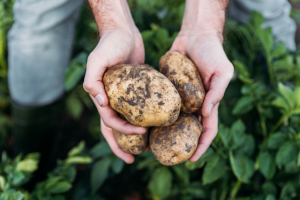
Food Standards Australia New Zealand (FSANZ) is inviting comments on an application allowing the sale and use of food derived from genetically modified (GM) potatoes. Food products made with GM potatoes, such as potato starch, potato flour, or pre-cooked potato chips, could be imported to Australia and New Zealand if the application is approved. Potato line BG25 has been genetically modified to resist late blight and virus Y infections. BG25 has also been modified to possess traits such as low-reducing sugars and reduced browning.
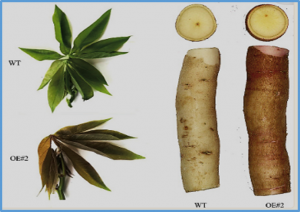
MeFtsZ2-1 is a key gene for plant plastid division, but the mechanism by which MeFtsZ2-1 affects pigment accumulation in cassava (Manihot esculenta Crantz) through plastids remains unclear. We found that MeFtsZ2-1 overexpression in cassava (OE) exhibited darker colors of leaves, with increased levels of anthocyanins and carotenoids. Further observation via Transmission Electron Microscopy (TEM) revealed no apparent defects in chloroplast structure but an increase in the number of plastoglobule in OE leaves. RNA-seq results showed 1582 differentially expressed genes (DEGs) in leaves of OE.

Scientists from the Helmholtz Institute for RNA-based Infection Research (HIRI) in Germany developed a new method which allows RNA detection using Cas12 nucleases. CRISPR is a widely used technique that has many applications in various industries. Aside from Cas9, Cas12 nucleases are also typically used in research studies. However, Cas12 nucleases only detect DNA.

Researchers from China National Rice Research Institute and partners have identified that the Trichome Birefringence (TBR) gene allows plants to handle extra zinc in the soil. Zinc is an important micronutrient that can become toxic to living cells when present in excess. Therefore, plants have developed mechanisms that will help them tolerate zinc toxicity. Plants absorb zinc on their cell walls through a process called pectin methylesterification. In this process, the structure of the cell wall's pectin molecules were altered to store additional zinc.
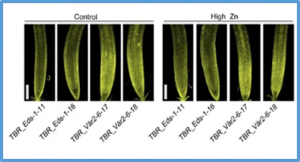
Zinc (Zn) is an essential micronutrient but can be cytotoxic when present in excess. Plants have evolved mechanisms to tolerate Zn toxicity. To identify genetic loci responsible for natural variation of plant tolerance to Zn toxicity, we conduct genome-wide association studies for root growth responses to high Zn and identify 21 significant associated loci. Among these loci, we identify Trichome Birefringence (TBR) allelic variation determining root growth variation in high Zn conditions.