


News & Events
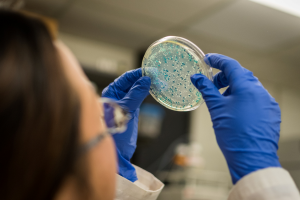
The Coordinated Framework for the Regulation of Biotechnology (CFRB) has been the regulatory review system in the United States since its establishment in 1986. With the emergence of genetic engineering (GE) on microbes, the commentary, published in GM Crops & Food, identifies the weaknesses and challenges associated with the CFRB in assessing the current system.
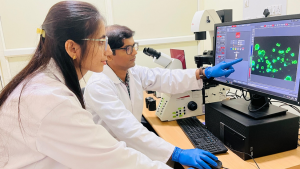
Genome editing technology has revolutionized agriculture, bringing market-ready innovations such as high oleic soybean, low pungency mustard greens, and high GABA tomatoes. The potential of this technology to enhance agricultural sustainability is immense. Traditionally, the SpCas9 nuclease, with its substantial size of around 1350 amino acids, has been the most widely used tool for genome editing
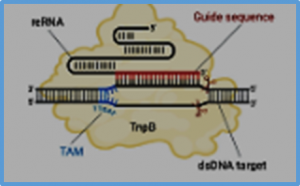
The two popular genome editor nucleases, Cas9 and Cas12a, hypothetically evolved from IscB and TnpB, respectively (Altae-Tran et al., 2021). Recent reports showed that TnpBs also function as RNA-guided nucleases in human cells (Karvelis et al., 2021). TnpB proteins are much smaller (~400 aa) than Cas9 (~1000–1400 aa) and Cas12a (~1300 aa). The large cargo size of Cas9 and Cas12a hinders their delivery into cells, particularly through viral vectors
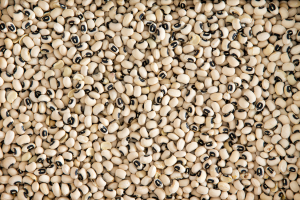
After over a decade of research, the Council for Scientific and Industrial Research-Savanna Agricultural Research Institute (CSIR-SARI) launches pod borer-resistant (PBR) cowpea for commercial cultivation in Ghana. PBR cowpea is the first genetically modified (GM) crop to be developed in the country.Cowpea is a vital crop rich in protein used for human and livestock consumption. However, the pod borer pests challenged the productivity of cowpeas, causing up to 80% yield losses.

The International Service for the Acquisition of Agri-biotech Applications, Inc. (ISAAA Inc.) and the Malaysian Biotechnology Information Centre (MABIC) invite agribiotechnology stakeholders to join the 7th Asian Short Course on Agribiotechnology, Biosafety Regulation, and Communication (ASCA7). This intensive 5-day program, to be held on September 2-6, 2024 at the Maruay Garden Hotel in Bangkok, Thailand, is co-hosted by Thailand's Department of Agriculture and Biotechnology Alliance Association.
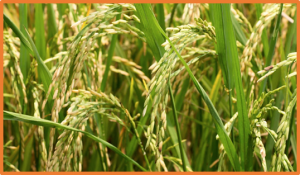
Bacterial Leaf Blight (Xanthomonas oryzae pv. oryzae) and blast (Magnaporthe oryzae) are the major biotic stresses around the rice-growing zones of the world. The development of resistant varieties through Marker Assisted Backcross Breeding is the utmost economical and eco-friendly method for achieving stable yield. Amongst the resistance genes recognized, Xa21 and Pi54 possess broad-spectrum resistance to many Xoo and blast strains around the world.
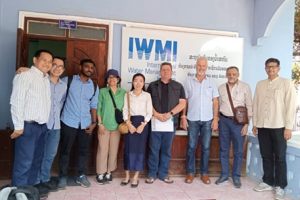
The recent exchange visit between the teams from IWMI Lao PDR and IWMI India working with the CGIAR Initiative on Agroecology took place in April 2024. Representatives from both countries visited project sites and interacted with local communities engaged in agroecological transitions. The visit focused on reflexive and transformative learning from the shared experience.

With 24 interventions from six partner centers, the CGIAR Initiative on Agroecology will be well represented at this year’s Tropentag, to take place from 11-13 September in Vienna, Austria.The team will organize 5 pre-conference workshops, make five oral presentations and present 14 posters covering the different work packages of the initiative. These interventions provide a deep dive into the progress of ongoing action research and initiative implementation.
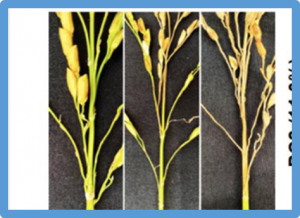
Cultivating rice varieties with robust blast resistance is the most effective and economical way to manage the rice blast disease. However, rice blast disease comprises leaf and panicle blast, which are different in terms of resistance mechanisms. While many blast resistant rice cultivars were bred using genes conferring resistance to only leaf or panicle blast, mining durable and effective quantitative trait loci (QTLs) for both panicle and leaf blast resistance is of paramount importance
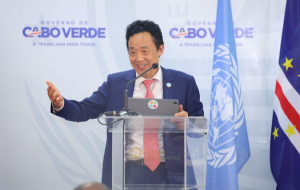
The Food and Agriculture Organization of the United Nations (FAO) has been scaling up and will continue to increase its support to Small Island Developing States (SIDS) to transform their agrifood systems to enable them to be part of the climate solutions and effectively contribute to food availability, accessibility and affordability, said FAO Director-General Qu Dongyu in his address today at a conference hosted by the Ministry of Agriculture and Environment of Cabo Verde entitled “Accelerating Agrifood Systems Transformation in Cabo Verde”.
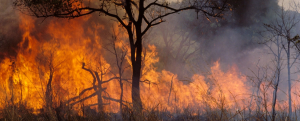
The Food and Agriculture Organization of the United Nations (FAO) has released guidelines for countries outlining how to manage the risks of damaging wildfires, which can threaten people and the environment. Integrated Fire Management Voluntary Guidelines: Principles and strategic actions updates previous FAO fire management voluntary guidelines that were published two decades ago and incorporates new content to address challenges stemming from the current climate crisis.
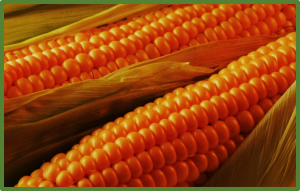
Polyploidy played an important role in the evolution of the three most important crops: wheat, maize and rice, each of them providing a unique model for studying allopolyploidy, segmental alloploidy or paleopolyploidy. However, its genetic and evolutionary role is still vague. The undelying mechanisms and consequences of polyploidy remain fundamental objectives in the study of eukaryotes. Maize is one of the underutilized crops at the polyploid level.