


News & Events
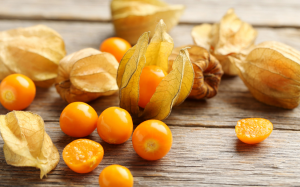
For more than six years, Dr. Joyce Van Eck at the Boyce Thompson Institute (BTI) has led a team of scientists in the “Physalis Improvement Project,” working to transform groundcherry from a garden novelty to a mainstream crop that could one day be a common sight alongside blueberries and blackberries in grocery stores. The sprawling growth habit of groundcherry plants makes them hard to manage.
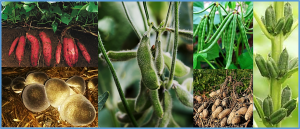
In the first six months in 2024, the IAS has drastically managed and conducted 22 projects with the fund of VND 15.20 billion. It included 01 national project, 01 crop breeding project, 04 MARD projects, 01 demonstration project, 02 potential trials, 02 functions regarding standadizing
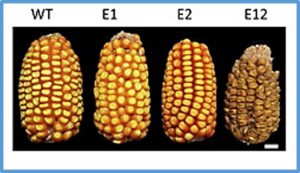
To improve the amylose content (AC) and resistant starch content (RSC) of maize kernel starch, we employed the CRISPR/Cas9 system to create mutants of starch branching enzyme I (SBEI) and starch branching enzyme IIb (SBEIIb). A frameshift mutation in SBEI (E1, a nucleotide insertion in exon 6) led to plants with higher RSC (1.07%), lower hundred-kernel weight (HKW, 24.71 ± 0.14 g), and lower plant height (PH, 218.50 ± 9.42 cm) compared to the wild type (WT).
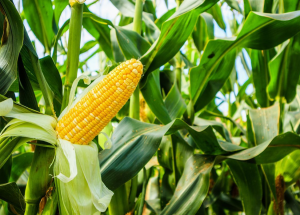
Scientists from the Chinese Academy of Agricultural Sciences and partners used CRISPR to enhance the starch properties of maize. Maize is an essential crop that is consumed by people around the world. The starch qualities of maize are influenced by amylose content (AC), which is positively correlated with resistant starch content (RSC). Resistant starch improves health, which causes maize with high amylose content to have a higher value.
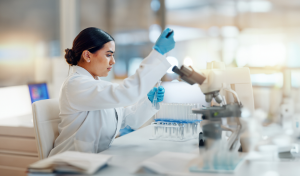
Scientists from the Arc Institute in California discovered a DNA-editing system in bacteria which has the potential to enable bigger changes in genomes compared to what CRISPR gene editing system can achieve. This breakthrough is reported in Nature. The new genome editor, called bridge editing, links two pieces of DNA which can be used to edit huge sections of a genome.
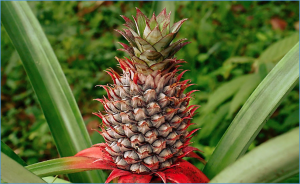
Red fruit peel is an attractive target for pineapple breeding. Various pineapple accessions with distinct red coloration patterns exist; however, the precise molecular mechanism accounting for these differences remains unknown, which hinders the pineapple breeding process from combining high fruit quality with red peel. In this study, we characterized a transcription factor, AcMYB266, which is preferentially expressed in pineapple peel and positively regulates anthocyanin accumulation.
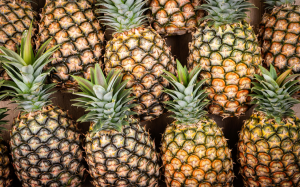
Researchers from the South China Agricultural University, Tropical Crops Genetic Resources Institute, Chinese Academy of Tropical Agricultural Sciences, and Guangdong Eco-Engineering Polytechnic have identified a key transcription factor specifically expressed in the pineapple peel that regulates anthocyanin accumulation.

Researchers from South China Agricultural University and partners reviewed the role of polyamine in regulating crop growth and development. Polyamines are bioorganic molecules that play important roles in the control of developmental processes of plants, as well as help with their adaptation to environmental stressors. However, there are important questions about polyamines that need answers.
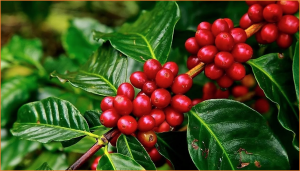
Coffee is a universal beverage that drives a multi-industry market on a global basis. Today, the sustainability of coffee production is threatened by accelerated climate changes. In this work, we propose the implementation of genomic-assisted breeding for climate-smart coffee in Coffea canephora. This species is adapted to higher temperatures and is more resilient to biotic and abiotic stresses. After evaluating two populations, over multiple harvests, and under severe drought weather condition, we dissected the genetic architecture of yield, disease resistance, and quality-related traits. By integrating genome-wide association studies and diallel analyses, our contribution is four-fold: (i) we identified a set of molecular markers with major effects associated with disease resistance and post-harvest traits, while yield and plant architecture presented a polygenic background;
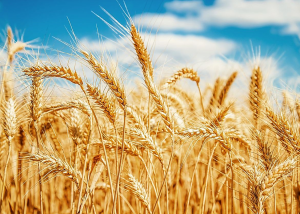
Researchers from the Eternal University and partners have discovered that the Rahnella bacteria have nitrogen-fixing capabilities, which can boost the growth of wheat. Certain bacteria can convert the nitrogen gas from the air into forms that plants can use. However, researchers must first identify which type of bacteria have nitrogen-fixing capabilities and to which crops they can be applied. Scientists isolated endophytic bacteria from cereal crops in India and screened them for nitrogen fixation. The eight bacterial isolates that exhibited nitrogenase activity were also tested for other growth-promoting traits.
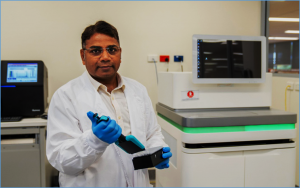
Researchers led by Murdoch University's Centre for Crop and Food Innovation (CCFI) have published the study "Unlocking plant genetics with telomere-to-telomere (T2T) genome assemblies," a ground-breaking international genomics research that could help develop new crop varieties that can better withstand drought, salinity, and pests. Complete Telomere-to-Telomere (T2T) assemblies allow scientists to map an entire genome to support molecular breeding to improve plant performance under stress conditions.
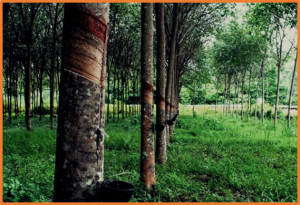
Among the Hevea species, rubber tree (Hevea brasiliensis) is the most important source of natural rubber. In previous studies, we sequenced the complete nuclear and chloroplast genomes of Hevea species, providing an invaluable resource for studying their phylogeny, disease resistance, and breeding. However, given that plant mitochondrial genomes are more complex and more difficult to assemble than that of the other organelles, little is known about their mitochondrial genome, which limits the comprehensive understanding of Hevea genomic evolution. In this study, we sequenced and assembled the mitochondrial genomes of four Hevea species.