


News & Events

Scientists from the Institute for Sustainable Agriculture and the University of the Basque Country in Spain demonstrate the potential of gene editing in developing wheat with low gluten content using CRISPR-Cas9 technology. Their findings mark a significant breakthrough in producing gluten-free wheat in the market. Wheat is one of the most widely cultivated crops and serves as a staple food for millions of people

A research team from the Research Institute for Plant Molecular and Cellular Biology (IBMCP), a joint center of the Spanish National Research Council (CSIC) and the Universitat Politècnica de València (UPV), has developed an innovative method for the biofortification of leaves and other green plant tissues with increased healthy substances such as beta-carotene, the main precursor of vitamin A in the human diet.
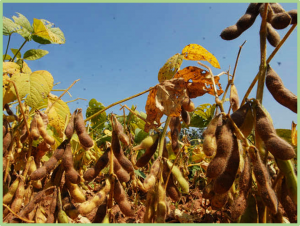
Soybean [Glycine max (L.) Merr.] is an important crop worldwide; its overall value comes from seed oil and high protein meal. The development of soybean varieties with allele combinations for improved oil and meal quality is expected to provide a compositional value bundle for soybean. The high oleic and low linolenic acid seed oil trait (HOLL; > 70% oleic and < 3% linolenic acid) is targeted to optimize the health and functional properties of soybean oil.
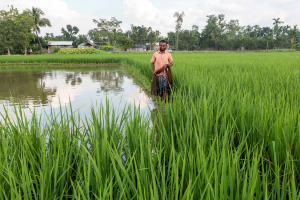
The session featured presentations on technological innovations and community-driven strategies to strengthen agricultural resilience in the Ganges Delta regions of Bangladesh and India. The discussions showcased how cutting-edge technology, nature-based solutions, and community-led innovations transform the agriculture sector by enhancing climate and livelihood resilience and adaptation in the Asian-Mega Deltas. The focus was on Bangladesh and India as part of the Ganges Delta.
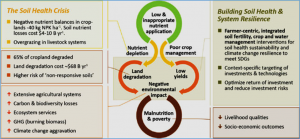
West Africa and the Sahel are grappling with a severe soil health crisis that threatens food security. Two-thirds of the region’s land is degraded, and fertilizer application rates remain far behind global averages. This has led to low crop yields and reduced agricultural productivity, particularly for smallholder farmers. Unsustainable farming practices and limited access to essential agricultural inputs have worsened this situation, putting regional food systems under severe strain.

Prickles on eggplant pose challenges for agriculture and are undesirable in cultivated varieties. This study aimed to uncover the genetic mechanisms behind prickle formation in eggplant. Using the F2 and F2:3 populations derived from a cross between the prickly wild eggplant, YQ, and the prickle-free cultivated variety, YZQ, we identified a key genetic locus (LPD, leaf prickle development) on chromosome E06 associated with leaf prickle development through BSA-seq and QTL mapping.

Why are there limited gene-edited agrifoods available in the market despite the Nobel Prize-winning discovery of CRISPR? This question was raised by Lisa Clark and Jill Hobbs, professors from the University of Saskatchewan Department of Agricultural and Resource Economics in the concluding chapter of the book titled "International Regulation of Gene Editing Technologies in Crops."
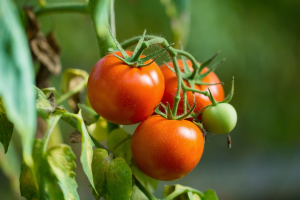
A study conducted by researchers from the University of Idaho and partners demonstrates the role of ubiquitin ligase seven in absentia1 (SINA1) mammalian BTF2-like transcription factors, Drosophila synapse-associated proteins, and yeast DOS2-like proteins (BSD1) function in controlling the vegetative growth of tomatoes through the production of plant growth hormone gibberellin (GA).
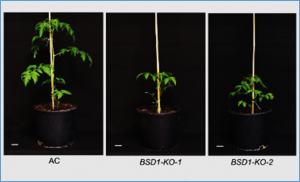
In plants, vegetative growth is controlled by synergistic and/or antagonistic effects of many regulatory factors. Here, the authors demonstrate that the ubiquitin ligase seven in absentia1 (SINA1) mammalian BTF2-like transcription factors, Drosophila synapse-associated proteins, and yeast DOS2-like proteins (BSD1) function as a regulatory module to control vegetative growth in tomato via regulation of the production of plant growth hormone gibberellin (GA).

Researchers from Bayer Crop Science releases the results of the first comprehensive exploration of the heritability of targeted and off-target gene edits in soybeans. The research team analyzed approximately 700 T1 plants produced from using LbCas12a constructs with CRISPR RNAs (crRNAs). The findings, published in Plant Direct, show that around 80% of the on-target edits observed in T0 plants were inherited in the T1 generation, and about 49% of the total observed on-target edits in T1 were not observed at T0.
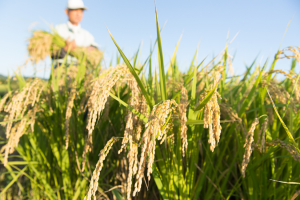
Blast, caused by the fungus Magnaporthe oryzae, is the most destructive rice disease occurring throughout Brazil. A study by Embrapa Genetic Resources and Biotechnology used the gene editing CRISPR-Cas9 technique to give blast resistance to the rice cultivar BRSMG Curinga. Launched in 2005, BRSMG Curinga was replaced in the market after becoming susceptible to the blast disease over the years.

In plants, development of all above-ground tissues relies on the shoot apical meristem (SAM) which balances cell proliferation and differentiation to allow life-long growth. To maximize fitness and survival, meristem activity is adjusted to the prevailing conditions through a poorly understood integration of developmental signals with environmental and nutritional information.