


News & Events
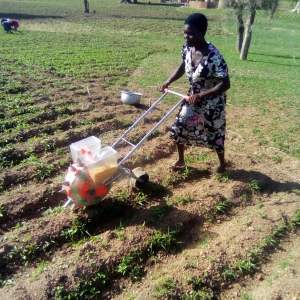
Women in agriculture contribute significantly towards sustaining rural livelihoods and achieving food and nutrition security. According to FAO, women play an important role in ensuring world food security contributing to up 43% of agricultural labor force in developing countries. However, they are faced discriminatory gendered social norms which limit their access to and control over production resources (land, labor, seed, fertilizer, livestock and finance) and improved agricultural technologies.
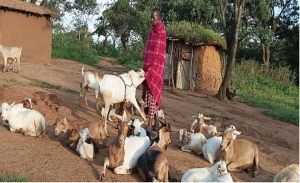
Rangeland management is essential for the sustainability of pastoralism, and the CGIAR Research Initiative on Livestock and Climate is advancing innovations to improve management practices. Effective management extends beyond soil and plant health to also include livestock breeding practices. Pastoralists have developed different ways to ensure that livestock are born in sustainable numbers and at the most favorable times for their survival.
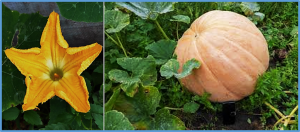
Peel colour is an important agronomic characteristic affecting commodity quality in Cucurbit plants. Genetic mapping of fruit peel colour promotes molecular breeding and provides an important basis for understanding the regulatory mechanism in Cucurbit plants. In the present study, the Cucurbita maxima inbred line ‘9-6’ which has a grey peel colour and ‘U3-3-44’ which has a dark green peel colour in the mature fruit stage, were used as plant materials.
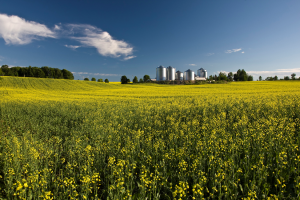
A research team from Osaka Metropolitan University was able to develop mutants of Euglena gracilis which produce wax esters with shorter carbon chains compared to wild-type species. This study opened new avenues for biofuel and chemical production development. Microalgal oil production represents great potential as a viable source of renewable energy that produces oils and wax esters.

For at least 12,000 years, barley has been one of the world's most important cereal crops. Its spread across the globe created random changes to its DNA to survive each new location. It is critical to identify the genes that changed to predict which varieties will thrive in places now struggling with increasingly hotter temperatures, longer stretches of drought, and more dramatic storms.
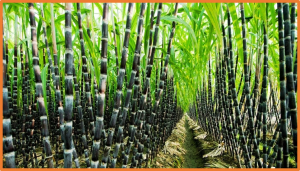
The auxin/indoleacetic acid (Aux/IAA) family plays a central role in regulating gene expression during auxin signal transduction. Nonetheless, there is limited knowledge regarding this gene family in sugarcane. In this study, 92 members of the IAA family were identified in Saccharum spontaneum, distributed on 32 chromosomes, and classified into three clusters based on phylogeny and motif compositions. Segmental duplication and recombination events contributed largely to the expansion of this superfamily. Additionally, cis-acting elements in the promoters of SsIAAs involved in plant hormone regulation and stress responsiveness were predicted.
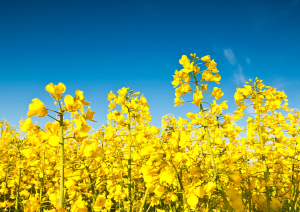
The Netherlands Commission on Genetic Modification (COGEM) was requested to evaluate the environmental risks associated with the renewal of the authorization for the import of genetically modified (GM) oilseed rape MON88302 for use in food and feed, as submitted by Bayer Agriculture BV on behalf of Bayer CropScience LP.
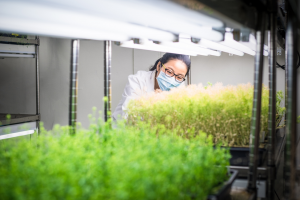
Researchers from the University of Delhi South Campus and the National Institute of Plant Genome Research in India report that overexpression of OsSAP10 leads to water deficit tolerance in Arabidopsis. Their findings are published in Plant Cell Reports. The function of stress-associated proteins (SAPs) in multiple abiotic stresses have been clearly established through several studies.
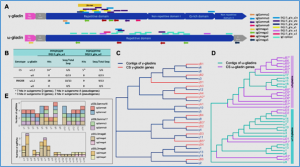
Wheat is a staple cereal in the human diet. Despite its significance, an increasing percentage of the population suffers adverse reactions to wheat, which are triggered by wheat gluten, particularly the gliadin fractions. In this study, we employed CRISPR/Cas multiplexing to introduce targeted mutations into γ- and ω-gliadin genes of wheat, to produce lines deficient in one or both immunogenic gliadin fractions simultaneously.
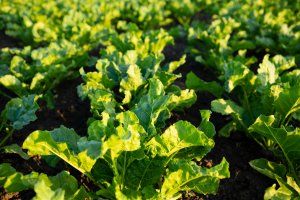
Food Standards Australia New Zealand (FSANZ) announced their invitation for public comments on the approval for the sale and use of food derived from genetically modified (GM) sugar beet line KSW20-1. GM sugar beet, developed by experts from Bayer CropScience, is tolerant to in-crop applications of dicamba, glufosinate, and glyphosate herbicides. Thus, it offers growers a broad spectrum weed management system for sugar beet production

Consumer concerns over genetically modified (GM) food remain a pressing issue on a global scale. Understanding factors affecting the consumption of GM foods will help address public concerns about food safety, health risks, and environmental impacts. The study published in Frontiers in Sustainable Food Systems aims to provide valuable insights into the views and attitudes of consumers on GM foods.
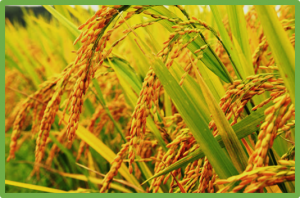
Rice is one of the most important crops in the world. Rice production consumes lots of water and significantly suffers from the water deficiency and drought stress. The water-saving and drought-resistance rice (WDR) confers good drought resistance and performs well in the water-saving cultivation.