


News & Events
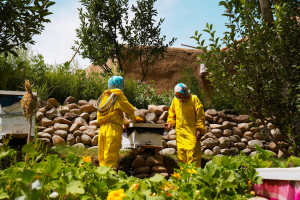
Correcting the gender gap in agrifood systems would dramatically reduce the worldwide hunger rate, raise the incomes of hundreds of millions of people and add $1 trillion to global gross domestic product, offering one of the most effective pathways towards the common objectives of the Sustainable Development Goals (SDGs).
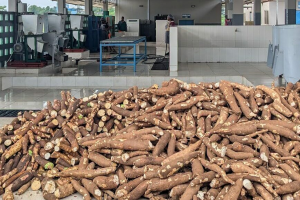
In the poorest regions, food loss and waste severely reduce food availability, driving up prices and limiting access to food for low-income households. The livelihoods of farmers and producers are also at risk when food must be sold at lower prices or discarded because of deterioration or poor quality. Food loss and waste squander the water, land, energy, and other natural resources used in food production, contributing to 6–10% of greenhouse gas emissions.
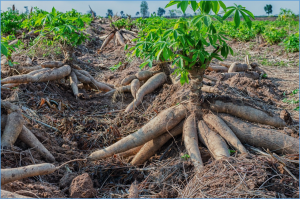
Cassava root-rot incited by soil-borne pathogens is one of the major diseases that reduces root yield. Although the use of resistant cultivars is the most effective method of management, the genetic basis for root-rot resistance remains poorly understood. Therefore, our work analyzed the transcriptome of two contrasting genotypes (BRS Kiriris/resistant and BGM-1345/susceptible) using RNA-Seq to understand the molecular response and identify candidate genes for resistance.

In an effort to foster collaboration toward healthier diets in Southeast Asia, the CGIAR Research Initiative on Fruit and Vegetables for Sustainable Healthy Diets (FRESH) and the Philippine Department of Science and Technology – Food and Nutrition Research Institute (DOST-FNRI) hosted a pivotal event in Manila, Philippines.
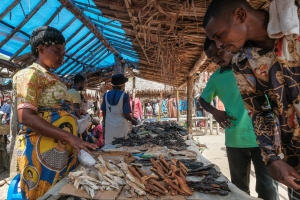
A new report led by experts from the International Livestock Research Institute (ILRI) uncovers the perils and promise of wild meat hunting, consumption and trade in Africa and Southeast Asia.They launched the report on 20 September 2024 at the 8th World One Health Congress in Cape Town, South Africa.The report is the first evidenced-based synthesis to focus on wild meat nutrition and disease issues rather than wildlife conservation alone.
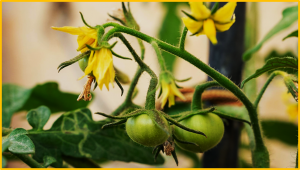
Tomato flowering time is an important agronomic trait that affects yield, fruit quality, and environmental adaptation. In this study, the high-generation inbred line 19108 with a late-flowering phenotype was selected for the mapping of the gene that causes late flowering. In the F2 population derived from 19108 (late flowering) × MM (early flowering), we identified a major late-flowering time quantitative trait locus (QTL) using QTL-seq, designated qLF2.1. This QTL was fine mapped to a 51.37-kb genomic interval using recombinant analysis
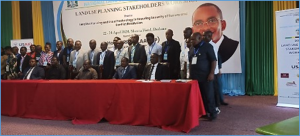
Joint village land use planning responds to the need for cross-border planning and sharing of collective land uses such as rangelands, forests and conservation areas that do not conveniently fall within administrative boundaries. In Tanzania, this is recognized by enabling policy and legislation that states, that a village planning authority ”…in respect of resources shared with other villages, prepare jointly with other villages planning authorities a village resource management sector plan,” (Land Use Planning Act 2007, Section 33 (1)).
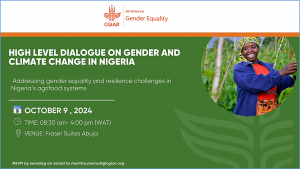
HER+ initiative investigates solutions to address limited empowerment, voice, and resources and discriminatory gender norms that hinder women’s benefits from and agency in agrifood systems and challenge a transformation towards just and resilient agrifood systems. HER+ research in collaboration with our partners across twelve countries in sub-Saharan Africa and South Asia resulted in new evidence and innovations for enhancing gender equality and climate resilience.
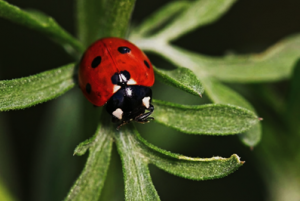
More than 50% of all animal species are insects that undergo complete metamorphosis. The key innovation of these holometabolous insects is a pupal stage between the larva and adult when most structures are completely rebuilt. Why this extreme lifestyle evolved is unclear. Here, we test the hypothesis that a trade-off between growth and differentiation explains the evolution of this novelty.
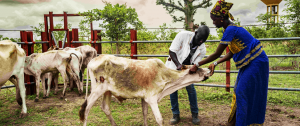
The Food and Agriculture Organization of the United Nations (FAO) today opened its first-ever Global Conference on Animal Health Innovation, Reference Centres and Vaccines, aimed at tackling animal diseases costing the world hundreds of billions of dollars annually and posing a threat to human health, global food security and livelihoods.

The Director-General of the Food and Agriculture Organization of the United Nations (FAO), QU Dongyu, has welcomed the adoption of the Pact for the Future, an agreement among UN member states designed to turbo-charge the implementation of the Sustainable Development Goals. In his address to the summit’s plenary in New York, the FAO Director-General underscored the pact's provisions for more equitable agrifood systems, recalling that hunger has risen since 2015, with more than 730 million people facing hunger in 2023.
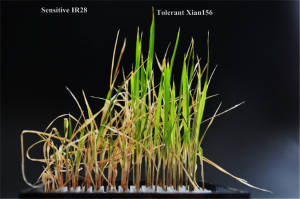
Salt stress is an environmental factor that limits plant growth and crop production. With the rapid expansion of salinized arable land worldwide, investigating the molecular mechanisms underlying the salt stress response in plants is urgently needed. Here, we report that GROWTH REGULATING FACTOR 7 (OsGRF7) promotes salt tolerance by regulating arbutin (hydroquinone-β-D-glucopyranoside) metabolism in rice (Oryza sativa).