


News & Events
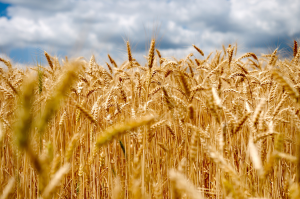
Gene editing has revolutionized agriculture paving the way for significant advancements in crop improvement. The development of crops with enhanced traits has helped reduce the reliance on chemical pesticides and fertilizers and build better tolerance to various environmental stressors like drought and extreme temperatures.
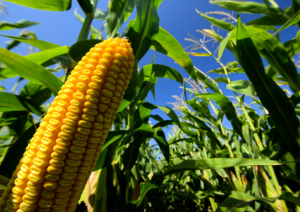
Researchers led by Huanzhong Wang, professor of plant molecular biology at the University of Connecticut's College of Agriculture, Health, and Natural Resources (CAHNR) have been working to understand how plants control their stem cells, specifically those that give rise to vascular bundles -- the structures that carry water and other nutrients throughout the plant.
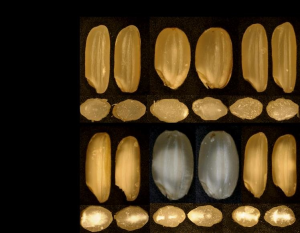
Grain shape (GS) is a key trait that affects yield and quality of rice. Identifying and analyzing GS-related genes and elucidating the physiological, biochemical and molecular mechanisms are important for rice breeding. In this study, genome-wide association studies (GWAS) were conducted based on 1, 795, 076 single-nucleotide polymorphisms (SNPs) and three GS-related traits, grain length (GL), grain width (GW) and thousand-grain weight (TGW)

An inexpensive kit called CRISPRkit developed by Stanford undergraduate students brings hands-on lessons in gene editing technology to high school classrooms. The CRISPRkit contains all the materials needed to conduct a CRISPR experiment in the classroom at about US$2 per kit (or approximately US$40 for materials for an entire classroom). The results of the experiment can be analyzed solely with a smartphone camera and the CRISPRkit website.
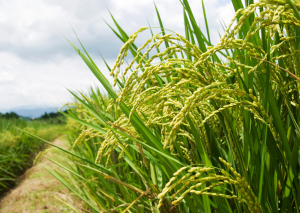
Scientists from the International Rice Research Institute (IRRI) and the University of California Davis (UC Davis) have published a groundbreaking paper detailing an innovative pathway for exploring and manipulating the rice phytobiome. They say this will contribute to rice resilience and productivity, which could help secure the global food supply in the face of climate change.
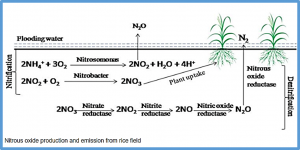
Nitrogen (N) fertilizers make up the majority of the input used in rice production, and their excess application leads to significant environmental pollution. Developing rice varieties with improved nitrogen use efficiency (NUE) is essential to maintain the sustainability of rice production. This study aims to evaluate the performance of transgenic Oryza sativa japonica cv.

Key leaders from various states gathered in September 2024 at the United Nations Headquarters in New York for the Summit of the Future, described by UN as a once-in-a-generation opportunity to reimagine the multilateral system and steer humanity on a new course to meet existing commitments and solve long-term challenge.
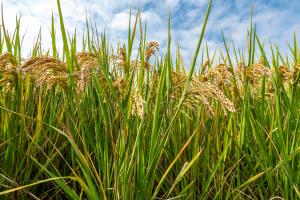
Researchers from Indonesia's National Research and Innovation Agency assessed the field performance and nitrous oxide emissions of nitrogen use efficient rice (Kitaake NUE). Their findings are published in the latest issue of Transgenic Research. Majority of the input for rice production is nitrogen fertilizers. However, excessive application may lead to environmental pollution.
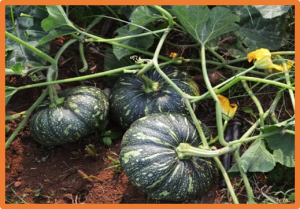
Low temperature is a key environmental factor that affects the protected cultivation of cucumber (Cucumis sativus L.) in winter, and the cold tolerance of cucumber/pumpkin-grafted seedlings depends on the rootstock. Pumpkin (Cucurbita spp.) has a well-developed root system, high resistance and wide adaptation, commonly used as rootstock for cucumber to improve the cold tolerance of grafted seedlings. This study used two high-generation inbred lines of Cucurbita moschata with significant differences in cold tolerance.
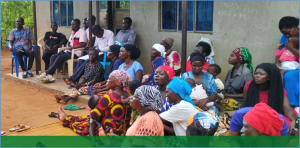
Smallholder farmers from the Butaleja district of Eastern Uganda have long faced barriers to accessing and adopting high-quality seeds of improved varieties. Entrenched social norms, limited knowledge, and poor agricultural management practices have hindered the uptake of these high-quality seeds that could boost productivity, resilience, and livelihoods. However, a concerted effort by Work Package 6 of the Seed Equal CGIAR Initiatives is now catalyzing a paradigm shift, leveraging the power of tailored social and behavior change communication (SBCC) campaigns to reshape attitudes and practices around access to and use of quality seed.

Scientists from the International Rice Research Institute (IRRI) and the University of California Davis recently published a groundbreaking paper that detailed an innovative pathway for exploring and manipulating the rice phytobiome to contribute to rice resilience and productivity, which in turn could help secure the global food supply in the face of climate change. The rice phytobiome includes various organisms such as bacteria, fungi, and insects that interact with the rice plant.
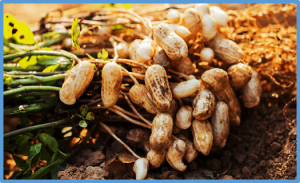
Trehalose-6-phosphate phosphatase (TPP) is a pivotal enzyme in trehalose biosynthesis which plays an essential role in plant development and in the abiotic stress response. However, little is currently known about TPPs in groundnut. In the present study, a total of 16 AhTPP genes were identified, and can be divided into three phylogenetic subgroups. AhTPP members within the same subgroups generally displayed similar exon-intron structures and conserved motifs