


News & Events
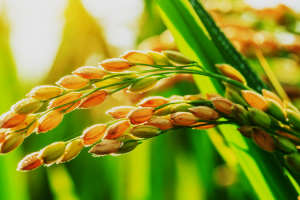
A study published in the Plant Biotechnology Journal investigates the effectiveness of the CRISPR-Cas12a-mediated miRNA knockout system to accurately generate loss-of-function microRNA (miRNA) mutants in ten different miRNA genes in rice. The findings of the study accelerate the understanding of miRNA functions, enhancing their application in genetic engineering research and efforts.
For the first time, a team led by researchers from the University of East Anglia (UEA) has identified the genes that help plants grow under stressful conditions, with implications for producing more sustainable food crops in the face of global climate change. The study, published in Nature Communications, reveals the genes that enable plants to make a novel anti-stress molecule called dimethylsulfoniopropionate
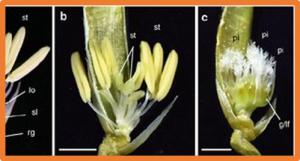
Grain width (GW) is one of the key traits affecting grain size and determines grain yield and appearance quality in rice. Mining gene loci and elite alleles controlling GW is necessary. The GW phenotypes of the two populations were investigated in three environments, which showed abundant phenotypic variation. GW3, encoding a P450 subfamily protein, was identified and validated as a causal gene by gene-based haplotype analysis
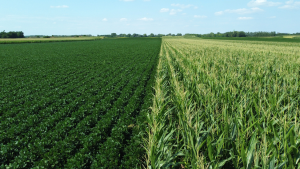
China's Ministry of Agriculture and Rural Affairs announced the final approval of genetically modified (GM) maize and soy varieties that passed the assessment of China National Crop Variety Registration Committee (CNCVRC). This is according to the report of the Global Agricultural Information Network of the USDA Foreign Agricultural Service released on October 14, 2024.
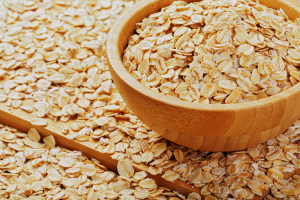
Experts from McGill University developed oats with enhanced nutritional value that may be beneficial for people with diabetes and heart disease. The findings of the study could also improve the oxidative stability of oats, making oat-based products less susceptible to spoilage. The researchers used genetic engineering techniques to modify the oil production of oats. Jaswinder Singh, an Associate Professor at the Department of Plant Science, said that this breakthrough has shown promising results in the agricultural industry and consumer health
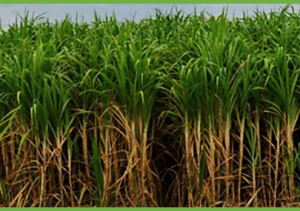
The sugarcane (Saccharum spp.) genome is one of the most complex of all. Modern varieties are highly polyploid and aneuploid as a result of hybridization between Saccharum officinarum and S. spontaneum. Little research has been done on meiotic control in polyploid species, with the exception of the wheat Ph1 locus harboring the ZIP4 gene (TaZIP4-B2) which promotes pairing between homologous chromosomes while suppressing crossover between homeologs. In sugarcane, despite its interspecific origin, bivalent association is favored, and multivalents, if any, are resolved at the end of prophase I.
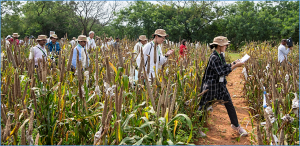
The International Crops Research Institute for the Semi-Arid Tropics (ICRISAT) hosted its biennial Pearl Millet Scientists' Field Day from 3-4 October 2024. Over 90 scientists from the public and private sectors explored 15,000 pearl millet unique breeding lines planted in the display fields.Participants from India, Japan, Brazil, and the U.S. selected breeding material for research focused on cultivars with combination traits, such as higher yields and resistance to biotic and abiotic stresses.

Indigenous and non-indigenous researchers, experts and officials from across the globe gathered today at the Global-Hub on Indigenous Peoples’ Food Systems, whose opening ceremony was held in a Nomadic tent of the Saami People from the Artic, transforming a space in the heart of Rome into an Indigenous Peoples’ territory. Hosted at the headquarters of the Food and Agriculture Organization of the United Nations (FAO), the Global-Hub’s in-person meeting,
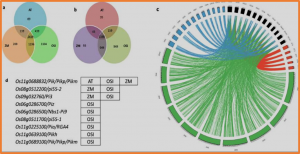
Rice blast disease is the most devastating disease constraining crop productivity. Vertical resistance to blast disease is widely studied despite its instability. Clusters of genes or QTLs conferring blast resistance that offer durable horizontal resistance are important in resistance breeding. In this study, we aimed to refine the reported QTLs and identify stable meta-QTLs (MQTLs) associated with rice blast resistance. A total of 435 QTLs were used to project 71 MQTLs across all the rice chromosomes. As many as 199 putative rice blast resistance genes were identified within 53 MQTL regions.
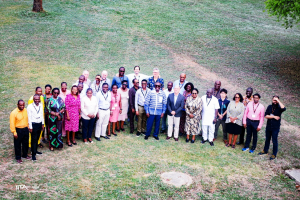
To enhance food security and improve the livelihoods of smallholder farmers across Sub-Saharan Africa, the Root, Tuber, and Banana (RTB) Breeding Network has officially been established, bringing together 18 National Agricultural Research and Extension Systems (NARES) and Universities, and two CGIAR Centers—the International Potato Center (CIP) and the International Institute of Tropical Agriculture (IITA).
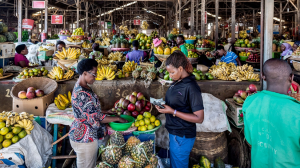
This year’s World Food Day theme, “Right to Food for a Better Life and a Better Future,” stresses the critical role of sustainable food systems in ensuring everyone’s fundamental right to nutritious food and healthy diets. As global food insecurity intensifies, the connection between food systems, diets, and health has never been more important. The theme aligns closely with the evolution of nutrition research and practice discussed in our chapter on Diets and Nutrition in the 2024 Global Food Policy Report,
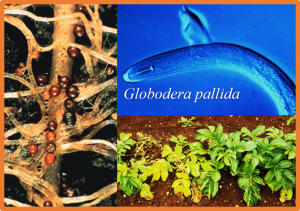
In this study, we show that the potato (Solanum tuberosum) pattern recognition receptor (PRR) NEMATODE-INDUCED LEUCINE-RICH REPEAT (LRR)-RLK1 (StNILR1) functions as a dual receptor, recognizing both nematode-associated molecular pattern ascaroside #18 (Ascr18) and plant hormone brassinosteroid (BR) to activate two different physiological outputs: pattern-triggered immunity (PTI) and BR response.