


News & Events

FAO’s decisive participation in major international governmental fora is increasingly producing agreements and alignments between the Organization’s priorities and those of the world’s major countries to accelerate the progress towards the achievement of SDG2. Examples include the G20 Agriculture Ministerial meeting in Cuiaba, Brazil, which upgraded the role of smallholders, who operate 90 percent of the world’s farms, by agreeing to hold a future session dedicated to Family Farming

The Plos One article titled CRISPR is Easy was authored by April Eichmeier from the Department of Emerging Media, University of St. Thomas, USA, and Michael Xenos from the Department of Life Sciences Communication, University of Wisconsin-Madison, USA. They explored the impact of watching Last Week Tonight with John Oliver episode that covered CRISPR. During the episode, Oliver answered what gene editing is and why citizens should care about it.
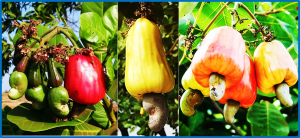
Vietnam is currently one of the largest producers and exporters of cashew nuts in the world. Cashew (Anacardium occidentale L.) is one of the main industrial crops cultivated in Dak Lak Province of Vietnam. Comprehending the endophytic bacteria of this plant, a new biofertilizer for sustainable cashew nut production can be progressed. In this report, the cashew root sample was collected from cashew fields in 2021 in Dak Lak.

Nanjing Agricultural University scientists in China developed rice varieties that are more resistant to aging and can be stored for longer periods. Their findings are published in Molecular Breeding. Lipoxygenase (LOX) enzyme plays a crucial role in rice seed aging and quality decline. Using CRISPR-Cas9 gene editing technology, the researchers successfully knocked out the OsLOX1 gene from rice
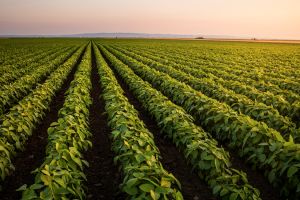
A study published in The Plant Journal reveals the transformative potential of gene editing in developing soybean plants with enhanced salt tolerance. This advancement marks a significant leap toward developing resilient soybean plants capable of thriving in challenging environments, paving the way for improved crop productivity in regions affected by soil salinity.
Deterioration of rice (Oryza sativa L.) affects grain quality and seed viability during storage. Lipoxygenase (LOX), a key enzyme in lipid metabolism, directly affects the rate of ageing. Here, we found that knock-out of lipoxygenase gene OsLOX1 by CRISPR/Cas9 delayed loss of seed viability and quality. Transcriptome analysis showed that during storage, OsLOX1 affected transcription of multiple genes,
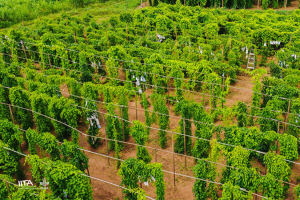
The International Institute of Tropical Agriculture (IITA), Pairwise, and the Bill & Melinda Gates Foundation are working on the Yam Optimized Architecture through Gene Editing (YOAGE) project, an innovative collaborative project aimed at delivering novel genetic variation to yam. The project aims to reduce labor and environmental impact associated with traditional plant staking while enabling mechanized farming in Nigeria, where yam is an important staple food crop.
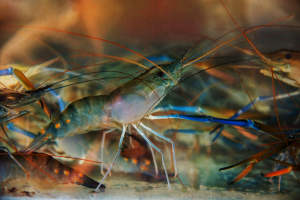
Following a successful first year, Watershed AC, Evogene Ltd., and Ben-Gurion University (BGU) received approval from the Israel Innovation Authority (IIA) to continue developing gene-edited crustaceans using CRISPR technology. This collaboration aims to improve growth rate, disease resistance, and environmental adaption in crustacean species.
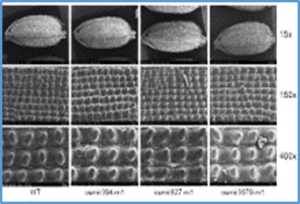
In recent years, the CRISPR-Cas9 nuclease has been used to knock out MicroRNA (miRNA) genes in plants, greatly promoting the study of miRNA function. However, due to its propensity for generating small insertions and deletions, Cas9 is not well-suited for achieving a complete knockout of miRNA genes. By contrast, CRISPR-Cas12a nuclease generates larger deletions, which could significantly disrupt the secondary structure of pre-miRNA and prevent the production of mature miRNAs.
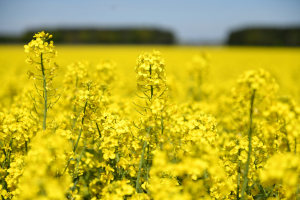
A study in Plant Direct reveals the gene responsible for regulating the flowering time and leaf angle of rapeseed. The findings of the study aim to provide a theoretical foundation for breeding new germplasm with desired plant traits, contributing to the advances of rapeseed crop improvement. Cultivated for its high-quality oil, rapeseed is valued for its nutritional profile, including low saturated fat content and a favorable omega-3 to omega-6 fatty acid ratio.
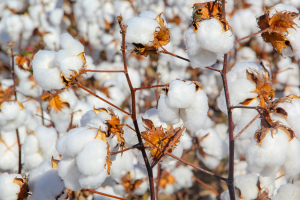
The Netherlands Commission on Genetic Modification (COGEM) was requested to evaluate the environmental risks associated with the renewal of the authorization for the import of genetically modified (GM) cotton T304-40 for use in food and feed, as submitted by BASF Agricultural Solutions Seed US LLC, represented in the EU by BASF SE.
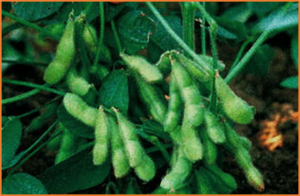
Soybean is an important plant source of protein worldwide. Increasing demands for soybean can be met by improving the quality of its seed protein. In this study, GmCG-1, which encodes the β-conglycinin α′ subunit, was identified via combined genome-wide association study and transcriptome analysis. We subsequently knocked down GmCG-1 and its paralogues GmCG-2 and GmCG-3 with CRISPR-Cas9 technology and generated two stable multigene knockdown mutants