


News & Events
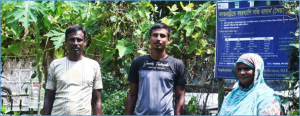
Mrs. Farida Begum, a 45-year-old mother of three, lives in Shahbajpur, Rangpur Sadar, Rangpur District in northwestern Bangladesh with her family. Together, they manage a 3.5 acre main crop field, where they cultivate rice, maize, sugarcane, and mustard. Besides, the family has a 2.5 decimal homestead area next to the house. While her husband primarily manages the field crops
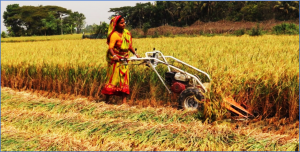
Madhuri Mallick, a 34-year-old resident from Fultola, Batiaghata, has transformed her life through innovation and training, leaving behind a life of poverty and deprivation. Living in a household of four without any farming land, Madhuri used to work as a day laborer, struggling with minimal income and an uncertain future. That changed in 2016 when she joined the Sustainable Intensification Innovation Lab (SIIL) project and learned about mechanized farming.
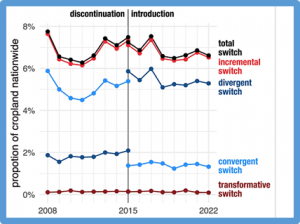
Crop switching, in which farmers grow a crop that is novel to a given field, can help agricultural systems adapt to changing environmental, cultural, and market forces. Yet while regional crop production trends receive significant attention, relatively little is known about the local-scale crop switching that underlies these macrotrends. We characterized local crop-switching patterns across the United States using the US Department of Agriculture (USDA) Cropland Data Layer
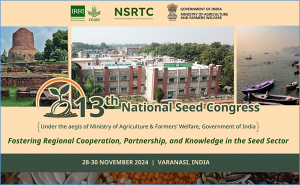
The National Seed Congress (NSC) is an annual confluence of researchers, policymakers, farmers, and representatives from the private and public sector to delve deeper into rice seed production and distribution to strengthen the agricultural sector in India and globally. With the theme, "Fostering Regional Cooperation, Partnership, and Knowledge Exchange in the Seed Sector," NSC 2024 provides a platform for presenting experiences and insights on the research advances, innovations, and principles related to seeds, crop improvements, and seed delivery systems.
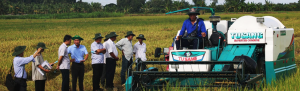
The Ministry of Agriculture and Rural Development (MARD), in collaboration with the International Rice Research Institute, conducted a seasonal review meeting for the 1-Million Hectare High Quality and Low Emission Rice Program. The meeting coincided with the Harvesting Day of a pilot farm in Soc Trang Province.
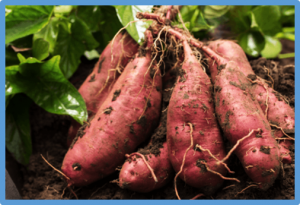
The plant U-box (PUB) proteins, a family of ubiquitin ligases (E3) enzymes, are pivotal in orchestrating many biological processes and facilitating plant responses to environmental stressors. Despite their critical roles, exploring the PUB gene family's characteristics and functional diversity in sweet potato (Ipomoea batatas (L.) Lam.) has been notably limited. There were 81 IbPUB genes identified within the sweet potato genome, and they were categorized into eight distinct groups based on domain architecture,

Blending art with a powerful environmental message and created by Lucas Memmola, a young Brazilian-Italian artist known for his immersive and experiential installations, the exhibition will run until 7 November 2024, open to the public from Tuesday to Sunday according to the hours of the Botanical Gardens. It offers a thought-provoking journey into the Amazon rainforest, highlighting the challenges of deforestation and the essential role of Indigenous Peoples in safeguarding our planet’s forests.

In a historic audience at the Quirinale Palace today, FAO Director-General QU Dongyu, alongside Italian President Sergio Mattarella, announced the creation of the FAO Food and Agriculture Museum and Network in Rome. Together, they unveiled the official logo for the museum, which will be inaugurated next year to mark FAO's 80th anniversary, symbolizing a new chapter in the longstanding partnership between FAO and Italy.
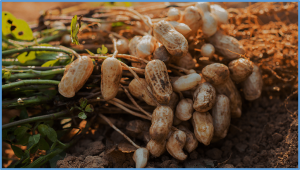
Pod and kernel traits, such as hundred pod weight (HPW), and hundred kernel weight (HKW), along with pod and kernel sizes, are pivotal determinants of yield in peanut breeding programs. This study sought to identify quantitative trait loci (QTL) that are associated with these pod and kernel traits in peanuts.
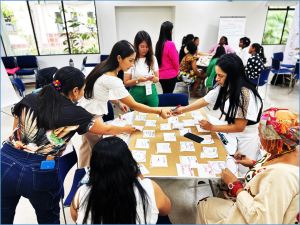
In the current global context of climate change, the IPCC (2023) has reaffirmed the crucial role of Human in this phenomenon, highlighting affectations such as weather and climate extreme, which affect both nature and people in all regions of the world. In its Third National Communication, the Colombian government predicted an increase in the country’s average temperature of 0.9°C, 1.6°C and 2.14°C for the years 2040, 2070
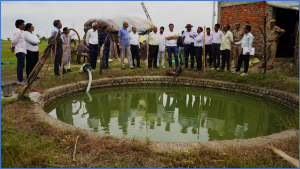
A high-level delegation from the Government of Uttar Pradesh recently visited four villages in the Bundelkhand region where science-backed interventions, in partnership with ICRISAT, have transformed deserted wastelands into water-abundant croplands. The success of these interventions, benefiting thousands of households, has inspired the Uttar Pradesh Government to explore scaling up the project across a wider area.
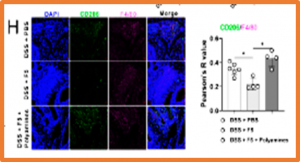
Gut microbiota plays a vital role in host metabolism; however, the influence of gut microbes on polyamine metabolism is unknown. Here, we found germ-free models possess elevated polyamine levels in the colon. Mechanistically, intestinal Lactobacillus murinus-derived small RNAs in extracellular vesicles down-regulate host polyamine metabolism by targeting the expression of enzymes in polyamine metabolism.