


News & Events
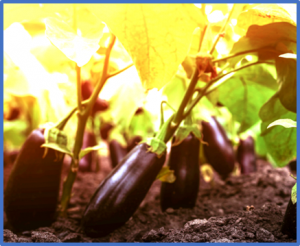
Bacterial wilt caused by Ralstonia solanacearum is a severe soil-borne disease globally, limiting the production in Solanaceae plants. SmNAC negatively regulated eggplant resistance to Bacterial wilt (BW) though restraining salicylic acid (SA) biosynthesis. However, other mechanisms through which SmNAC regulates BW resistance remain unknown. Here, we identified an interaction factor, SmDDA1b, encoding a substrate receptor for E3 ubiquitin ligase, from the eggplant cDNA library using SmNAC as bait. SmDDA1b expression was promoted by R. solanacearum inoculation and exogenous SA treatment.
Kenya's National Biosafety Authority assured the public in a press release that the country has a well-established legal, regulatory, and institutional framework that outlines specific application requirements, safety assessment procedures, and monitoring mechanisms aligned with the country's commitment to food safety, environmental protection, and the socio-economic well-being of its citizens. "The Authority takes note of the recent High Court ruling on GMOs and their derived products which was delivered on Thursday, 7th November 2024,

ISAAA Inc., in collaboration with the Philippine Agriculture and Fisheries Biotechnology Program of the Department of Agriculture (DA Biotech Program Office), will hold a webinar titled Leading Breakthroughs: Gene Drives for a Sustainable Agriculture and Biodiversity Conservation aimed at providing information and recent developments on the new and emerging applications of gene drives. The webinar is scheduled for December 9, 2024, from 10:00 AM to 12:00 PM (GMT+8), via Zoom. The registration is now open to all interested participants.
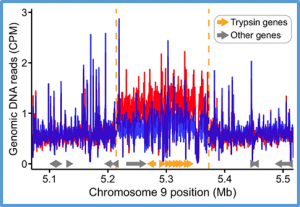
Transgenic crops producing crystalline (Cry) proteins from the bacterium Bacillus thuringiensis (Bt) have been used extensively to control some major crop pests. However, many populations of the noctuid moth Helicoverpa zea, one of the most important crop pests in the United States, have evolved practical resistance to several Cry proteins including Cry1Ac.
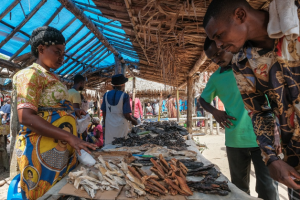
Graduate fellow Sherril Phyllis Masudi and postdoctoral scientist Nicholas Ngwili from the One Health Research, Education and Outreach Centre in Africa (OHRECA) were among the finalists at the 2024 World Food Forum Transformative Research Challenge, alongside Samuel Akpan, a fellow with the Institute of Genomics and Global Health. OHRECA is hosted at the Nairobi campus of the International Livestock Research Institute (ILRI).

Today, COP29 in Baku turned its attention to the food and agriculture sector—an area often sidelined in climate discussions despite its central role in global livelihoods and its vulnerability to climate change. With over 2.5 billion people dependent on agriculture, many of them smallholder farmers in low- and middle-income countries (LMICs), the sector is both a significant contributor to greenhouse gas emissions and one of the hardest hit by climate impacts like droughts, floods, and heatwaves.
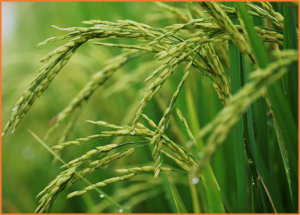
Heat stress (HS) has become a major factor limiting crop yields worldwide. HS inhibits plant growth by ROS accumulation, and NADPH oxidases (Rbohs) are major ROS producers in plants. Here, we show that CRISPR/Cas knockout of the OsRbohB (OsRbohB-KO) significantly increased rice tolerance to HS imposed at various different growth stages. We produced OsRbohB-KO and OsRbohB-overexpression (OsRbohB-OE) lines in a japonica cultivar, Nipponbare

As climate change drives temperatures higher, heat stress threatens rice crops by disrupting growth, damaging floral organs, decreasing pollen viability, and reducing yields. A study published in the Plant Biotechnology Journal showed that the knockout of the OsRbohB gene successfully reduces reactive oxygen species (ROS) overaccumulation and enhances heat stress tolerance in rice.
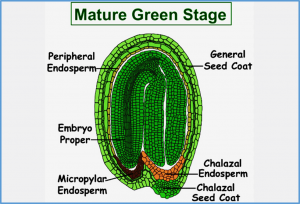
Dormancy is an essential characteristic that enables seeds to survive in unfavorable conditions while germinating when conditions are favorable. Myosin-binding proteins (MyoBs) assist in the movement of organelles along actin microfilaments by attaching to both organelles and myosins. In contrast to studies on yeast and metazoans, research on plant MyoBs is still in its early stages and primarily focuses on tip-growing cells.
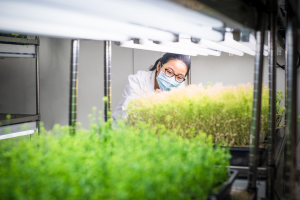
Seed dormancy is a significant adaptation that allows seeds to survive harsh conditions and germinate only when the environment is favorable. Myosin-binding proteins (MyoBs) play a vital role in this process by facilitating the movement of cellular components within the seed. A study published in The Plant Journal focused on Arabidopsis MyoB13, a protein highly expressed in mature, dry seeds. By using CRISPR-Cas9 gene editing, they created a myob13 mutant that exhibited premature sprouting (vivipary). This suggests that MyoB13 is essential for maintaining seed dormancy.
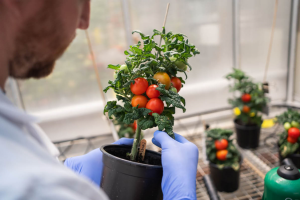
The United Kingdom-based trait development company Phytoform released a mini version of the popular tomato variety Ailsa Craig that is only one-sixth the size of a conventional tomato plant but produces five times the amount of fruit. The UK-based startup used gene editing to produce the tomato that is tailored to the needs of vertical farms. Phytoform founder and CEO Dr. William Pelton said the tomato plant is a small crop and they are hoping it will be a reset to vertical farming.
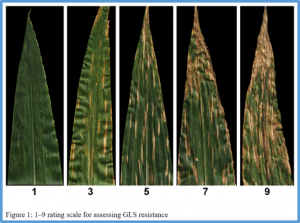
Gray leaf spot (GLS) is a major foliar disease of maize (Zea mays L.) that causes significant yield losses worldwide. Understanding the genetic mechanisms underlying gray leaf spot resistance is crucial for breeding high-yielding and disease-resistant varieties. In this study, eight tropical and subtropical germplasms were crossed with the temperate germplasm Ye107 to develop a nested association mapping (NAM) population comprising 1,653 F2:8 RILs,